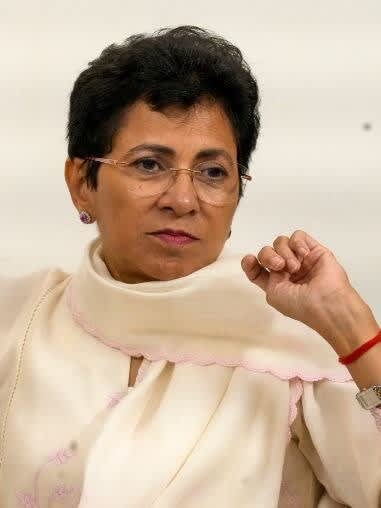
Congress MP from Sirsa and former Union Minister Kumari Selja
Congress leader Selja cites High Court’s observations on Mental Healthcare Act, calls for accountability and effective implementation of public welfare legislation
Chandigarh | Pen of Democracy News Desk
Sirsa MP, former Union Minister, Congress General Secretary and Congress Working Committee (CWC) member Kumari Selja said the credibility of any democratic government depends not on the number of laws it enacts but on how effectively those laws are implemented on the ground. Referring to the Punjab and Haryana High Court’s observations over the delayed implementation of the Mental Healthcare Act, 2017, she said the issue raises serious questions about administrative accountability and governance. In a statement, Selja said the High Court’s decision to seek responses from the governments of Punjab, Haryana and the Chandigarh Administration over the implementation of the Mental Healthcare Act underscores a significant gap between legislation and execution. According to her, the court’s remarks indicate that despite the enactment of progressive laws, their intended benefits are still not reaching ordinary citizens. “The success of a government cannot be measured merely by passing new laws. It is determined by whether those laws are implemented honestly, transparently and within a reasonable timeframe,” she said. The Congress leader noted that the Mental Healthcare Act, 2017 was enacted to safeguard the rights of persons suffering from mental illness and to ensure access to dignified and quality healthcare services. She questioned why, nearly eight years after its enactment, courts are still compelled to seek explanations from governments regarding its implementation. “If the judiciary has to ask why a law has not been enforced even after so many years, it reflects not just administrative delay but a deeper weakness in governance,” Selja remarked. She argued that the issue is not confined to a single piece of legislation. Citing the Nari Shakti Vandan Adhiniyam, 2023, Selja alleged that despite its passage, the expected progress towards its implementation has yet to materialise. She also referred to the Public Examinations (Prevention of Unfair Means) Act, 2024, which was introduced to curb paper leaks and examination malpractice. According to Selja, despite the enactment of the law, incidents of examination irregularities and paper leaks have continued to surface across the country, raising concerns about enforcement. She alleged that the government is now considering amendments to the same legislation, which, in her view, reflects shortcomings in its implementation. She said strict enforcement of examination-related laws from the outset could have prevented repeated cancellation of competitive examinations and protected the interests of lakhs of students. “Passing a law and then failing to ensure its implementation cannot be regarded as good governance. Young people deserve a recruitment and examination system that is transparent, accountable and trustworthy,” she said. Selja further stated that while governments frequently promise fast-track action and speedy justice, many important matters continue to witness delays in both administrative and legal processes. As a result, she said, courts are often compelled to intervene and seek explanations from governments and administrative authorities. Calling for greater accountability, the Congress leader said laws are enacted to protect citizens’ rights and serve the public interest, not merely to make political announcements. She urged the Union Government to establish a robust mechanism for the effective implementation, periodic review and accountability of every law passed by Parliament, ensuring that citizens receive the intended benefits without unnecessary delay. “The people of India do not need only new legislation; they need its meaningful implementation. The credibility of a democratic government ultimately rests on its ability to enforce the laws it enacts with seriousness, transparency and commitment,” Selja said.