₹25 Wheat MSP Hike Is Grossly Inadequate for Farmers: Kumari Selja
Sirsa MP and Congress national general secretary Kumari Selja has questioned the Centre’s decision to raise the minimum support price (MSP) of wheat by only ₹25 per quintal for the Rabi Marketing Season 2027-28, arguing that the increase needs to be viewed against the wider rise in the cost of cultivation and household expenses faced by farmers. Her remarks came a day after the Union Cabinet approved the revised MSPs for the mandated rabi crops. According to the government’s figures, wheat MSP has been increased from ₹2,585 to ₹2,610 per quintal for RMS 2027-28.
Government data puts wheat MSP at ₹2,610 per quintal
The Cabinet Committee on Economic Affairs approved the new rabi MSPs on September 30. The official announcement states that wheat has received an increase of ₹25 per quintal, while the government’s stated all-India weighted average cost of production for wheat is ₹1,264 per quintal. On that calculation, the government says the revised wheat MSP represents a margin of 106 per cent over its cost estimate. The same official data shows larger absolute increases for several other rabi crops, including ₹675 for safflower, ₹413 for rapeseed and mustard and ₹390 for lentil.
Selja has focused her criticism on the size of the annual increase rather than disputing the government’s cost calculation itself. She has argued that farmers have to manage a much broader basket of expenses, including seed, fertiliser, irrigation, hired labour, machinery, diesel and electricity, while also bearing weather and market risks. Her contention is that the adequacy of an MSP increase should be assessed in the context of the farmer’s overall economic situation and not only by comparing the announced MSP with the government’s cost benchmark.
A wider question over the cost of farming
For wheat-growing regions such as Haryana, the MSP announcement is closely linked to the procurement season because wheat is one of the principal crops purchased for the central pool. Haryana’s official procurement agency HAFED states that wheat is procured for the central pool on behalf of the Food Corporation of India and records substantial annual procurement across the state’s mandis. This makes both the declared price and the functioning of the procurement system important to cultivators.
Selja has said that the government has repeatedly spoken about improving farmers’ incomes and ensuring remunerative returns. In her view, the latest wheat MSP increase does not adequately answer the concerns of cultivators facing higher recurring expenses. She has therefore called for a broader review of MSP and procurement arrangements so that the announced price translates into meaningful economic support for farmers.
Paddy procurement and moisture checks also in focus
The Congress leader also raised concerns about the treatment of farmers during paddy procurement, particularly complaints relating to moisture assessment. She said prescribed quality and moisture standards should be followed, but the testing process should remain transparent so that farmers are not subjected to avoidable deductions or repeated inconvenience.
Haryana’s procurement system uses moisture meters for checking paddy against prescribed specifications. The issue, therefore, is not simply whether standards exist, but how consistently and transparently they are applied at procurement centres. For farmers bringing harvested produce to mandis, delays, quality deductions and uncertainty over acceptance can have a direct bearing on the final return from a crop.
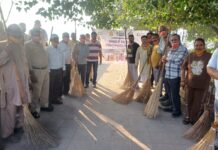
Community cleanliness drives highlight the importance of local participation and public systems
MSP debate goes beyond a single number
The latest announcement also highlights the continuing debate over how agricultural support should be measured. The Centre has said the revised rabi MSPs are intended to provide remunerative prices and that the wheat MSP is 106 per cent above its all-India weighted average cost of production. Critics such as Selja are asking a different question: whether the pace of annual MSP increases is keeping sufficient step with the practical pressures experienced by farming households.
That distinction is important because MSP is only one part of the farm-income equation. The eventual economic outcome also depends on procurement access, quantity actually purchased at MSP, input prices, crop yields, labour availability, irrigation costs, transport expenses and the time taken for payment. A higher notified MSP does not automatically produce the same benefit for every farmer if procurement access or production conditions differ.
Selja seeks review of price and procurement arrangements
Selja has urged the Centre to review the MSP and procurement framework for wheat and other crops in the light of changing cultivation costs and the financial risks borne by farmers. She has maintained that farmers need more than policy announcements and should receive a price structure and procurement system that adequately recognise their expenditure, labour and risk.
The government’s official position remains that the new wheat MSP provides a 106 per cent margin over its stated cost of production and is part of its policy of ensuring remunerative returns. Selja’s response reflects the opposing political argument that the ₹25 increase is insufficient when viewed against farmers’ wider economic pressures. The difference between these positions is now part of the broader public debate over farm incomes, procurement and the practical value of MSP.
Kumari Selja flags unemployment, recruitment delays and women’s safety issues in Haryana