Cooperatives Key to Farmer Self-Reliance, Says Shyam Singh Rana at Jagadhri Seminar
JAGADHRI | PEN OF DEMOCRACY NEWS DESK
District-level cooperative awareness programme also highlights natural farming, affordable credit and collective strength for farmers
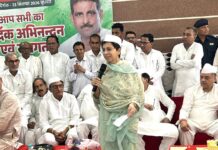
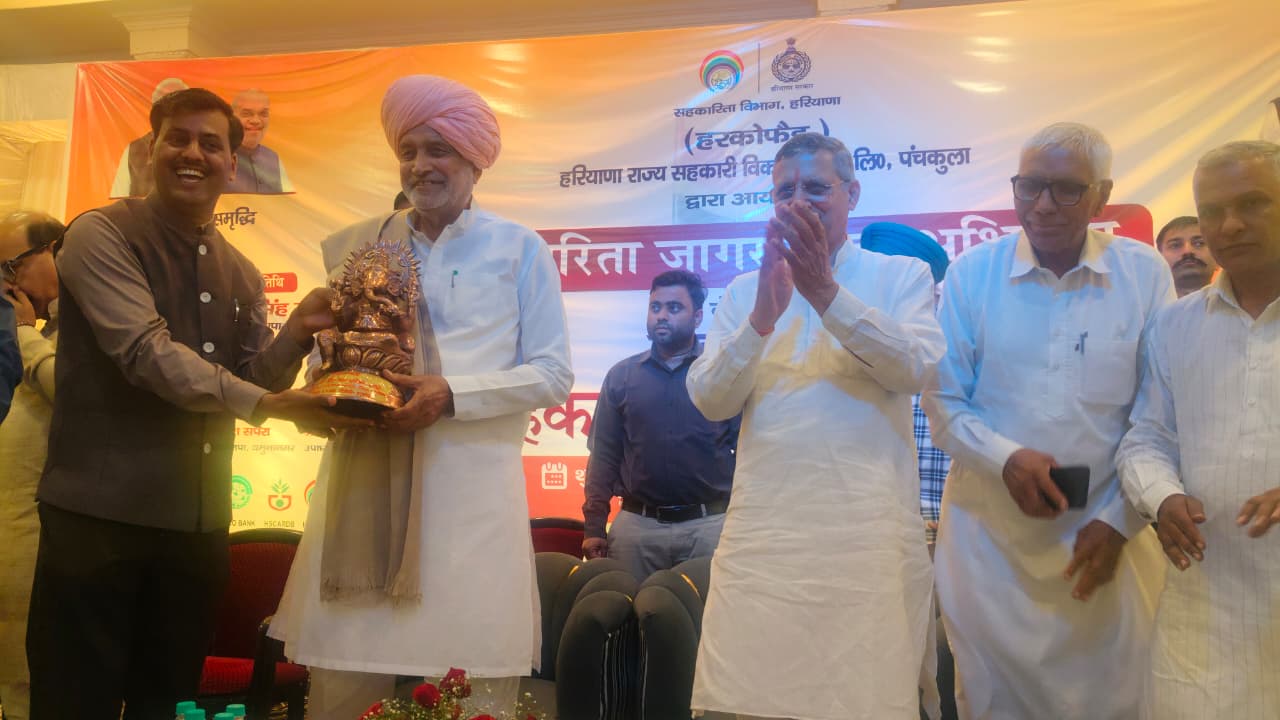
A district-level seminar on cooperation was organised at Gupta Palace in Jagadhri under the Cooperative Awareness Campaign of the Haryana State Cooperative Development Federation. Haryana Agriculture and Farmers’ Welfare, Fisheries and Animal Husbandry Minister Shyam Singh Rana attended the programme as the chief guest, while former Haryana Cabinet Minister Kanwar Pal Gurjar was the special guest.
The programme focused on the role of cooperative institutions in strengthening farmers, improving access to economic opportunities and encouraging collective participation. Organisers welcomed the two guests with shawls and presented a Lord Ganesha idol as a token of honour. The programme began with the ceremonial lighting of the lamp.
Rana Links Cooperation with Long-Term Economic Self-Reliance
Addressing the gathering, Shyam Singh Rana said cooperation would have an important role in the country’s effort to become a developed nation by 2047. He said wider participation in cooperative activities could contribute to economic self-reliance and strengthen farmers and communities.
Rana said the principle of cooperation could help connect prosperity with self-reliance and, in turn, contribute to stronger farming communities. He also referred to the role of cooperation in strengthening India’s economic position and said citizens should participate in collective institutions wherever they can provide practical benefits.
The minister also spoke about the rising cost of cultivation and the pressure created by expensive agricultural inputs. He called for greater attention to natural farming and reducing dependence on chemical fertilisers and pesticides. According to his remarks, natural farming can reduce input costs where farmers are able to adopt suitable practices and can support efforts to improve farm returns.
Focus on Natural Farming and Lower Input Costs
Rana said Haryana’s largely level agricultural land provides scope for experimenting with and expanding natural farming practices. He emphasised that changing agricultural conditions require farmers to examine cultivation methods that can reduce avoidable expenditure while maintaining productivity.
He said the state government was providing assistance for agricultural machinery through subsidies and offering facilities linked to agricultural credit. He also referred to schemes intended to promote natural farming and said farmers could benefit from government support while moving towards more sustainable cultivation practices.
The minister’s comments on natural farming formed an important part of the seminar because input costs, access to credit and market strength are closely linked to the economic position of small and medium farmers. Cooperative structures can provide one route through which farmers organise procurement, credit, marketing and other common requirements.
Kanwar Pal Calls Cooperation a Shared Responsibility
Former Cabinet Minister Kanwar Pal Gurjar said cooperation could not be treated as a responsibility of the government alone and called upon citizens to participate in cooperative institutions. He said an individual farmer could face difficulties when dealing alone in the market, while collective participation through a cooperative society could increase bargaining strength and improve access to services.
Gurjar also highlighted the role of timely credit and collective economic activity. He said cooperative institutions could help farmers access finance and market opportunities, while the broader cooperative movement could create space for communities to work together on economic activities.
Referring to women-led self-help groups, Gurjar said women were using collective platforms to pursue self-employment and strengthen household incomes. He said wider participation in cooperative activities could contribute to economic opportunities in rural areas.
Technology and Innovation Also Highlighted
Gurjar said cooperative institutions should also be strengthened through modern technology and innovation. The emphasis on digital tools and new approaches reflects the changing nature of agriculture and rural enterprise, where access to information, markets and financial services increasingly depends on technology.
For farmers, the practical value of cooperation can extend beyond the purchase and sale of agricultural inputs. Depending on the type and capacity of a cooperative, collective arrangements may support credit access, procurement, processing, marketing and other services. The effectiveness of such institutions, however, depends on their management, participation and compliance with applicable rules.
Farmers and Rural Representatives Attend
BJP district president Rajesh Sapra, Jagadhri Sub-Divisional Magistrate Vishwanath, HARCOFED media in-charge Saurabh Atri, Praveen Atri, Rampal Numberdar, the HARCOFED chairman and officials, senior BJP leaders and workers, along with farmers and villagers from different areas, attended the seminar.
The gathering provided a platform for discussing cooperation in the context of agriculture, rural livelihoods and collective economic activity. The focus on natural farming also brought farm input costs and sustainable cultivation practices into the discussion.
As Haryana continues to promote cooperative institutions and natural farming initiatives, the implementation of these ideas at the village and farmer level will remain important. For farmers, the key considerations will include access to reliable information, suitable technology, affordable credit, market linkages and practical support for adopting new cultivation methods.
ALSO READ
₹27-Crore Saharanpur-Kurukshetra Road Project Launched on Yamunanagar-Radaur Stretch
RELATED NEWS
Cooperation Pushed as Key to Farmer Self-Reliance at Jagadhri Seminar
Yamunanagar Administration Announces Grievance Meetings and National Lok Adalat Schedule
Source note: This report is based on the programme information supplied to Pen of Democracy and cross-checked against a Haryana state news report published on September 18, 2026. Statements made by public figures are presented as attributed remarks.