Cooperation Pushed as Key to Farmer Self-Reliance at Jagadhri district seminar
YAMUNANAGAR | PEN OF DEMOCRACY NEWS DESK
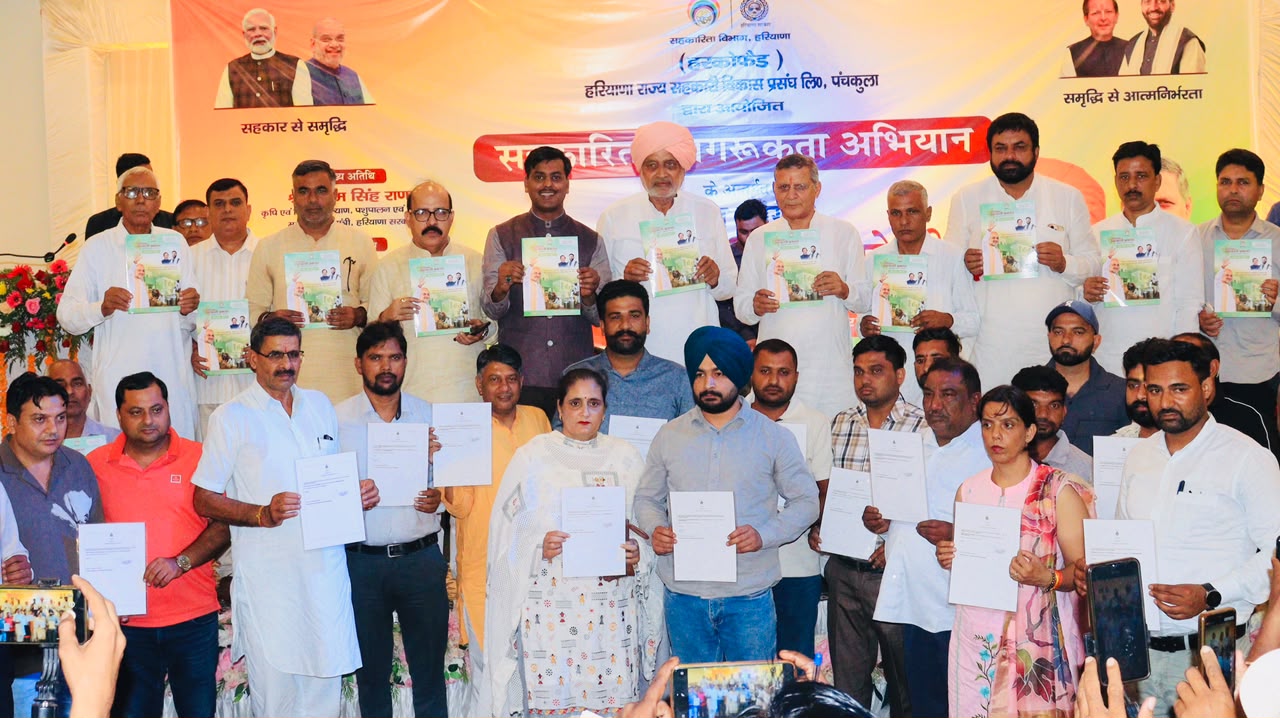
A district-level cooperative awareness seminar in Jagadhri brought farmers, rural representatives and officials together, with Agriculture and Farmers’ Welfare Minister Shyam Singh Rana calling for wider participation in the cooperative movement and greater adoption of natural farming practices.
Cooperation Linked to the Goal of a Developed India
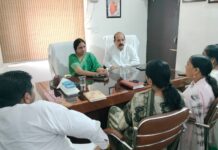
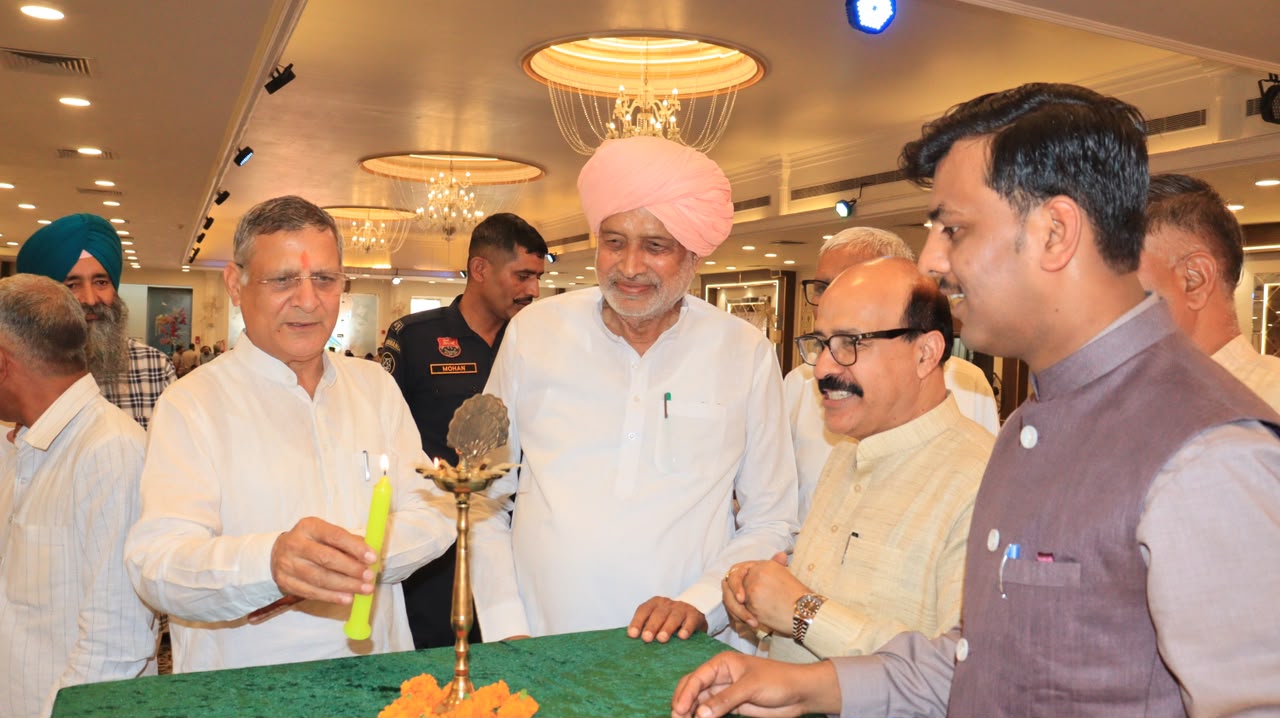
The seminar was organised by the Haryana State Cooperative Development Federation Ltd. at Gupta Palace, Jagadhri, as part of a cooperative awareness campaign. Rana attended as the chief guest, while former Haryana Cabinet Minister Kanwar Pal was the special guest. The organisers welcomed both guests with shawls and idols of Lord Ganesha before the programme began with the ceremonial lighting of the lamp.
Addressing the gathering, Rana said cooperation would have an important role in the effort to build a developed India by 2047. He said collective economic participation could strengthen farmers and other sections of society, linking the cooperative approach with the broader objectives of prosperity and self-reliance.
Minister Calls for Greater Focus on Natural Farming
Rana also spoke about rising cultivation costs and the pressure created by expensive agricultural inputs. He said farmers should increasingly explore natural farming and reduce dependence on chemical fertilisers and pesticides where suitable. According to the minister, lowering input costs while maintaining farm productivity can support efforts to improve farm incomes.
He said changing agricultural conditions make sustainable farming practices an important area of attention. Rana pointed to Haryana’s largely level agricultural land as an advantage for experimenting with and expanding natural farming methods, while stressing that farmers need practical support and suitable schemes during the transition.
The minister said the state government is providing assistance for agricultural machinery and access to agricultural credit through various schemes. He also referred to government initiatives aimed at encouraging natural and organic farming and said cooperative institutions could play a role in helping farmers access resources and strengthen their economic position.
‘Collective Strength’ Can Improve Farmers’ Market Position
Former Cabinet Minister Kanwar Pal said cooperation should be viewed as a practical mechanism through which farmers can improve their collective bargaining strength. He said an individual farmer may face limitations while dealing alone in the market, whereas participation in a cooperative society can provide access to institutional support, credit and organised marketing opportunities.
Kanwar Pal also urged farmers to reduce excessive dependence on chemical inputs and consider natural farming. He said cooperative work cannot be undertaken by governments alone and called for wider participation by citizens, farmers and rural communities.
He also highlighted the role of women’s self-help groups in creating livelihood opportunities. According to him, women associated with such groups are taking up self-employment and contributing to household incomes, demonstrating another area where collective action can support economic participation.
Technology and Innovation Also Highlighted
Kanwar Pal said the cooperative movement now needs to be strengthened with modern technology and innovation. He said digital tools, improved management practices and new approaches could help cooperative institutions respond more effectively to changing economic and agricultural needs.
Awareness Campaign Being Conducted Across Districts
HARCOFED Publicity and Education Officer Saurabh Attri briefed participants about the cooperative movement and said the federation is conducting cooperative awareness programmes across districts under the guidance of Cooperation Department Principal Secretary Pankaj Yadav, Registrar of Cooperative Societies Subhita Dhaka and HARCOFED Managing Director Naresh Goyal.
The programme was attended by district cooperative coordinator and HSCARDB vice-chairman Ramjatan Gurjar Damauli, BJP district president Rajesh Sapra, Jagadhri SDM Vishwanath, district BJP general secretary Praveen Khadri, Rampal Numberdar and farmers and rural residents from several villages.
Cooperative Institutions as a Support System for Rural Communities
Speakers at the seminar said cooperative societies can provide a platform for farmers and rural households to work collectively rather than negotiating separately for every requirement. Access to organised procurement, credit facilities, technical guidance and market linkages can help members make better use of available resources, subject to the rules and services of the respective cooperative institutions.
The discussion also underlined the need to make cooperative institutions more responsive to young people and women in rural areas. Self-help groups and other collective models can create opportunities for skill development, small enterprises and additional sources of household income. The participants were encouraged to view cooperation as a continuing economic activity rather than only as a government-supported programme.
Rana said the broader objective is to create stronger rural communities by combining collective action with modern agricultural practices. He stressed that farmers need to remain informed about available schemes, financial support and newer methods of cultivation so that decisions on production costs and farm management can be taken with better information.
ALSO READ
KVK Damla Inspects Paddy Demonstrations and Farmer Field Trials in Yamunanagar
RELATED NEWS
KVK Damla Focuses on Climate-Resilient Farming and Scientific Advisory Support
The seminar focused on cooperative participation, farmer self-reliance, natural farming and the use of technology and collective institutions to support rural economic activity.
POD/DESK