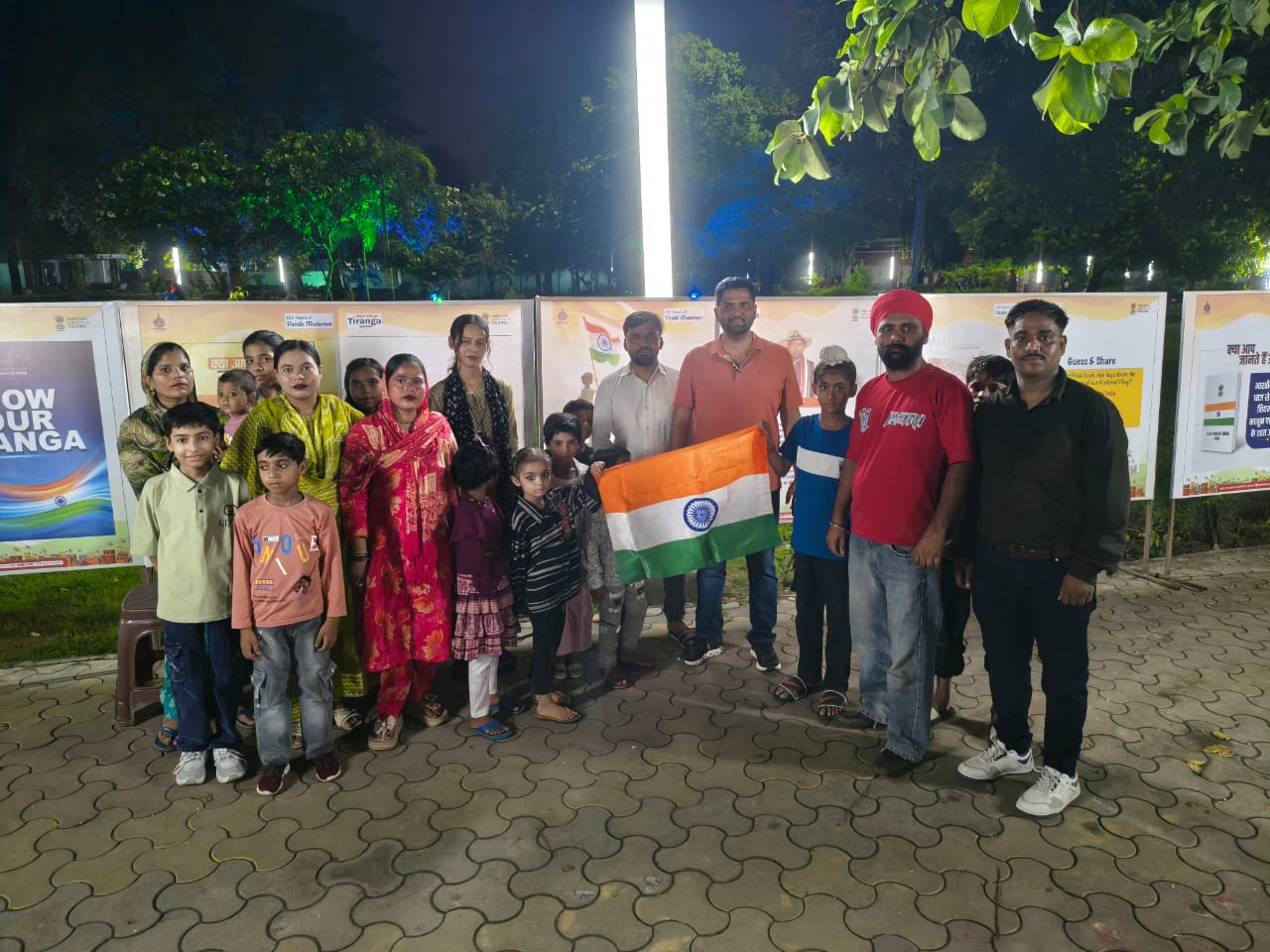
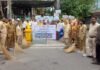
Residents visit the Tricolour exhibition organised at Nehru Park, Yamunanagar, under the ‘Har Ghar Tiranga’ campaign.
Yamunanagar civic body uses ‘Har Ghar Tiranga’ exhibition to spread awareness about national flag, its history and Flag Code
YAMUNANAGAR | PEN OF DEMOCRACY NEWS DESK
The Municipal Corporation Yamunanagar organised a grand tricolour exhibition at Nehru Park under the ‘Har Ghar Tiranga’ campaign, drawing the attention of residents and youngsters towards the history, significance and proper use of the national flag.
Municipal Commissioner Mahabir Prasad inaugurated the exhibition and took a detailed tour of the displays. The programme was organised under the directions of Mayor Suman Bahmani and Municipal Commissioner Mahabir Prasad to encourage citizens to actively participate in the ‘Har Ghar Tiranga’ campaign, which will continue till August 17.
The main attraction of the exhibition was the historical journey of the Indian national flag, showcasing its evolution from 1906 to 1947. The displays presented the various stages through which the national flag evolved before the present Tricolour was adopted.
Visitors were also informed about the significance of the three colours of the national flag, the importance of the Ashoka Chakra and key provisions of the Flag Code governing the display and hoisting of the Tricolour.
The exhibition also highlighted important occasions on which the national flag was displayed and included information related to patriotism and the national song ‘Vande Mataram’. Through the exhibition, citizens were encouraged to understand the national flag not merely as a symbol, but as an expression of national pride, unity, sacrifice and responsibility.
Municipal Commissioner Mahabir Prasad appealed to residents to visit Nehru Park in large numbers and actively participate in the ‘Har Ghar Tiranga’ campaign by hoisting the national flag at their homes.
He said the Tricolour represents the pride, self-respect and sacrifices associated with the nation. Every citizen should be aware of its history as well as the rules governing its respectful display.
The exhibition witnessed enthusiasm among local residents and young people. Chief Sanitation Inspector Govind Sharma, Swachh Bharat Mission IEC experts Akash Kumar and Durgesh Kumar, Pankaj and several other municipal officials and employees were present.
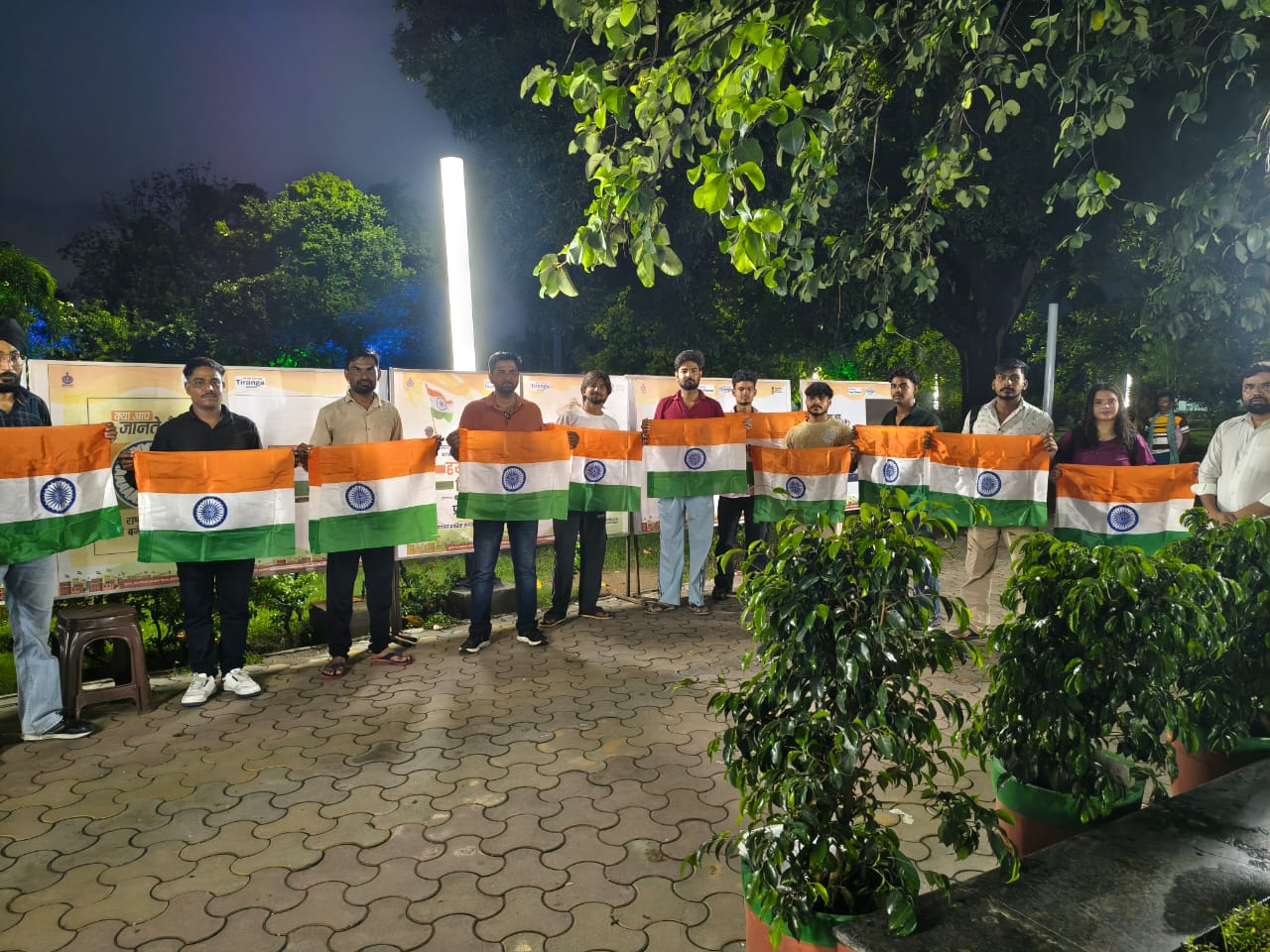
Municipal employees and residents display the Tricolour during the ‘Har Ghar Tiranga’ exhibition at Nehru Park.
From 1906 to 1947: The evolution of the Tricolour
Chief Sanitation Inspector Govind Sharma explained that the first known national flag associated with India’s freedom movement was hoisted at Parsi Bagan Square in Kolkata on August 7, 1906, featuring red, yellow and green stripes.
In 1907, Bhikaji Cama hoisted a flag in Germany featuring the words ‘Vande Mataram’. In 1921, Pingali Venkayya presented a red-and-green flag before Mahatma Gandhi, which was later modified with white and the spinning wheel representing self-reliance.
In 1931, the Congress adopted a saffron, white and green flag with the spinning wheel as its official flag. In 1947, the spinning wheel was replaced by the Ashoka Chakra, leading to the adoption of the Indian national flag in its present form.