Kumari Selja seeks white paper on Uttarakhand’s 1,320 MW power purchase deal
CHANDIGARH | PEN OF DEMOCRACY NEWS DESK
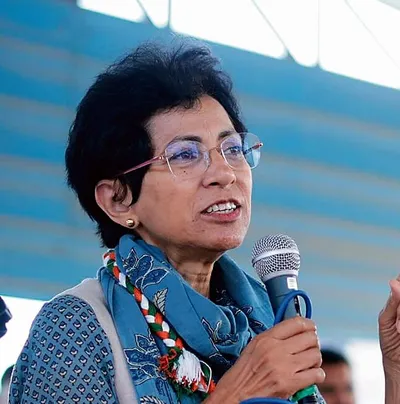
Kumari Selja has sought a white paper on Uttarakhand’s 1,320 MW long-term power procurement arrangement.
Congress leader questions the cancellation of an earlier UJVNL-THDC proposal and seeks disclosure of tender changes, financial calculations and the proposed long-term agreement.
Sirsa MP, former Union minister, Congress general secretary and CWC member Kumari Selja has demanded that the Uttarakhand government issue a white paper on the state’s proposed long-term procurement of 1,320 MW of electricity. She has sought public disclosure of the original and revised tender conditions, documents relating to the earlier UJVNL-THDC proposal, financial calculations behind the procurement and the terms of the proposed power supply agreement.
The Uttarakhand Cabinet approved a 25-year power procurement arrangement with Adani Power in August 2026 for 1,320 MW of coal-based electricity at a tariff of ₹5.746 per unit, according to published reports. The proposed generating project is in Chhattisgarh.
Selja Questions Decision-Making Process
Selja has questioned why the earlier proposal involving UJVNL and THDC was discontinued and why extensive changes were subsequently made to the tender conditions. She has asked the government to identify the authorities and experts whose recommendations led to the reported changes in the bidding framework.
Official regulatory records provide part of the background. In proceedings before the Uttarakhand Electricity Regulatory Commission, UPCL stated that an earlier 1,181 MW thermal project involving THDC India Limited and UJVN Limited was not expected to be commissioned within the required timeframe. The proposal was subsequently withdrawn and UPCL moved towards a fresh tender for 1,320 MW of coal-based power.
A central issue raised by Selja is the reported modification of 84 of the 86 tender conditions. She has asked the state government to place the original and amended provisions in the public domain so that the effect of the changes on eligibility and competition can be assessed.
Recent political statements have also questioned whether the modifications affected the competitive framework. These are allegations made by opposition leaders; the government’s position, as reported after the Cabinet decision, is that Adani Power emerged as the lowest bidder through tariff-based competitive bidding.
The official regulatory record confirms that UPCL sought approval for modifications, deviations or clarifications in specific clauses of the bidding documents for the 1,320 MW long-term procurement process.
Location, Transmission and Consumer Costs
Selja has also questioned the decision to permit the generating plant to be established outside Uttarakhand. She has asked the government to explain the financial implications for consumers, including transmission and related costs associated with bringing power into the state.
She has argued that the public should be given a clear calculation of the eventual cost of electricity rather than being provided only with the quoted generation tariff.
25-Year Commitment Under Scrutiny
The duration of the proposed agreement is another issue highlighted by Selja. The Cabinet authorised UPCL to enter into a 25-year power supply arrangement with Adani Power, subject to the required contractual and regulatory processes.
Selja has referred to an estimated overall financial size of around ₹1.66 lakh crore over the contract period and has argued that the complete calculation behind the figure should be made public. The figure is part of the political criticism surrounding the agreement and should be considered alongside the stated tariff, contracted capacity and future procurement requirements.
Demand for Full Disclosure and Inquiry
Selja has demanded publication of the original tender documents, revised conditions, files concerning the withdrawal of the UJVNL-THDC proposal, financial assessments, tariff calculations and the complete terms of the proposed agreement. She has also sought an independent and impartial inquiry into the procurement process.
The broader debate concerns Uttarakhand’s long-term power requirements, the role of public-sector entities in electricity procurement and the financial implications of long-duration power contracts. The state government’s reported position is that the procurement is intended to strengthen energy security and provide a stable long-term supply.
Selja has maintained that the people of Uttarakhand should have access to the complete record before the state enters into such a long-term financial arrangement and has demanded that every major document relating to the procurement be made public.