Kumari Selja Seeks Full Disclosure of
Form-7 Records and Election Software Process
Congress leader questions the handling of voter-roll objections in Uttarakhand
and seeks independent scrutiny of electoral data and software processes
CHANDIGARH | PEN OF DEMOCRACY NEWS DESK
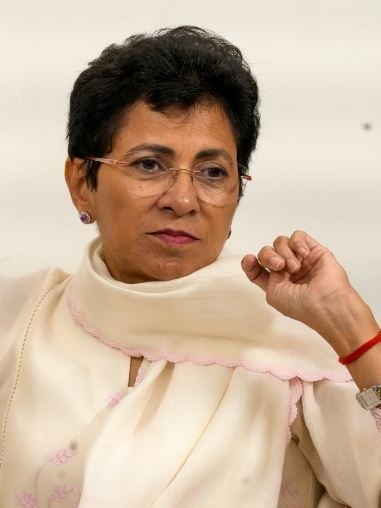
Sirsa MP and Congress general secretary Kumari Selja has called for the Election Commission to place detailed records concerning Form-7 applications, voter-list revisions and the role of electoral software in the public domain, saying questions raised over the process require clear factual and procedural explanations.
Sirsa MP, former Union minister, Congress general secretary, CWC member and Uttarakhand in-charge Kumari Selja has said questions raised by Leader of Opposition in the Lok Sabha Rahul Gandhi about the functioning of the Election Commission, electoral rolls and election-related software should be addressed through records and procedural explanations rather than being dismissed as political allegations.
Selja was referring to concerns surrounding the Special Intensive Revision (SIR) of electoral rolls and the processing of Form-7 applications in Uttarakhand. Form-7 is used for seeking deletion of a name from an electoral roll. Recent reports have also highlighted differences recorded by two Election Commissioners on several matters connected with electoral-roll management and the Commission’s
She said the Election Commission should make public the objections reportedly recorded by the two commissioners, the decisions taken on those objections and the records relating to the role of software in the electoral-roll process.
Questions over Form-7 applications in Uttarakhand
According to figures cited by Selja, 42,030 Form-7 applications during the Uttarakhand SIR process were shown in the name of Assistant Electoral Registration Officers (AEROs), while another 22,443 were shown in the name of Electoral Registration Officers (EROs).
Selja said Form-7 applications relate to objections seeking deletion of names from electoral rolls and questioned how such a large number of applications could appear in the names of officers who are responsible for examining and deciding electoral-roll matters.
She compared the figures with the number of such applications attributed to EROs and AEROs in Punjab, which she cited as 215, and said the difference required a clear explanation from the election authorities. Her demand is that the complete process and records behind the figures should be placed before the public.
ALSO READ
Kumari Selja Raises Electoral Transparency Issues at Bhattu Congress Convention
95,000 Form-7 applications and the software question
Selja also referred to the recent clarification from the Uttarakhand Chief Electoral Officer’s office that around 95,000 Form-7 applications were automatically generated after voters classified as “ineligible” following the logical-discrepancy verification process were marked accordingly through the Election Commission’s online system.
The Uttarakhand CEO’s office has explained that the cases involved voters who either did not provide the required documents during the verification process or did not appear for the hearing themselves or through a family member. Once the concerned ERO or AERO marked such a case as “ineligible” on ECI-Net, Form-7 was automatically generated for deletion, according to the official explanation.
The official clarification is significant because it indicates that the Form-7 applications were generated after an officer’s eligibility decision in the concerned cases, rather than simply being created at the initial stage when a software flag was raised. The CEO’s office has also said that “logical discrepancy” is a software-generated flag and does not, by itself, establish that a voter is ineligible. :contentReference[oaicite:3]{index=3}
Selja, however, has sought a more detailed public record of the process. She has asked the Election Commission to disclose the digital logs, reasons, dates, authorised officials and details of hearings associated with the automatically generated applications.
Demand for independent examination of electoral data
The Congress leader said similar questions about additions and deletions in voter lists, the use of centralised software and the handling of electoral data had earlier been raised by Rahul Gandhi in relation to Haryana and Maharashtra. The Election Commission has rejected or disputed several allegations made by Gandhi concerning electoral processes and has issued explanations on aspects of the voter-roll revision process.
Selja said that, in her view, public confidence would require more than competing political statements and that the relevant records should be examined independently. She called for scrutiny of electoral data, application procedures, system records and changes made to voter lists in Haryana, Maharashtra and Uttarakhand.
Her demand includes examination of application records and digital logs, as well as an independent technical and judicial review of the processes used to add, retain or remove names from electoral rolls.
POD ELECTION & DEMOCRACY
Electoral-roll revision involves both the removal of ineligible entries and the protection of eligible voters’ registration. The current debate concerns how software-generated flags, officer-level verification, notices, hearings and final decisions are linked within the revision process.
ECI clarification and the role of verification
The Election Commission’s recent public position provides an important part of the context. In Uttarakhand, officials have said that voters classified as ineligible after the required verification and hearing process can seek inclusion through Form-6. The final electoral roll in the state is scheduled to be published on October 3, while the claims and objections process remains underway.
At the national level, the Election Commission has also said that its official orders, decisions and administrative directions carry legal authority and that differences of opinion and internal observations are part of deliberative institutional processes. Reports, however, have documented written objections by Election Commissioners Sukhbir Singh Sandhu and Vivek Joshi on several electoral-roll and technology-related issues.
The reported objections and the Commission’s response are separate from the specific Form-7 figures cited by Selja. The latter will need to be assessed against official records showing how the applications were generated, processed and decided.
Selja calls for safeguards before deletion of names
Selja said electoral-roll purification is necessary, but argued that an eligible citizen should not lose voting rights because of a technical error, an opaque software process or an automated administrative step.
She called for adequate notice, an opportunity for personal hearing and a reasoned order before any eligible voter’s name is removed. She also demanded that Form-7 applications be disclosed constituency-wise and that the overall process be subjected to an independent audit.
According to Selja, the Election Commission’s constitutional responsibilities include conducting elections as well as maintaining electoral rolls in a manner that protects the voting rights of eligible citizens. Her demand is that the records behind the current controversy be made sufficiently transparent for the public and relevant authorities to examine the process independently.
RELATED READING
More political and public-affairs reports from Pen of Democracy
EDITORIAL NOTE & READER’S NOTE
This report presents statements and demands made by Kumari Selja alongside publicly reported information and the Election Commission’s available explanations. Claims concerning electoral irregularities, software processes or internal objections should be distinguished from established findings. Readers may consider the underlying official records, responses and subsequent proceedings when assessing the issues.
POD/DESK