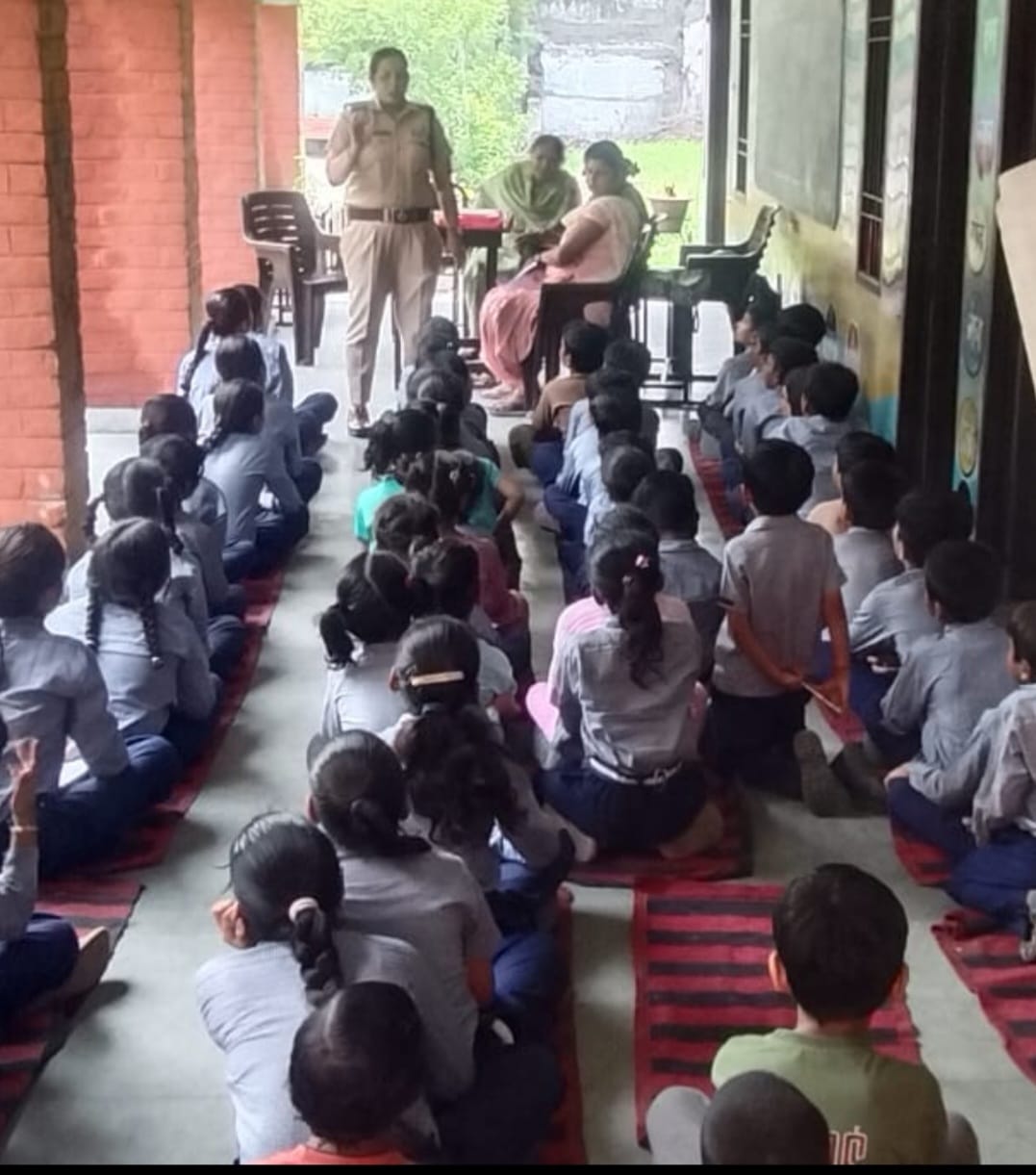
Safe City Team ASI Neelam interacts with students during a child safety awareness programme at a government primary school in Yamunanagar.
Safe City Team Explains Good Touch, Bad Touch, Emergency Helpline 112 and Cyber Safety to Young Students
YAMUNANAGAR / PEN OF DEMOCRACY NEWS DESK
The Yamunanagar Police continued its child safety and awareness outreach programme by visiting educational institutions and providing students with practical information about personal safety, emergency assistance and responsible behaviour in potentially risky situations.
As part of the initiative being conducted under the guidance of Superintendent of Police Kamaldeep Goyal, teams of the district police are regularly reaching out to students in schools and other educational institutions to make children more aware of safety measures and the resources available to them in case they face a difficult or threatening situation.
In the latest awareness programme, ASI Neelam of the Safe City Police Team visited a Government Primary School in Yamunanagar and interacted with students on several issues directly related to their personal safety.
The session was designed to communicate important safety messages in language that children could easily understand. Rather than limiting the programme to general advice, the police team focused on situations that children may encounter in everyday life and explained how they should respond if they feel uncomfortable, threatened or unsafe.
One of the key subjects discussed during the programme was the difference between good touch and bad touch.
ASI Neelam explained to the students that they should understand the concept of personal boundaries and remain aware of the importance of protecting their private body parts. She told them that if anyone attempts to touch them inappropriately or behaves with them in a manner that makes them feel uncomfortable, they should not remain silent.
Children were encouraged to immediately tell their parents, teachers or another trusted adult whenever they experience inappropriate behaviour.
The police officer emphasised that children should not feel guilty or afraid about reporting uncomfortable or inappropriate behaviour. Instead, they should understand that seeking help from a trusted adult is an important step towards protecting themselves.
The awareness session also addressed the need for children to remain cautious around strangers. Students were advised not to follow unknown people or accept offers, instructions or inducements from people they do not know.
They were told that if they find themselves in an unfamiliar or potentially dangerous situation, they should avoid panic and seek assistance from a trusted adult or the appropriate emergency service.
The police team stressed that the safety of children must remain a priority and that incidents involving inappropriate behaviour should not be hidden because of fear, embarrassment or uncertainty.
Another important part of the programme was information about the 112 emergency helpline.
ASI Neelam explained that children and members of the public can contact 112 when they require police assistance during a genuine emergency. Students were informed about the purpose of the emergency service and were also advised that the helpline should be used responsibly and primarily in situations where immediate assistance is genuinely required.
The session also introduced students to basic aspects of cyber safety.
With children increasingly using smartphones, digital platforms and online services, police officials highlighted the importance of remaining cautious while interacting with unknown people online.
Students were advised not to share sensitive personal information with strangers and to inform their parents or teachers if they come across suspicious messages, online interactions or activities that make them uncomfortable.
The police team also encouraged students to report suspicious activities rather than attempting to deal with potentially dangerous situations on their own.
Officials said that awareness at an early age can play an important role in helping children recognise unsafe situations and respond appropriately.
The objective of such programmes is not to create fear among children but to provide them with practical knowledge that can help them make safer decisions.
Police officials explained that children who are aware of basic safety principles are better prepared to communicate their concerns and seek assistance when necessary.
The awareness programme also encouraged students to maintain open communication with their parents, teachers and other trusted adults.
The police team emphasised that children should feel comfortable discussing any incident or behaviour that makes them uncomfortable. Early communication can help adults understand the situation and take appropriate steps to protect the child.
Teachers at the school appreciated the initiative and the information provided by the police team.
School staff said that awareness programmes of this nature are useful because children often have questions about personal safety but may not always know whom they should approach for guidance.
The students also participated enthusiastically in the session and asked questions about situations that may affect their safety.
The interaction provided the police team with an opportunity to address students’ concerns directly and explain safety measures in a simple and practical manner.
The Yamunanagar Police said that the awareness programme is part of a continuing district-wide effort to connect law enforcement with educational institutions.
Police teams are visiting schools and other institutions to promote awareness among students about personal safety, cyber security, emergency assistance and responsible behaviour.
Officials said that safety education should begin at an early age and continue through regular interaction between children, schools, parents and law-enforcement agencies.
The police also highlighted the importance of cooperation between educational institutions and families. While schools can provide children with knowledge and guidance, parents and guardians also have an important role in ensuring that children feel secure enough to discuss their concerns openly.
The Safe City initiative is intended to strengthen awareness and confidence among children and other vulnerable groups. Through direct interaction, police officials seek to make safety information more accessible and understandable.
The latest programme at the Government Primary School also reinforced the message that children have the right to feel safe at home, in school, in public places and in the digital environment.
Police officials said that children should never hesitate to seek help if they feel threatened or uncomfortable.
The district police further stated that similar awareness programmes would continue to be organised at educational institutions across Yamunanagar.
The objective is to create a safer environment for students while making them aware of their rights, personal boundaries, emergency services and basic precautions that can reduce their vulnerability to unsafe situations.
The police said that awareness and timely communication are important components of child safety. By educating children about good touch and bad touch, stranger awareness, cyber safety and emergency assistance, the department aims to help students become more confident in recognising and reporting potential risks.
The programme concluded with an appeal to students to remain alert, communicate openly with trusted adults and seek assistance whenever they encounter a situation that threatens their safety.
The Yamunanagar Police reiterated that its awareness campaign will continue across educational institutions in the district, with the aim of ensuring that students receive not only academic education but also essential knowledge about personal safety and responsible citizenship.