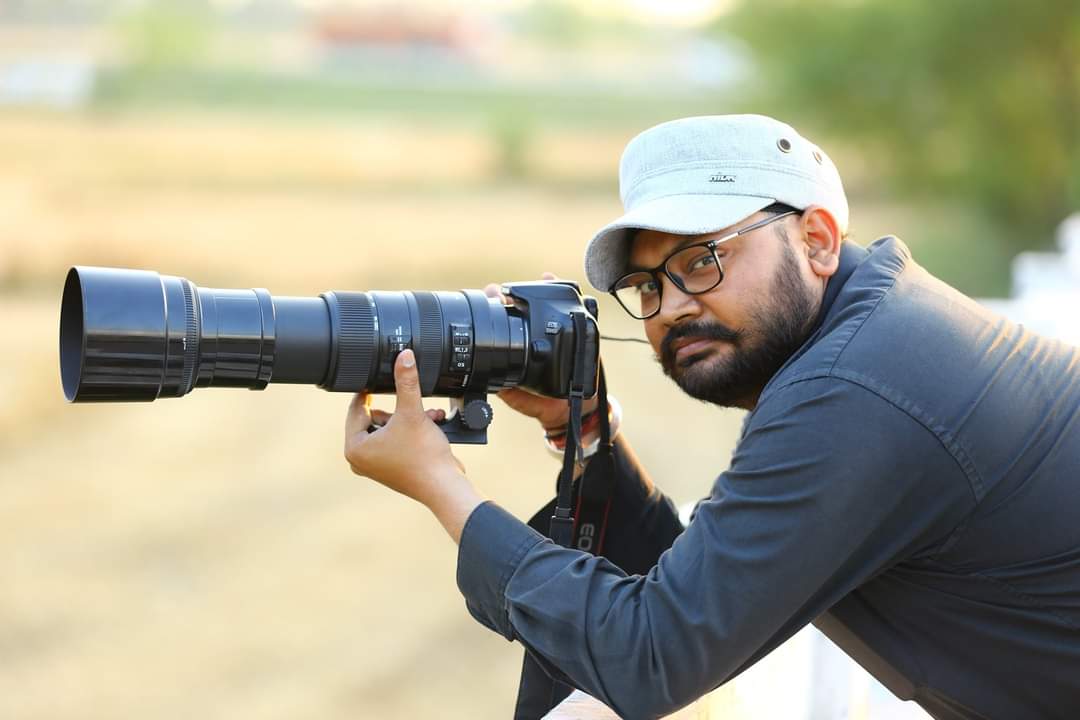
Photojournalist Gurpreet Singh speaks about the art and evolving technology of photography on World Photography Day.
Photojournalist Gurpreet Singh highlights the power of photography to preserve memories, emotions and stories
YAMUNANAGAR | PEN OF DEMOCRACY NEWS DESK
Photographs are not merely visual representations of people, places or events; they preserve precious moments that gradually become part of the past and can never return. A single photograph can tell an entire story without saying a word. This, according to photojournalist Gurpreet Singh, is the greatest beauty and strength of photography.
Speaking on the occasion of World Photography Day, Gurpreet Singh said photography is a global celebration of art, creativity and technology. Sharing his experiences from the field, he said that photographs have the extraordinary ability to stop time. As life continues to move forward and days gradually become memories, an old photograph can bring those moments alive once again before our eyes.
He said photography has evolved into a remarkable combination of art, technology, observation and creativity. The development of modern cameras, digital technology and smartphones has made photography more accessible than ever before. Today, almost everyone carries a camera in the form of a smartphone, allowing people to instantly capture important events, personal memories and everyday moments.
However, Gurpreet Singh stressed that photography is not simply about pressing a camera button. The ability to recognise an important moment and present it effectively requires observation, patience, creativity and an understanding of the subject.
He said photographs have always played a crucial role in journalism and publishing. Whether it is a newspaper or a magazine, photographs are an important part of its presentation. A powerful image can make a news report more compelling, but its importance goes much beyond visual appeal. In many situations, a photograph communicates the circumstances, emotions and atmosphere of an event more effectively than hundreds of words.
“A photograph can sometimes communicate what words cannot,” he said, explaining why photojournalism remains an important part of the news industry.
Gurpreet Singh also recalled the contribution of his mentor Sanjay Jha, saying that World Photography Day is an appropriate occasion to acknowledge the people who guide photographers in learning and understanding the art. He said that photography is a continuous learning process and that guidance from experienced professionals helps a photographer understand the finer aspects of the craft.
According to him, elements such as framing, lighting, angle, background, composition and understanding the subject can transform an ordinary photograph into an exceptional one. A technically perfect image may still lack impact if it fails to communicate an emotion or capture the right moment.
He explained that the world of photography has undergone a dramatic transformation over the decades. The journey began with traditional film cameras and gradually moved towards digital cameras, DSLRs, mirrorless cameras and, eventually, highly advanced smartphone cameras. Every technological development has made photography faster and more accessible while also opening new possibilities for creativity.
The growth of social media and digital platforms has further transformed the profession. Photographers can now showcase their work to audiences across the world without depending entirely on traditional publishing platforms. Digital platforms have created opportunities for photographers to build their portfolios, develop professional networks and find clients in different parts of the country and abroad.
Gurpreet Singh, however, emphasised that expensive equipment alone does not make someone a good photographer. A photographer with a strong understanding of light, composition, framing and timing can create remarkable images even with an ordinary smartphone.
“Technology provides the tools, but it is the photographer’s vision that brings a photograph to life,” he said.
He explained that photographers need to develop the ability to look beyond what is immediately visible. An ordinary street, a child’s expression, an elderly person’s face, a farmer working in a field or an unexpected moment during a public event can become a powerful photograph if the photographer recognises its emotional or storytelling value.
According to him, timing is one of the most important qualities in photography. The difference between an ordinary image and an unforgettable photograph can sometimes be a fraction of a second. A good photographer must therefore remain alert and prepared to capture the moment when everything comes together.
Photography also offers numerous career opportunities for young people today. Gurpreet Singh said that skilled photographers are increasingly required across a wide range of sectors, including digital media, newspapers, magazines, advertising, wildlife photography, fashion photography, wedding photography, product photography and social media content creation.
The expansion of digital journalism has particularly increased the demand for professionals who can combine photography with storytelling. Photojournalists today are expected not only to capture images but also to understand the context of an event and present it responsibly.
He said aspiring photographers should therefore develop both technical and creative skills. Learning how cameras work is important, but equally important is understanding people, situations, light and emotions. A photographer must also learn to respect the dignity and privacy of people while documenting sensitive situations.
Gurpreet Singh described photography as an art of seeing the world from a different perspective. A good photographer can identify significance in moments that others may consider ordinary. This ability to observe and interpret everyday life gives photography its unique power.
He said the true value of a photograph often becomes visible with time. A picture that may appear ordinary when captured can become priceless years later because it preserves a person, place, relationship or moment that may no longer exist in the same form.
He added that photography also plays an important role in preserving history. Photographs document social change, cultural traditions, important public events and the everyday lives of people. In this sense, photographers become visual storytellers whose work can provide future generations with a window into the past.
The increasing popularity of mobile photography has also encouraged ordinary citizens to document their surroundings. While professional photography requires specialised knowledge and discipline, the availability of cameras on smartphones has made visual storytelling a part of everyday life.
Gurpreet Singh said young people interested in photography should focus on developing their own visual language and perspective rather than simply copying popular trends. Experimenting with different subjects, observing light, studying composition and learning from experienced photographers can gradually help them develop their individual style.
He emphasised that photography should ultimately remain connected to human emotions and storytelling. Whether a photograph appears in a newspaper, on a social media platform, in a magazine or in a family album, its lasting value comes from the story and emotion it preserves.
“We do not capture pictures; we capture moments.” This thought, he said, represents the essence of photography.
Photography, therefore, is much more than a technical process involving a camera. It is a combination of observation, creativity, patience, emotion and storytelling. It freezes moments that time cannot stop and preserves memories that might otherwise disappear.
On World Photography Day, Gurpreet Singh’s message underlines the enduring importance of the art: while technology will continue to evolve, the photographer’s ability to see, understand and capture a meaningful moment will always remain at the heart of great photography.