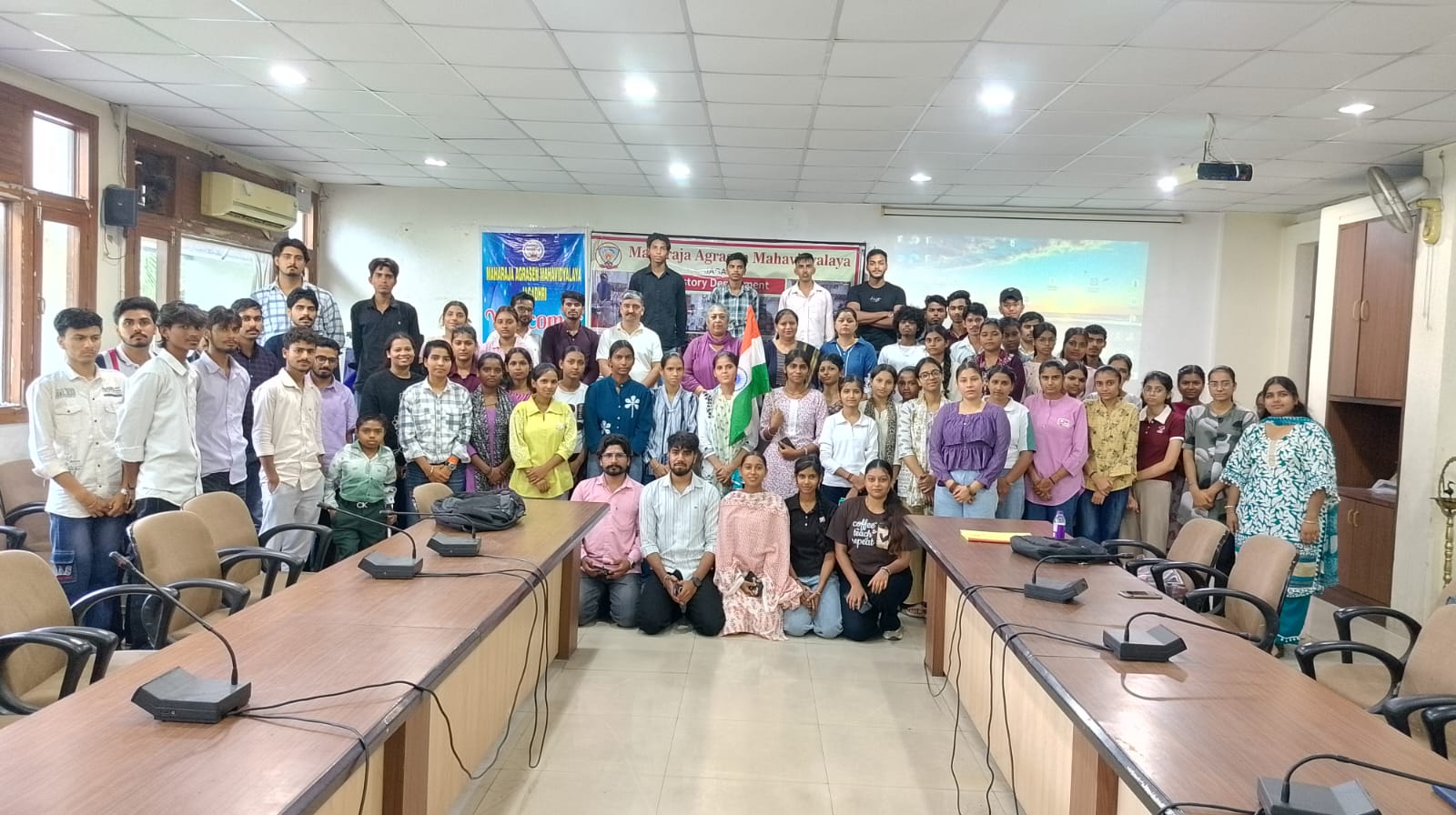
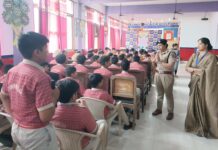
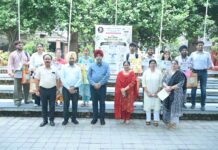
Students and faculty members attend the Partition Horror Remembrance Day programme at Maharaja Agrasen College, Jagadhri.
History Department organises special programme to recall the displacement, suffering and human tragedy of the 1947 Partition
JAGADHRI | PEN OF DEMOCRACY NEWS DESK
The History Department of Maharaja Agrasen College, Jagadhri, organised a special programme on the occasion of Partition Horror Remembrance Day (Vibhajan Vibhishika Smriti Diwas) on August 14 at 11 a.m. in the college conference hall. The programme was organised with the objective of acquainting students with the painful experiences associated with the Partition of 1947 and encouraging them to reflect upon its historical, social and human dimensions.
The programme focused on the displacement, suffering, violence, separation and immense human tragedy witnessed during the Partition. Through discussion, a special lecture and documentary screening, students were given an opportunity to understand how the political division of the subcontinent deeply affected ordinary families and communities. The event also highlighted the struggles and sacrifices of people who were forced to leave their homes, properties and familiar surroundings during one of the most difficult chapters of modern Indian history.
The programme was coordinated by Dr. Virendra Singh Dhillon, Head of the History Department, who delivered a special lecture on “Jagadhri and its Partition Experiences.” During his address, Dr. Dhillon elaborated on the experiences of the Jagadhri region during the Partition and discussed the local memories and social consequences associated with the historic event.
Dr. Dhillon explained that while Partition is often discussed in terms of political developments and geographical changes, its most profound impact was felt by ordinary people. Families were separated, communities were displaced and thousands of people had to rebuild their lives in completely unfamiliar surroundings. The memories of those experiences have continued to influence generations and form an important part of the social history of the region.
He particularly highlighted the importance of documenting and understanding Jagadhri’s own Partition experiences. Local histories, family memories and accounts of survivors can provide valuable insight into how national events affected communities at the grassroots level. Such memories, he said, help students understand history not merely through dates and political developments but through the experiences of people who actually lived through those events.
As part of the programme, a documentary titled “1947: Children of Partition – Five Survivors Tell Their Stories” was also screened. The documentary presented the experiences of Partition survivors and helped students understand the emotional impact of displacement, loss and separation. Their personal accounts provided a human perspective on an event that transformed the lives of millions of people.
The documentary screening also encouraged students to think about the consequences of violence and division. The organisers emphasised that remembering Partition should not be viewed merely as an exercise in recalling painful memories. Rather, it should help the younger generation understand the importance of peace, tolerance, mutual respect and social harmony.
The programme was presided over by Principal Dr. Karuna. In her presidential address, she said that the tragedy of Partition should not be considered merely an event belonging to the past. Its memories carry important lessons for the present and future generations.
Dr. Karuna stressed the need to draw lessons of human sensitivity, peace, harmony and social unity from the experiences of Partition. She said that preserving the memories of those who suffered is an important means of introducing future generations to the human side of history.
“Freedom is not just a word; freedom is a feeling,” she said, emphasising that the value of freedom becomes more meaningful when people understand the sacrifices and suffering that accompanied the country’s journey towards independence.
She called upon students to respect the freedom enjoyed today and to understand their responsibility towards maintaining peace and unity in society. She said that education should not only provide academic knowledge but should also develop empathy, sensitivity and a sense of responsibility among young people.
Students participated enthusiastically in the programme. The special lecture and documentary screening generated interest among them and provided an opportunity to reflect upon the experiences of people who lived through Partition. The programme also helped students understand how historical events can leave a lasting impact on society and future generations.
The organisers said that educational institutions have an important role in preserving historical memories and ensuring that young people understand the lessons of the past. Remembering the victims and survivors of Partition can help strengthen respect for human life and reinforce the importance of peaceful coexistence.
The event also underlined that historical remembrance should promote understanding rather than hatred. The painful memories associated with Partition can serve as a reminder of the devastating consequences of violence, intolerance and division. The organisers emphasised the need to preserve historical facts while encouraging students to work towards a more peaceful, inclusive and harmonious society.
Several faculty members and college employees contributed to the successful conduct of the programme. Mr. Rahul performed the responsibility of stage coordination and conducted the proceedings. Dr. Usha Devi, Professor Sapna and Professor Abhishek, along with other teaching and non-teaching staff members, remained present during the programme.
The participation of faculty members and students reflected the college’s effort to create an environment where important historical events can be discussed meaningfully. The programme provided students with an opportunity to connect classroom learning with personal memories and documentary accounts, thereby giving them a broader understanding of the Partition.
At the conclusion of the programme, participants paid tribute to the victims and survivors of the Partition. A collective commitment was expressed to uphold the values of peace, harmony, humanity, tolerance and social unity.
The organisers said that the purpose of remembering Partition is not simply to revisit the pain of the past but also to learn from it. The experiences of those who suffered during the Partition underline the importance of protecting social harmony and ensuring that future generations do not witness similar tragedies.
The programme at Maharaja Agrasen College, Jagadhri, therefore served as both a historical remembrance and a message for the future. Through the lecture on Jagadhri’s Partition experiences, the screening of survivor accounts and the reflections shared by the principal, students were encouraged to understand the human cost of division and the value of peaceful coexistence.
The event concluded with the message that history must be remembered with sensitivity and responsibility. The memories of Partition victims and survivors should inspire present and future generations to value freedom, respect humanity and work towards strengthening unity and harmony in society.