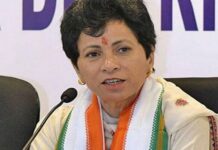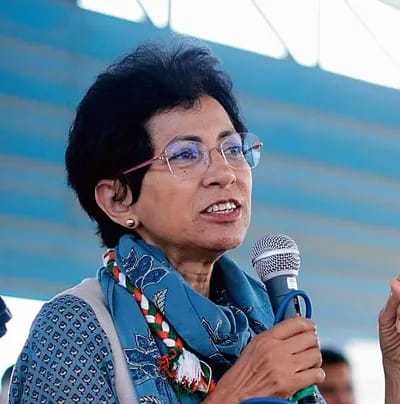
Congress leader and Sirsa MP Kumari Selja has raised concerns over the reported shortage of basic facilities in government schools across Haryana, saying children should not be compelled to study in conditions that undermine their comfort, dignity and learning environment.
Selja, a former Union Cabinet minister, AICC general secretary and member of the Congress Working Committee, said the condition of government schools deserved urgent attention even as Haryana was being projected as a developed state. Referring to a published report, she said nearly 3.80 lakh children in around 14,000 government schools were reportedly without desks and continued to sit on mats spread on classroom floors. These figures were cited in the statement supplied to Pen Of Democracy and have not been independently verified for this report.
She argued that access to education should mean more than enrolment and attendance. Children must also have a safe, clean and respectful environment in which they can concentrate on their studies. The reported shortage of desks, she said, raised questions about the availability of essential infrastructure in schools serving families with limited financial resources.
Basic facilities are essential for effective learning
Selja pointed out that government schools educate children from economically weaker households, including families of farmers, agricultural labourers, workers and other low-income groups. For many such families, public education is an important route to better opportunities, making the quality of school infrastructure a matter of wider social concern.
She also drew attention to complaints about the availability and maintenance of adequate, clean toilets for girls in some schools. Proper seating, safe school buildings, clean drinking water and sufficient teachers are among the facilities that authorities need to ensure, she said. Separate, functional toilets are particularly important for girls’ dignity, comfort and regular attendance.
Inadequate infrastructure can affect children’s comfort, attendance and ability to focus in class. Poor sanitation may create additional difficulties for girls and their families. Selja maintained that such concerns should be addressed through practical measures rather than left unresolved while broader development claims are made.
Selja seeks a time-bound plan for schools
The Congress leader urged the Haryana government to move beyond announcements and ensure that essential facilities reach schools where shortages have been identified. She called for a district-wise assessment of infrastructure gaps and a time-bound plan to address them.
She said priority should be given to providing desks and ensuring functional, clean toilets for girls. The assessment should also examine drinking water, school building safety and other basic requirements so that local deficiencies can be identified and addressed systematically.
Selja said children were the country’s future and that the promise of a developed India depended in part on whether every child received a meaningful opportunity to learn. In her view, the progress of a state should be measured not only by public announcements but also by the everyday conditions experienced by children in classrooms.
She added that the Congress had consistently advocated strengthening public education and expanding equal educational opportunities. The immediate priority, she said, should be to ensure that students in government schools can learn in a dignified environment, regardless of their family’s economic circumstances.