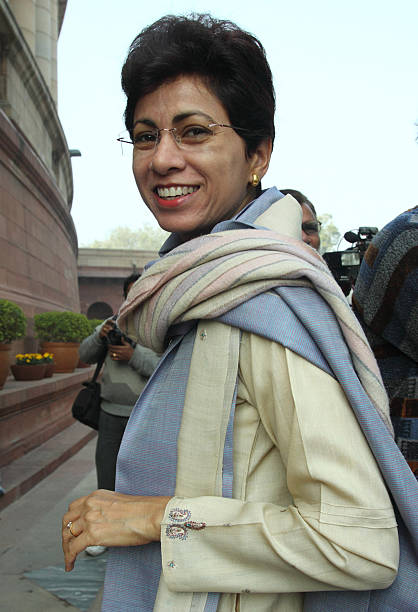
Kumari Selja Never Compromised on Her Principles
She Never Bowed Before the Obstruction and Betrayal of Leaders Who Called Themselves Veterans
CHANDIGARH | PEN OF DEMOCRACY
BY
Surendra Bhatia
Editor-in-Chief, Pal-Pal Sirsa
As Kumari Selja turns 64 on September 24, her supporters are organising blood donation camps and various social activities at several places in Haryana to mark her birthday.
This editorial traces Kumari Selja’s political journey and her long association with Sirsa.
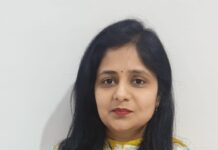
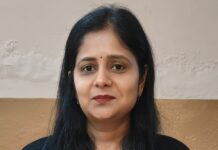
Kumari Selja, Sirsa MP, former Union minister, Congress general secretary and member of the Congress Working Committee, will turn 64 on September 24. On the occasion of her birthday, her supporters will organise blood donation camps and undertake various social activities at several places across the state.
Kumari Selja, who has been elected to Parliament six times so far, is the younger daughter of former Union minister Chaudhary Dalbir Singh. She has been elected three times from Sirsa and twice from Ambala to the Lok Sabha and has also served once as a member of the Rajya Sabha. She completed an M.Phil. in English literature from Panjab University and is associated with village Prabhuwala in Hisar district. She was born on September 24, 1962. In 1991, she was among the youngest members of Parliament and on July 2, 1992, became one of the youngest Union Deputy Ministers.
After being appointed president of the Haryana Pradesh Congress Committee, she left no stone unturned in bringing Congress workers across Haryana together. Today, Kumari Selja is actively working with Congress workers to take the alleged anti-people policies of the state government to the people.
Kumari Selja entered politics at the age of just 26 in 1988 after the death of her father and never looked back. During nearly 38 years of political life, she never bowed before the obstruction and alleged betrayal of leaders who called themselves veterans. Because of this determination, she remained a Union minister for around 13-and-a-half years and a Member of Parliament for nearly 24 years during her long political career. She has also served as president of the Haryana Pradesh Congress Committee.
In 1991, 1996 and 2024, Kumari Selja was elected three times from the Sirsa parliamentary constituency. Due to political circumstances, she contested from the Ambala parliamentary constituency and represented the seat in 2004 and 2009. In 2014, the Congress party sent her to the Rajya Sabha, where she remained a member until 2020. During this period, she served as Union Minister of State for about nine-and-a-half years from 2004 and later as a Cabinet minister. In 2019, she was appointed president of the Haryana Pradesh Congress Committee. At present, she is the Member of Parliament from Sirsa.
An Example of a Karma Yogi Personality
The way Kumari Selja has demonstrated a karma yogi personality is evident from her long political career. After becoming a Member of Parliament at the age of just 29, she gave priority to development works in the Sirsa parliamentary constituency between 1991 and 1996 and made efforts to ensure development in every field. This was why she was re-elected from Sirsa in 1996 despite an anti-Congress wave in the state.
An interesting point is that the Lok Sabha and Assembly elections were held together in 1996. Kumari Selja won her election by 15,147 votes, while Congress candidates were defeated in all nine Assembly constituencies falling under the Sirsa Lok Sabha constituency. Four of these candidates even lost their security deposits. Despite this, the people of the Sirsa parliamentary constituency voted for Kumari Selja on the basis of her work. There can be no greater evidence of her popularity.
Gave a New Direction to the Development of Sirsa
While representing the Sirsa parliamentary constituency, Kumari Selja facilitated several major development works. Among them, the conversion of Sirsa’s railway connection to broad gauge in 1994 was particularly important. At that time, broad-gauge railway lines had reached most parts of the country, but Sirsa, which had been connected to the railway network in 1884, remained cut off from the country’s major rail network because it was served by a narrow-gauge line.
Through Kumari Selja’s efforts, the Bathinda-Sirsa-Hisar-Bhiwani-Rewari rail section was converted from metre gauge to broad gauge. This enabled Sirsa to connect with different parts of the country on the railway map.
Kumari Selja became one of the youngest Union Deputy Ministers in the Central Government on July 2, 1992, and was given responsibility for the Education Department. Through her efforts, the announcement to open the regional centre of Kurukshetra University in Sirsa was made on December 11, 1992, and it was to be established at Phoolkan. However, due to political reasons, the regional centre could not be started during the tenure of the Chief Minister at that time. Later, with assistance from the Central Government, construction of the regional centre began on February 5, 1996. In due course, this regional centre developed into Chaudhary Devi Lal University.
At that time, the Education Department was under the Ministry of Human Resource Development and Kumari Selja also held responsibility for the Culture Department.
Development Works Undertaken with Public Support Alongside Government Funds
Between 1992 and 1996, Kumari Selja facilitated several important works in Sirsa. Some of these works are closed today because of negligence by subsequent governments and the bureaucracy. These include the Science Centre built at Bal Bhawan in Sirsa and the Late Leeladhar Dukhi Memorial.
With the cooperation of the National Science Centre, New Delhi, Kumari Selja established Haryana’s first Science Centre at Bal Bhawan in Sirsa with the objective of educating children through play. In addition, to make Bal Bhawan an attraction for children, she facilitated the installation of a toy train there and, with the cooperation of the Indian Air Force, a MiG-21 aircraft.
After the death of Sirsa litterateur Leeladhar Dukhi, a museum was constructed on the first floor of Bal Bhawan in 1997 from the Members of Parliament Local Area Development Fund to preserve the objects of archaeological importance collected by him. Many important objects associated with the Saraswati River were displayed in this museum.
Kumari Selja is described in the state as a symbol of clean politics. Whenever she got an opportunity, she made efforts to provide essential facilities to ordinary people. Along with government funds, she also facilitated several development works in Sirsa with public support. These included the establishment of a school for children with special needs and an old-age home. Because of these works, the people of Sirsa have regarded her as their leader for nearly 35 years.
ALSO READ
Kumari Selja Raises Farmers, Jobs and Electoral Transparency Issues at Bhattu Congress Convention
Following Her Father’s Footsteps, She Gave Priority to the Development of the Region
With the assistance of the Sports Department, Kumari Selja laid the foundation stone of the Chaudhary Dalbir Singh Indoor Stadium near Sirsa grain market on June 5, 1993. It was inaugurated in 1996. Built nearly three decades ago, this indoor stadium is still among the major indoor stadiums in Haryana.
In addition, Kumari Selja made funds available from the Central Government for the construction of a hockey stadium at Shri Jeevan Nagar and an auditorium at CMK College, Sirsa. This auditorium is also among the large auditoriums built in colleges in Haryana.
During her tenure, she also facilitated the establishment of a Shramik Vidyapeeth in Sirsa. Similar to today’s Skill India programme, the objective of the Shramik Vidyapeeth was to train unskilled workers and make them skilled. At that time, such institutions were established only in a few selected districts of the country.
While serving as the MP from Sirsa and Union Deputy Education Minister, Kumari Selja ordered the establishment of Kendriya Vidyalaya No. 2 in Sirsa in 1994. At that time, Sirsa was the first district in Haryana to have two Kendriya Vidyalayas. One school was located in the Air Force complex, while Kendriya Vidyalaya No. 2 was established on Kanganpur Road.
Reached the Victims After the Dabwali Fire Tragedy
On December 23, 1995, a tragic fire broke out in the city of Dabwali in Sirsa district, in which more than 442 people died. As soon as she received information about the incident, Kumari Selja reached Sirsa the same day by a BSF aircraft. She immediately made a special request to the then Prime Minister P. V. Narasimha Rao and invited him to visit Dabwali.
After the Prime Minister’s visit, several announcements were made for the victims of the Dabwali fire. Under this, a centre was established with assistance from the Central Government and the Rajiv Gandhi Foundation for the rehabilitation and support of the victims.
Her Tone Has Changed This Time
Despite reaching a high position in politics, Kumari Selja has always been regarded as a leader with a calm temperament, but this time her tone has changed. She now appears more forthright and aggressive than before and responds to her opponents in their own language. Earlier, opponents sometimes regarded her silence as her weakness, but this time she has entered state politics firmly and with greater assertiveness. This has also created considerable political activity in the Deshwali belt.
Her voice reaches the party high command, and today the high command cannot ignore her views. Along with the people of the state, the eyes of her opponents are also constantly fixed on her. The demand to make her president of the Haryana Congress is being raised from almost every district of the state.
She is not only senior in the Congress but also experienced. She has extensive experience of working as a Union minister. She learned the game of political moves and countermoves from her late father, Chaudhary Dalbir Singh. Politics came to her as a legacy and, considering her age, she can provide active leadership for at least another 20 years.
Raised Public-Interest and National Issues Prominently in the Lok Sabha While in Opposition
MP Kumari Selja has always been serious about issues concerning public interest and the national interest. She raised public problems prominently in the Lok Sabha. Along with issues related to the Sirsa parliamentary constituency, she also placed important subjects concerning the country before the House.
Despite being in the Opposition, Kumari Selja did not allow the pace of development in the Sirsa parliamentary constituency to stop between 2024 and 2026. Through her efforts, several important development projects, including four overbridges, were approved in the Sirsa Lok Sabha constituency. Along with this, she extensively reviewed public problems and pending development projects in Disha meetings held in Sirsa, Fatehabad and Jind districts. On the basis of her judgement and administrative experience, she gave several positive and public-oriented directions to officials. She placed special emphasis on completing approved schemes within the prescribed time, maintaining quality in development works and ensuring that the benefits of government schemes reached the last person.
Kumari Selja raised issues related to national highways, railways, farmers, health services, employees’ problems, education, reforms in the agricultural sector and regional issues in the House. She also placed state-level problems before Chief Minister Nayab Singh Saini. She cautioned the government regarding flood relief measures and from time to time urged the government to ensure cleaning of canals and drains and improve water drainage arrangements.
She raised the issue of the nuclear power plant under construction in village Gorakhpur of Fatehabad district in the Lok Sabha. While raising the Bhakra canal water dispute before the state and Central governments, she strongly demanded that Haryana be given its full share of water. Along with raising the issue of the poor condition of cities, she made efforts to resolve problems in Sirsa, Fatehabad and Jind districts. Through her efforts, stoppages of several trains were also ensured at Narwana.
RELATED READING
EDITORIAL NOTE & READER’S NOTE
This editorial is based on the source material provided for publication and presents the political journey, public work and views attributed to Kumari Selja in that material. References to political assessments, achievements or claims should be read in their stated context.
For readers: Political journeys are best understood by examining public records, parliamentary work, contemporary statements and developments in their proper historical context. Readers are encouraged to form their own views after considering the available evidence.
POD/DESK