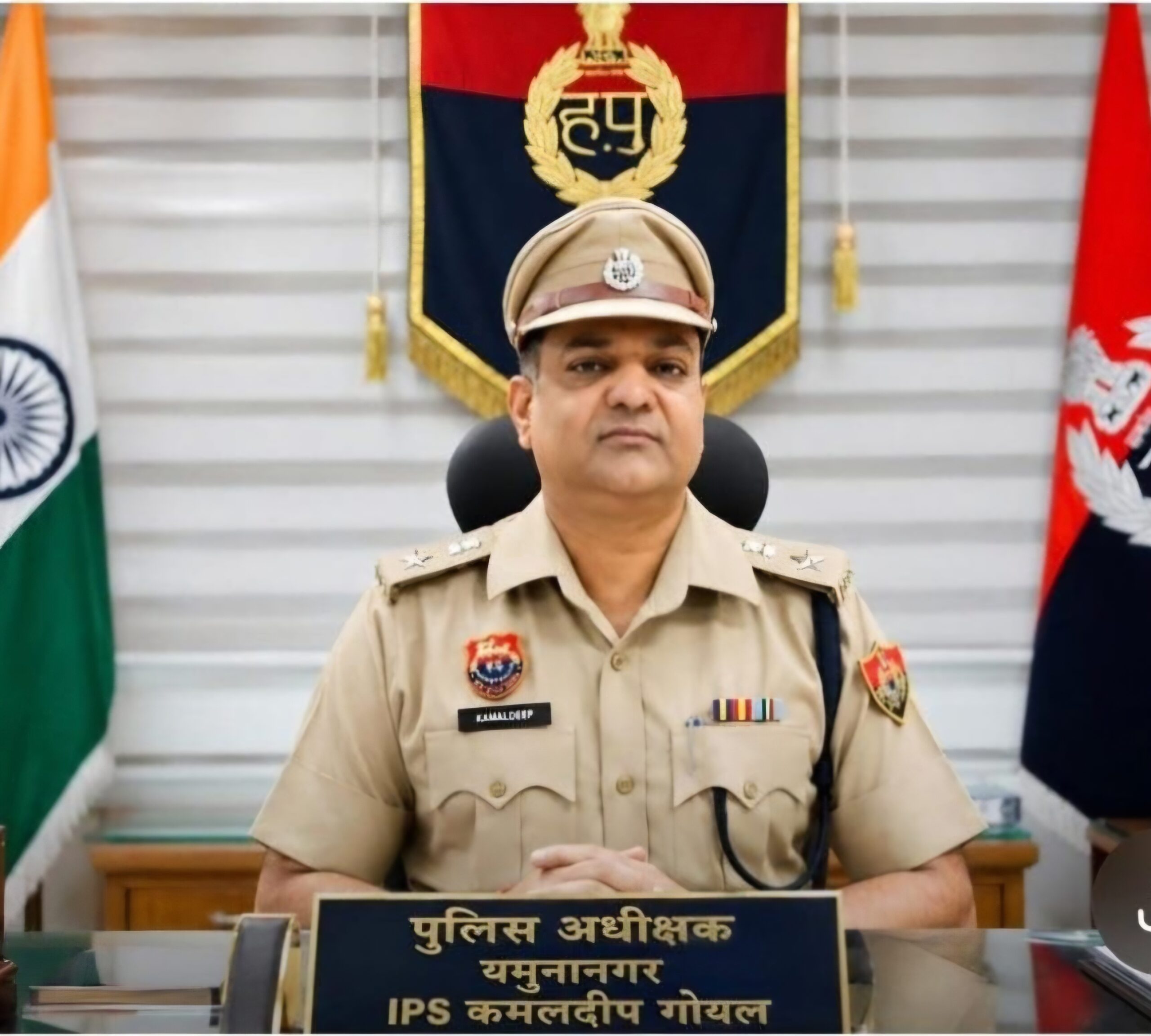
Yamunanagar Police issues a cyber safety advisory warning citizens against QR code scams and fraudulent digital payment requests.
SP Kamaldeep Goyal Says Fraudsters Are Misusing QR Codes to Steal Money; Citizens Advised Never to Scan a Code to Receive Payments
PEN OF DEMOCRACY NEWS DESK YAMUNANAGAR
The Yamunanagar Police has issued a detailed cyber safety advisory warning citizens against a growing form of online fraud involving QR codes. Superintendent of Police Kamaldeep Goyal, IPS, has urged people to remain extremely cautious while making or receiving digital payments, saying that cyber criminals are increasingly exploiting the widespread use of QR codes and digital payment platforms to deceive unsuspecting victims.
According to the police spokesman, the advisory has been issued as digital transactions continue to become an integral part of everyday life. While online payments have made financial transactions faster and more convenient, the increasing dependence on digital platforms has also created new opportunities for cyber criminals. Fraudsters are reportedly using social engineering techniques to persuade people to scan QR codes on the pretext of sending money to their bank accounts.
SP Kamaldeep Goyal said citizens should understand a basic but important principle of digital payments: a QR code can be used to make a payment, but a person does not need to scan a QR code in order to receive money. He advised residents to be particularly suspicious whenever an unknown person asks them to scan a QR code claiming that the process is necessary for receiving a payment.
The police explained that cyber criminals may approach potential victims by posing as buyers, customers, representatives of companies or other legitimate individuals. They may claim that they want to transfer money to the person’s bank account and then send a QR code through WhatsApp, social media or another digital communication platform.
The fraudster may then instruct the victim to scan the code to receive the money. However, when the victim scans the QR code and authorises the transaction, money can be deducted from the victim’s account instead of being credited to it.
The police have therefore advised citizens not to act on instructions from unknown individuals without first verifying their identity and the purpose of the transaction.
SP Goyal stressed that citizens should not assume that every QR code is safe simply because it appears to be associated with a digital payment service. A QR code can contain payment information, and scanning it may initiate a payment request. Therefore, people should carefully check what transaction is being authorised before entering any PIN or approving a payment.
The police advisory also cautions citizens against allowing themselves to be rushed into making digital transactions. Cyber criminals often create a sense of urgency by telling victims that a payment must be completed immediately or that they will otherwise lose an offer, order, refund or financial benefit.
The Yamunanagar Police has urged citizens to stop and verify the details whenever they receive an unexpected request involving a QR code. People should confirm the identity of the person contacting them and independently verify the transaction before proceeding.
The police have also advised citizens never to share sensitive banking or UPI information with strangers. Bank account details, passwords, debit or credit card information, CVV numbers, OTPs and UPI PINs should remain confidential. No legitimate payment process requires a person to disclose their UPI PIN to another individual for receiving money.
Another important precaution highlighted by the police is the need to use only official and trusted payment channels. Citizens should avoid making payments through suspicious links, unknown applications or platforms recommended by unidentified individuals.
The advisory further warns against making financial decisions under the influence of attractive offers or emotional pressure. Fraudsters may promise rewards, refunds, purchases, commissions or other financial benefits in order to convince people to complete an unfamiliar transaction.
The police have identified several warning signs that citizens should recognise immediately. These include an unknown person sending a QR code on the pretext of transferring money, insisting that the code must be scanned quickly, contacting the victim from an unfamiliar mobile number or social media account, asking the person to carry out an unnecessary transaction, or claiming that money will be received only after a QR code is scanned.
Such statements, according to the police, should immediately raise suspicion.
The police have particularly warned citizens to be cautious about the common claim that “scan first and receive money later.” The department clarified that receiving money through a UPI transaction does not require the recipient to scan a QR code sent by another person.
Citizens are also advised to carefully examine transaction notifications on their phones before approving any payment. If a payment request appears unexpectedly or the transaction details do not match the intended purpose, it should not be authorised.
The police have urged residents to remain cautious while dealing with online buyers and sellers as well. Fraudsters may pose as customers interested in purchasing goods and then send QR codes or payment requests to the seller. Sellers should independently verify whether money has actually been credited to their account instead of relying solely on screenshots or messages sent by the purported buyer.
Similarly, people should not trust screenshots showing successful payments without checking their own bank or UPI application. A screenshot can be manipulated or may not represent an actual completed transaction.
The police spokesman said that awareness is one of the strongest tools available to citizens in preventing cyber fraud. As digital payment systems become increasingly common, people need to understand basic transaction procedures and remain alert to unusual requests.
The advisory also emphasises the importance of acting quickly if a person becomes a victim of QR code-related fraud. If money is lost through a cyber transaction, the victim should immediately contact the National Cyber Crime Helpline at 1930 and report the incident through the official cybercrime reporting portal. The matter should also be brought to the attention of the nearest police station or cyber cell.
Prompt reporting can be important in cases involving financial fraud because early intervention may assist authorities in taking steps to trace or freeze the transferred funds, subject to the circumstances of the case and availability of the funds in the relevant accounts.
The police have advised victims to preserve all available digital evidence. Screenshots, mobile numbers, WhatsApp conversations, QR codes, transaction details, bank statements, payment confirmations and other relevant information should be retained and provided to investigators.
SP Kamaldeep Goyal appealed to citizens to avoid panic and report cyber fraud without delay. He said that people should not feel embarrassed about reporting an online scam, as timely information can help the authorities take appropriate action.
The Yamunanagar Police has reiterated that citizens should develop a habit of verifying every unexpected digital payment request. A few seconds spent checking the identity of the sender, transaction details and payment purpose can prevent significant financial loss.
The police also urged residents to share cyber safety information with family members, particularly elderly people and those who may have limited experience with digital payments. Awareness within families and communities can help prevent fraudsters from exploiting people who are unfamiliar with online transaction procedures.
SP Kamaldeep Goyal said citizens should remain alert and avoid scanning QR codes merely because someone claims that doing so is necessary to receive money. He emphasised that awareness, verification and caution remain the most effective safeguards against digital payment fraud.
The Yamunanagar Police has appealed to residents to think before they scan, verify before they pay and never share confidential banking credentials with anyone. With increasing reliance on digital payments, responsible online behaviour and basic cyber awareness can play a crucial role in protecting individuals and families from financial fraud.