YAMUNANAGAR | PEN OF DEMOCRACY NEWS DESK
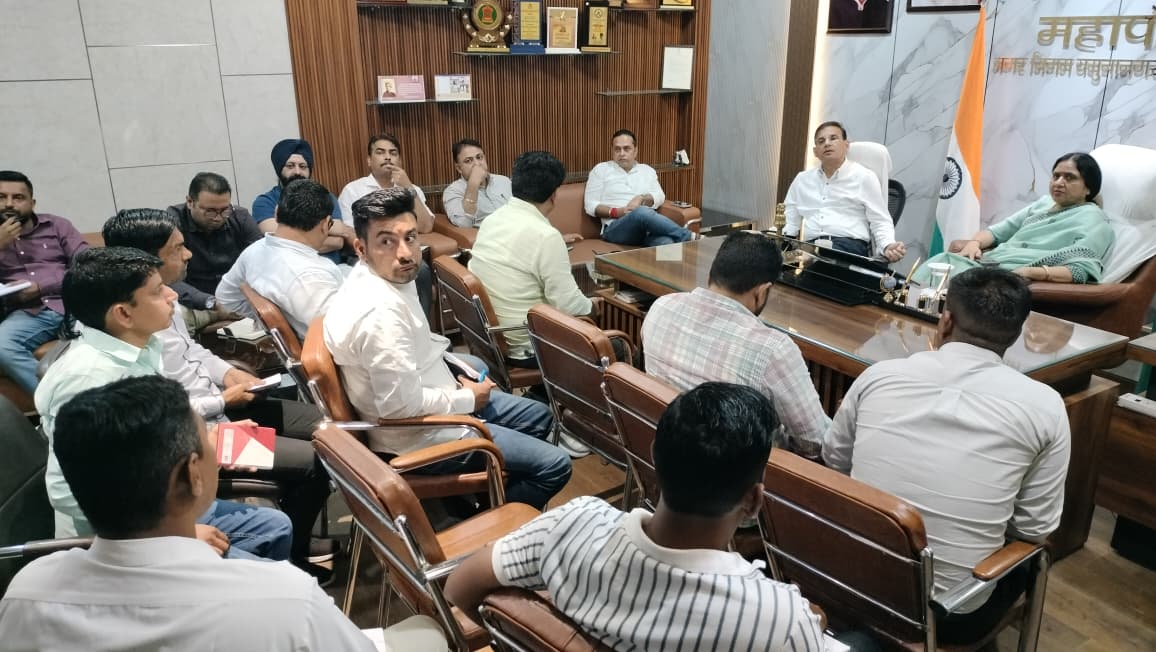
Yamunanagar-Jagadhri is set to intensify efforts to improve its sanitation system by drawing lessons from Indore’s waste management model. Following their visit to Indore to study its approach to urban cleanliness, Mayor Suman Bahmani and Municipal Commissioner Mahabir Prasad held a meeting with municipal officials and directed them to ensure 100 per cent door-to-door waste collection and strengthen the entire solid waste management process.
The meeting focused on making the system more accountable, from collecting waste at households and commercial establishments to segregation, transportation and scientific processing. The municipal leadership emphasised that sanitation cannot be improved merely by lifting garbage from streets. Each stage of waste handling must be monitored so that collected material reaches appropriate processing facilities and is managed according to prescribed procedures.
Officials were asked to ensure regular collection from residential areas as well as commercial premises. The instructions also stressed segregation at source, enabling wet waste, dry waste and other categories to be handled separately and sent for appropriate treatment. The civic body aims to improve coordination between its departments and the door-to-door collection agency to make the system more organised and effective.
Every Waste Collection Vehicle to Maintain a Register
A key instruction issued during the meeting concerned record-keeping by the door-to-door waste collection agency. Municipal Commissioner Mahabir Prasad directed the agency’s representatives to ensure that every waste collection vehicle, locally referred to as a tipper, carries a register.
The register is to record the house number, the name of the house owner and the type of waste collected from each household. The information must be entered daily, according to the directions issued at the meeting.
Maintaining these records is intended to bring greater consistency and accountability to the collection process. Recording the category of waste collected from individual households can help the agency and municipal officials review whether segregation is being followed and identify areas where the process requires attention.
The daily register requirement also makes documentation part of the collection system rather than leaving waste lifting as an unrecorded routine. The instructions are intended to support closer monitoring of collection teams and improve visibility into how the service is being delivered across the city.
Monitoring Required at Every Stage of Waste Management
During the meeting, officials and representatives of the collection agency were told that the proposed arrangements should be implemented effectively at the earliest. The municipal leadership emphasised that collecting waste is only the first step; its transportation, segregation and processing also require oversight.
For the system to work as intended, waste collected from homes and commercial establishments must be handled according to its category and transported to the relevant processing facilities. Weak coordination at any stage can affect the overall management process. The meeting therefore highlighted the need for better coordination among the concerned municipal branches and the agency responsible for door-to-door collection.
Officials were instructed to monitor sanitation arrangements regularly and address shortcomings in a timely manner. The emphasis was on ensuring that the procedures laid down for collection and processing are followed consistently, and that responsibilities are clearly understood by everyone involved.
Waste Segregation and Scientific Processing in Focus
The meeting held after the Indore visit gave particular attention to scientific solid waste management. Segregation at source is an important part of this process because different categories of waste may require different handling and treatment methods. The municipal leadership directed officials to ensure that segregated waste is transported to the relevant processing plants and processed appropriately.
The instructions also place importance on routine supervision. Municipal officials have been asked to keep track of the sanitation system and correct deficiencies when identified. Regular monitoring is expected to help the corporation review the performance of collection arrangements and the implementation of waste segregation procedures.
The aim is to establish a more organised chain of operations, beginning with household-level collection and continuing through transportation and processing. The directions also underline the need for the collection agency and municipal staff to work in coordination instead of treating their responsibilities as separate activities.
Officials Attend Review Meeting
The meeting was attended by Executive Engineer Harish Kumar, Assistant Engineer Surender Dahiya, Chief Sanitary Inspector Vinod Beniwal, Harjeet Singh, Govind Sharma, Amit Kamboj and other officials.
The municipal corporation has set out an operational focus on regular door-to-door collection, daily records of waste collected from households, segregation at source, proper transportation and scientific processing. The instructions issued by the mayor and commissioner following the Indore visit are intended to strengthen these interconnected elements of sanitation management in Yamunanagar-Jagadhri.
The success of the proposed approach will depend on consistent implementation of the directions, coordination between municipal teams and the collection agency, and regular monitoring of the complete waste management chain. The corporation’s stated goal is to make Yamunanagar-Jagadhri cleaner, more orderly and healthier through a stronger and more accountable sanitation system.
NEWS NOTE
The municipal corporation has directed door-to-door waste collection teams to maintain a daily register on every tipper, recording household details and the type of waste collected. Officials have also been instructed to strengthen segregation, transportation and processing, with the stated target of achieving 100 per cent door-to-door collection.