Yamunanagar civic body begins ward-wise fogging to curb mosquito-borne diseases across 22 wards
YAMUNANAGAR | PEN OF DEMOCRACY NEWS DESK
Municipal Corporation has divided the city into three zones, deployed two large and 12 small machines, and plans two rounds of fogging in every ward while advising residents to prevent stagnant water
Three Zones, Dedicated Teams for City-Wide Mosquito Control
The Municipal Corporation of Yamunanagar-Jagadhri has started ward-wise fogging across its civic limits as part of efforts to reduce the risk of mosquito-borne diseases such as dengue, malaria, chikungunya and other fever-related illnesses. The drive is being carried out on the directions of Mayor Suman Bahmani and Municipal Commissioner Mahabir Prasad.
According to Chief Sanitation Inspector Vinod Beneval, the corporation has divided the 22 wards into three operational zones. Zone 1 covers Wards 1 to 8, Zone 2 covers Wards 9 to 15, and Zone 3 covers Wards 16 to 22. Separate teams are working under Chief Sanitation Inspectors Harjit Singh, Govind Sharma and Amit Kamboj respectively.
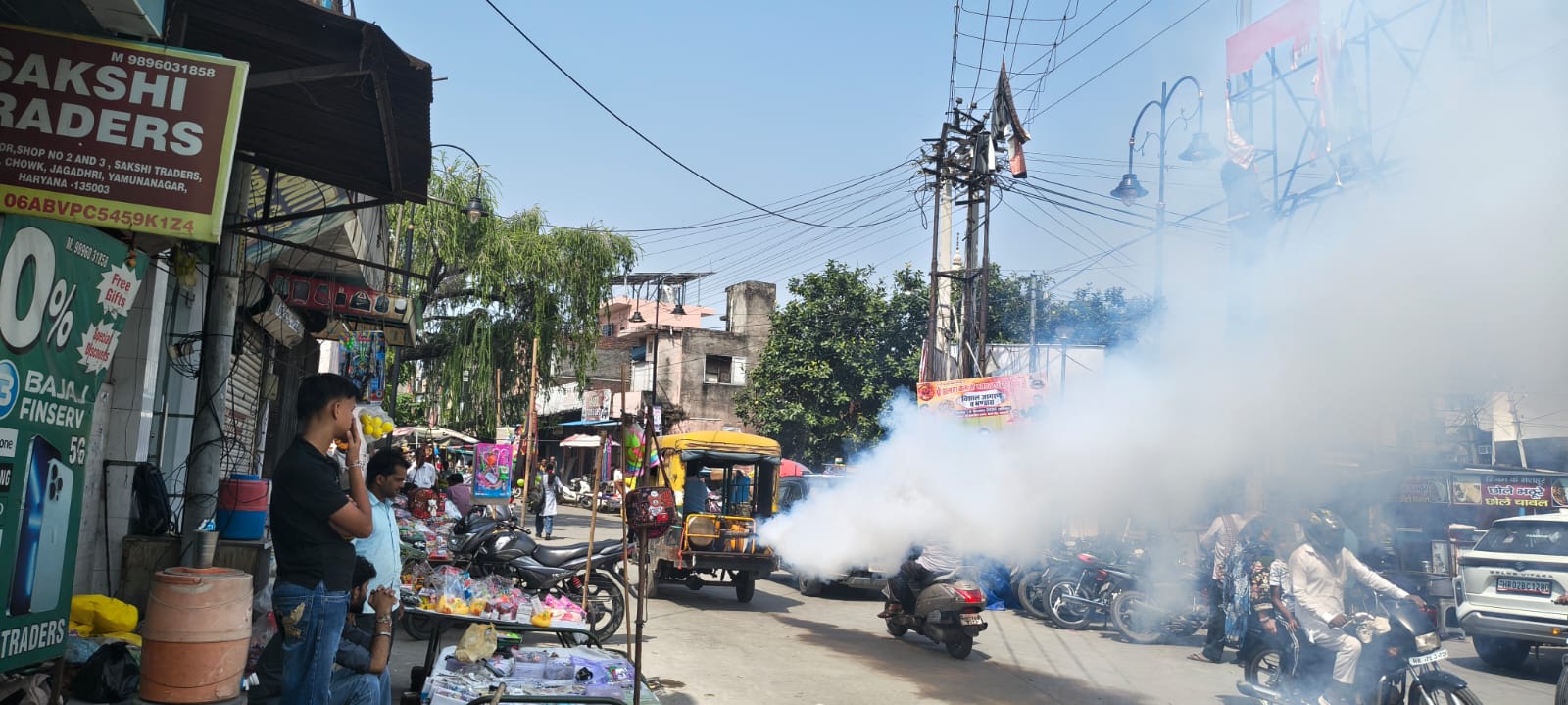
The corporation has deployed two large fogging machines and 12 smaller machines. Large machines are being placed on auto-rickshaws or the corporation’s cargo vehicles for use on main roads, wider streets and other accessible stretches. Smaller machines are being used in residential colonies, villages and narrow lanes where larger vehicles cannot easily enter.
Fogging Reaches Narrow Lanes Through Small Machines
Fogging is currently being carried out in Wards 1, 22 and 9 as the zone-wise programme gets underway. Corporation workers are using large machines on roads and broad lanes, while smaller machines are being taken by motorcycle or operated on foot in congested streets and lanes.
The approach is intended to cover locations that may otherwise be missed during a vehicle-based operation. Earlier civic fogging drives in Yamunanagar-Jagadhri have also used large machines for main roads and smaller machines for narrow residential lanes, reflecting the practical need for different equipment across urban areas. citeturn765661search2
The Municipal Corporation has said the present campaign will be carried out in two rounds in every ward. Officials are preparing the detailed schedule, while fogging will not be conducted during rain because weather conditions can affect the operation.
Municipal Corporation Plans Two Rounds in Every Ward
The stated objective is to provide repeated coverage rather than a single pass. The corporation plans two rounds of fogging in every ward so that mosquito-control efforts continue across different neighbourhoods and localities. The schedule supplied by the civic body gives the following ward-wise dates:
| Ward | Fogging schedule |
|---|---|
| 22 | September 11 to September 28 |
| 21 | September 29 to October 12 |
| 20 | October 13 to October 31 |
| 19 | November 2 to November 10 |
| 18 | November 11 to November 19 |
| 17 | September 11 to September 19 |
| 16 | September 21 to October 1 |
| 15 | October 3 to November 5 |
The Municipal Corporation has issued these dates as part of the broader ward-wise exercise. Residents may therefore see teams operating at different times depending on the zone and ward sequence. The programme may also be adjusted for rain or operational requirements.
Stagnant Water Control to Accompany Fogging
Officials said fogging is being supplemented by measures aimed at mosquito breeding sites. Where standing water cannot be drained easily, oil and larvicide-related treatment is being used to discourage mosquito larvae from developing. The focus on stagnant water is significant because fogging alone cannot replace source-control measures.
The need for such preventive action has gained attention in Yamunanagar this season. The health department recently intensified surveillance after reporting confirmed dengue and malaria cases, while field teams inspected thousands of houses and found mosquito larvae in a substantial number of them. citeturn765661search0 The Haryana Health Department also lists mosquito-control and fogging activities among measures being undertaken in districts including Yamunanagar. citeturn765661search9
Residents Asked to Prevent Mosquito Breeding Around Homes
The civic body has appealed to residents to support the campaign by preventing water from accumulating around their homes. Officials have specifically advised people to remove standing water after rain and to keep rooftops clear of containers or other stored items in which water can collect.
Residents have also been advised to ensure that accumulated water in places where drainage is difficult is treated appropriately. The basic precaution is to avoid leaving water undisturbed for long periods, particularly in coolers, discarded containers, tyres, trays and other household or construction-related items that can become breeding sites.
Public participation is an important part of mosquito control because municipal fogging teams cannot reach every private premises or eliminate every breeding site. Keeping surroundings clean, removing stagnant water promptly and reporting problem locations can complement the corporation’s scheduled operations.
Health Precautions Remain Important During the Monsoon Season
The current fogging programme comes at a time when mosquito-borne illnesses remain a public-health concern after monsoon rainfall. Recent reporting from Yamunanagar indicates that health surveillance has been stepped up, with mosquito breeding found during household inspections. citeturn765661search0 For residents, preventive measures such as eliminating stagnant water and following local health advisories remain important alongside civic control operations.
The Municipal Corporation’s three-zone arrangement is intended to make the operation more systematic across the 22 wards. With two sizes of machines and teams assigned to specific zones, officials are seeking to combine wider road coverage with access to narrow neighbourhood lanes.
RELATED NEWS
Mayor Suman Bahmani approves ₹3.07 crore development works for Yamunanagar
Yamunanagar administration announces grievance meetings and public schedules
Editor’s note: The ward dates and operational details in this report are based on information supplied by the Municipal Corporation. Residents should check official civic updates for any changes caused by rain or operational requirements.