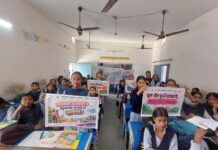
St Lawrence International School Holds Mock Parliament on Artificial Intelligence
Students debate AI’s impact on jobs, education and children’s mental development, highlighting the need for ethical use, independent thinking and balanced technological learning.
St Lawrence International School, Shahpur Road, Vyasarpur, organised a mock Parliament session on Artificial Intelligence (AI) to familiarise students with emerging technological issues, democratic values and parliamentary proceedings.
Taking on the roles of the ruling party and the Opposition, students engaged in a meaningful debate on the growing influence of AI, its employment opportunities and challenges, future job readiness, and its potential impact on children’s mental development.
The parliamentary discussion explored how artificial intelligence is creating new possibilities in education, healthcare, science and industry, while also transforming the nature of employment. Students examined the importance of developing relevant skills to adapt to a changing professional landscape.
AI and the Future of Employment
During the debate, students considered how AI-powered tools could support learning, research and productivity while changing the skills required in the workplace. The discussion highlighted the importance of preparing young people for emerging opportunities without overlooking the challenges associated with technological change.
The session also encouraged students to think critically about the reliability of AI-generated content, excessive dependence on technology and the ethical responsibilities involved in using digital tools.
Focus on Children’s Mental Development
A key theme of the mock Parliament was the influence of AI on children’s mental development. Students discussed how appropriate use of AI can make learning more engaging, expand access to knowledge and help explain complex subjects.
At the same time, they raised concerns that excessive dependence on technology could affect independent thinking, decision-making, creativity and the ability to solve problems without assistance.
The discussion emphasised the need to use AI as a learning aid rather than a substitute for personal effort, original thought and real-life experience. Students also considered why verifying information and exercising judgement remain important when working with AI-generated material.
Dr MK Sehgal Stresses Responsible Use of Technology
In his message, the school’s Managing Director, Dr MK Sehgal, said that students in the present technological era must understand not only how to use AI but also its effects and limitations.
He emphasised that education should not be restricted to acquiring information. It must also nurture independent thinking, decision-making, creativity and ethical values.
Dr Sehgal encouraged students to use technology judiciously while continuously developing their knowledge and skills. His message highlighted the importance of combining technological awareness with the intellectual and moral foundations needed to make responsible decisions.
Dr Rajni Sehgal Highlights Holistic Development
School Chairperson Dr Rajni Sehgal said activities such as mock Parliament help develop logical thinking, confidence, leadership qualities and a sense of responsible citizenship.
She stressed that the all-round development of children requires equal attention to technological education and their mental, social and emotional growth.
Dr Sehgal encouraged students to use AI to enhance their abilities while continuing to value original thinking, human sensitivity and real-life experiences. Her message underlined the importance of ensuring that technological progress complements, rather than replaces, essential human capabilities.
Students Call for a Balanced Approach to AI
At the conclusion of the session, students agreed that artificial intelligence could create new opportunities in education and employment, but benefiting from these developments would require skill-building, ethical use and a balanced approach.
They also emphasised that AI should be used with proper guidance and responsibility so that children’s mental development and capacity for independent thought remain central to the learning process.
The school management reiterated its commitment to organising educational activities that prepare students for future technological challenges while promoting their holistic development. The mock Parliament provided students with an opportunity to connect a contemporary technological issue with democratic debate, critical thinking and responsible citizenship.
Youth activities and student participation at DAV Girls College
Education, sports and the importance of physical development
Awareness initiatives and child-focused community programmes
Student participation and educational activities
NEWS NOTE: This report is based on information supplied about the school’s mock Parliament session. No additional claims about student numbers, awards or specific debate outcomes have been added.