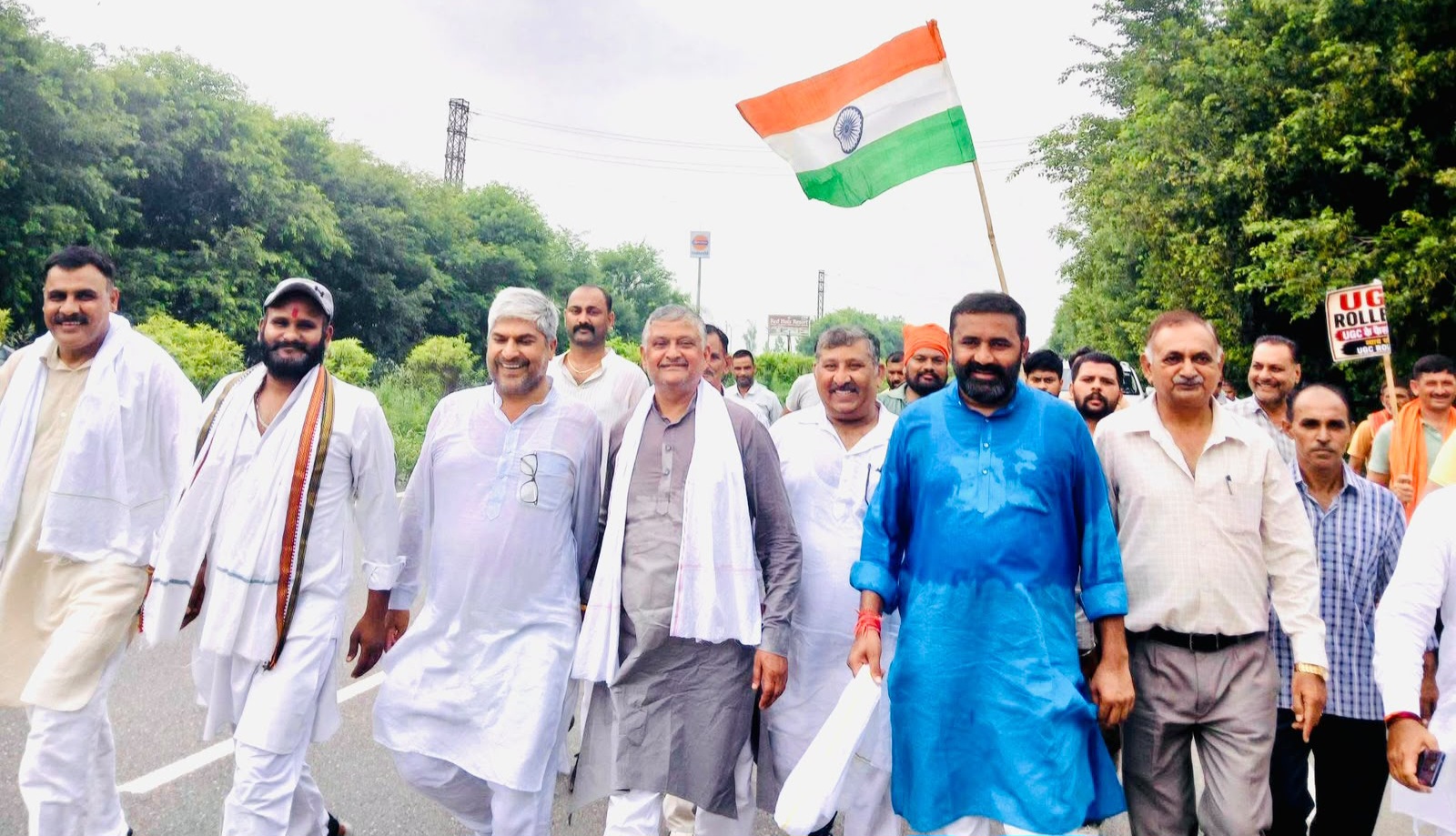
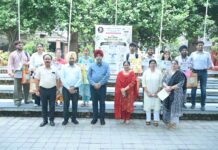
Kapil Pandit participates in the padyatra led by Mahipal Singh Makrana from Panipat towards Chandigarh.
Parshuram Sena founder says education-related decisions should involve wider consultation; calls for peaceful and democratic expression of public concerns
CHANDIGARH/ YAMUNANAGAR | PEN OF DEMOCRACY NEWS DESK
Kapil Pandit, president and founder of Bhagwan Shri Parshuram Sena Sangh Trust and a prominent office-bearer of the Yamunanagar Brahmin community, is actively participating in the padyatra being led by Karni Sena national president Mahipal Singh Makrana from Panipat towards Chandigarh. According to the organisers, the march is being held to raise issues concerning society and the education system, with a demand for withdrawal of what they describe as an alleged “black law” related to the University Grants Commission (UGC).
The padyatra began from Panipat and is passing through different locations before reaching Chandigarh. Sunday marked the seventh day of the march, with Pandit continuing to walk alongside Makrana and other participants.
Speaking during the march, Pandit said that every citizen has the democratic right to raise issues concerning society and public interest and to place those concerns before the government through peaceful and constitutional means. He said the objective of the padyatra was not to stand against any particular community or group, but to draw the government’s attention towards issues that, according to the participants, have a direct bearing on society, students and the education system.
Pandit said education is closely connected with the future of young people and therefore decisions affecting students, teachers and educational institutions should be considered after adequate consultation with all stakeholders. He maintained that concerns raised by different sections of society should be heard seriously and addressed through dialogue.
The organisers have claimed that social organisations and young people from different areas have joined the march during its journey. The padyatra is scheduled to proceed towards Chandigarh after passing through various stops. According to the organisers, the march is expected to reach Chandigarh on August 25, where a memorandum addressed to the Prime Minister will be submitted to the Governor.
The proposed memorandum is expected to prominently raise the demand for withdrawal of what the organisers have termed the alleged “black law” associated with the UGC. The participants intend to place their concerns before the authorities through the memorandum and seek consideration of their demands.
Pandit said that issues connected with higher education require a balanced approach because decisions in this field can have a long-term impact on students, teachers and academic institutions. He said that the government should take into account the concerns of stakeholders before implementing decisions that could affect the functioning of the education system.
He further said that public concerns should be conveyed through peaceful and democratic channels. According to him, a padyatra provides an opportunity for participants to communicate their views directly and peacefully while drawing public attention to the issues being raised.
Pandit also appealed to participants and supporters of the march to maintain discipline and ensure a peaceful atmosphere throughout the journey. He said that differences of opinion should be expressed through democratic methods and that the march should continue without disrupting public order.
He emphasised that a peaceful public movement can become an effective means of communicating concerns to the authorities when it remains focused on its stated objectives and follows democratic norms.
The march has also brought together representatives and supporters associated with different social organisations, according to the organisers. The participation of young people has been highlighted by the organisers as an indication of growing interest in issues concerning education and society.
Pandit said that the participation of young people is particularly important because education policies directly influence their academic opportunities and future careers. He stressed that young people should be given an opportunity to express their concerns about policies that affect their educational environment.
He said that the government should consider the concerns being raised during the padyatra in a constructive manner. Instead of allowing differences to escalate, he called for dialogue between the concerned stakeholders and the authorities.
The demand being raised during the march centres on the alleged UGC-related legislation or regulatory provision described by the organisers as a “black law”. Pandit reiterated that the issue should be examined carefully and that the concerns of students, teachers and educational institutions should be considered before any decision is finalised.
He said that the participants would formally communicate their demands through the memorandum once the padyatra reaches Chandigarh. The memorandum is expected to be submitted to the Governor with a request that the concerns be conveyed to the central government and appropriate consideration be given to the demands.
Pandit maintained that democratic participation does not merely mean voting during elections but also includes the right of citizens to peacefully raise concerns about policies and decisions affecting society. He said that public movements conducted peacefully can help bring important issues into the attention of decision-makers.
The Bhagwan Shri Parshuram Sena Sangh Trust founder also reiterated his commitment to remaining actively involved in the march until it reaches Chandigarh. He said that the participants would continue their journey while maintaining discipline and respecting democratic norms.
The organisers said the final phase of the march towards Chandigarh would be significant as representatives are expected to submit the memorandum and formally place their demands before the authorities.
Pandit appealed to all participants and supporters to remain united, peaceful and disciplined during the remaining journey. He said the objective should be to ensure that the concerns related to education and society reach the government in a clear and constructive manner.
As the padyatra moves towards Chandigarh, the focus remains on the memorandum proposed to be submitted on August 25 and the demand for reconsideration of the alleged UGC-related “black law”. The organisers hope that the government will take note of their concerns and initiate dialogue with the stakeholders.
Pandit said that the ultimate purpose of raising such issues should be to strengthen the education system and protect the interests of students and teachers. He reiterated that constructive dialogue and democratic engagement remain the most effective ways to address differences and work towards solutions in matters of public interest.