NEW DELHI / CHANDIGARH | PEN OF DEMOCRACY NEWS DESK
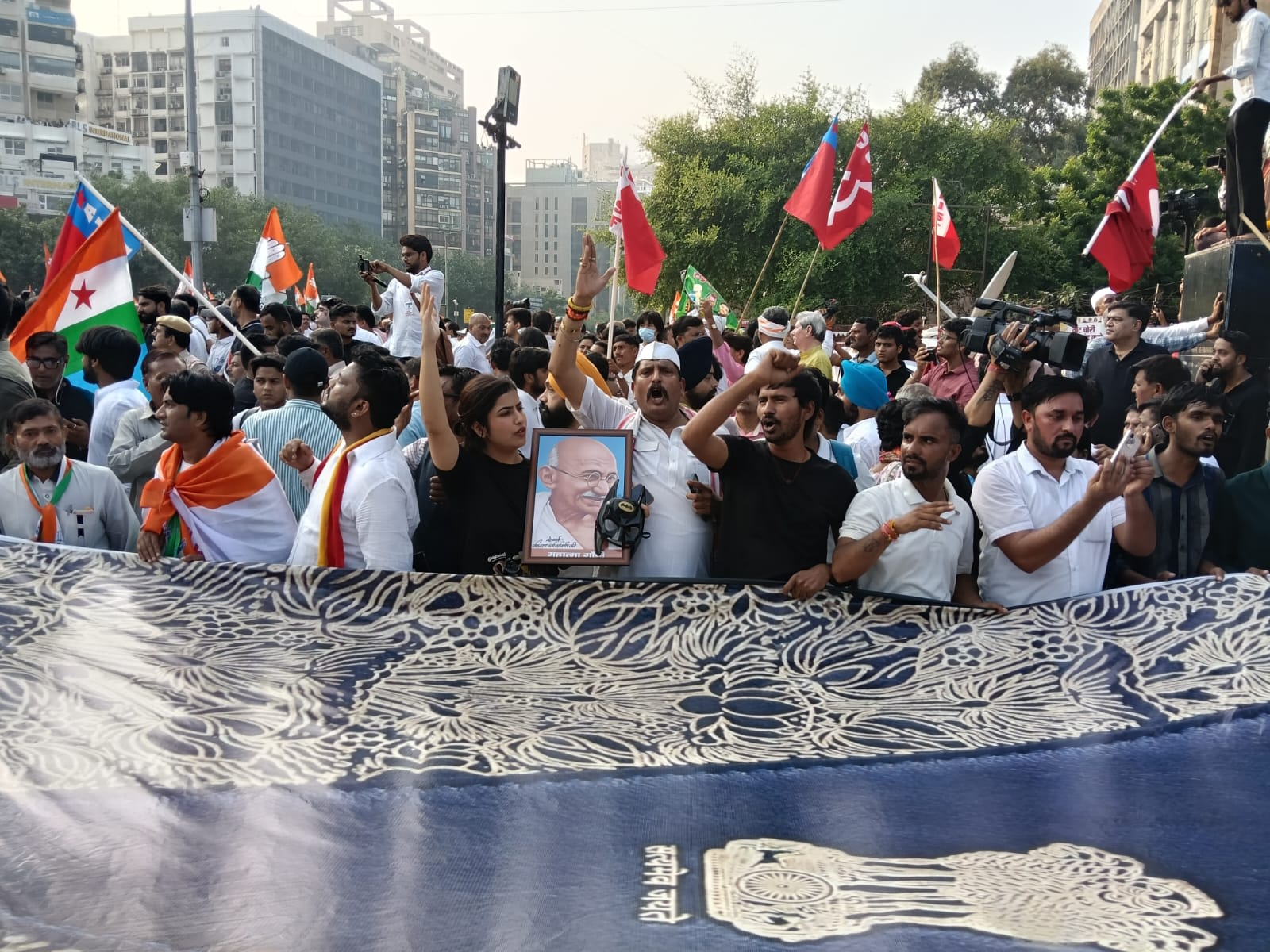
The Bharatiya Rashtriya Mazdoor Congress Federation, commonly known as the INTUC Federation, participated in the ‘Delhi Chalo’ protest organised in the national capital following a call by Congress leader Rahul Gandhi. Led by the federation’s national president, Swaminath Jaiswal, the organisation raised issues relating to workers’ rights, rising prices, unemployment, privatisation and social security for workers employed in the unorganised sector.
According to the federation, the protest was intended to draw attention to concerns affecting workers, farmers, young people and economically vulnerable sections of society. The organisation maintained that democratic protest remains an important way to raise concerns about government policies and press for measures that protect workers’ interests, expand employment opportunities and improve access to social security schemes.
The federation said workers need stronger protection, fair employment opportunities and access to welfare benefits. It called for policies that place greater emphasis on the economic security and dignity of working people, particularly those who lack stable employment arrangements or comprehensive social protection.
Federation Demands Repeal of All Four Labour Codes
A central demand raised by the INTUC Federation was the repeal of all four labour codes. National president Swaminath Jaiswal reiterated the organisation’s commitment to continuing its efforts to protect workers’ rights and called for safeguards that address the concerns of employees across different sectors.
The four labour codes are a major part of India’s labour-law framework. The federation has opposed them and is demanding their withdrawal, arguing that workers’ interests and protections must remain central to labour policy. Its position, as expressed during the protest, was that labour legislation should provide effective protection and ensure that workers can raise concerns about wages, working conditions and social security.
Jaiswal also called for social security coverage for workers in the unorganised sector. Such workers may face particular difficulties in accessing stable employment benefits and welfare protections. The federation urged the authorities to ensure that eligible workers can access relevant social security measures and that safeguards reach those who need them.
The organisation said it would continue to raise labour-related concerns through public platforms and democratic means. It presented the protection of workers’ rights as an ongoing responsibility rather than an issue limited to a single demonstration.
Inflation and Unemployment Among Key Concerns
Rising prices and unemployment were also highlighted during the protest. Jaiswal said the burden of inflation and the lack of adequate employment opportunities affect ordinary households and working people. The federation called for effective measures to support workers and help ensure access to fair wages, social protection and a dignified standard of living.
Inflation can place pressure on household budgets, particularly when the cost of essential goods and services rises faster than a family’s income. For workers on limited or irregular earnings, such pressures can make it more difficult to meet everyday expenses. The federation argued that labour and welfare policies should take these economic pressures into account.
The organisation also stressed the need to expand employment opportunities for young people and workers. It said that protecting the future of workers and youth requires attention to job creation, working conditions and the availability of appropriate safeguards for people in employment.
The protest brought these concerns together under a broader demand for policies that respond to the needs of workers and economically vulnerable communities. The federation said it would continue to press for measures aimed at improving employment security and protecting the interests of working people.
Opposition to Privatisation and Call to Protect Public Assets
The INTUC Federation also expressed opposition to the privatisation of public assets. The organisation linked this concern to its wider position on employment, workers’ welfare and the future of young people.
During the protest, the federation called for workers’ interests to receive priority in policy decisions and for employment opportunities to be strengthened. It maintained that decisions affecting public assets and services should take account of their potential implications for workers and the wider public.
Jaiswal said the federation was committed to protecting workers’ dignity, social justice and constitutional values. He stated that the organisation would continue to raise workers’ problems at different forums and pursue its demands through democratic action.
The federation’s position was that economic and labour policies should be assessed not only in terms of administrative or financial objectives but also in relation to their implications for workers’ livelihoods, social security and access to employment. These were among the concerns the organisation sought to place before the authorities through the demonstration.
Judicial Rights and Constitutional Values Also Raised
Statements associated with the protest also referred to the role of the judiciary, delays in the delivery of justice and the constitutional rights of ordinary citizens. The federation expressed the expectation that the judicial system should play an effective role in ensuring timely justice for citizens and workers.
Access to justice is closely connected with the ability of people to seek remedies when their rights are affected. For workers, the timely resolution of disputes can be important in matters involving wages, employment conditions and other workplace concerns. The federation’s comments placed these issues within a broader discussion of fairness, accountability and the protection of constitutional rights.
The organisation said the protection of workers’ rights, access to social security and a fair system of justice are important requirements of a democratic society. It emphasised that workers should be able to raise their concerns through established democratic channels and seek remedies when necessary.
INTUC Federation Says It Will Continue Raising Workers’ Issues
The federation reiterated that it intends to continue advocating for workers’ rights and social protection at different platforms. Its demands include the repeal of the four labour codes, improved access to social security for unorganised-sector workers, attention to inflation and unemployment, and protection of workers’ interests in decisions relating to privatisation.
Led by Swaminath Jaiswal, the organisation presented the ‘Delhi Chalo’ protest as an opportunity to bring these issues into public discussion. The federation said its broader commitment remains the protection of workers’ dignity, social justice and constitutional values.
The demands expressed at the demonstration reflect the organisation’s stated priorities. Any policy changes arising from such demands would depend on decisions by the relevant authorities. For the federation, however, continued democratic engagement and public advocacy remain central to its efforts to highlight the concerns of workers and economically vulnerable sections of society.
NEWS NOTE
The INTUC Federation says it joined the Delhi Chalo protest under national president Swaminath Jaiswal, raising demands on the four labour codes, workers’ rights, inflation, unemployment, privatisation and social security for unorganised-sector workers.