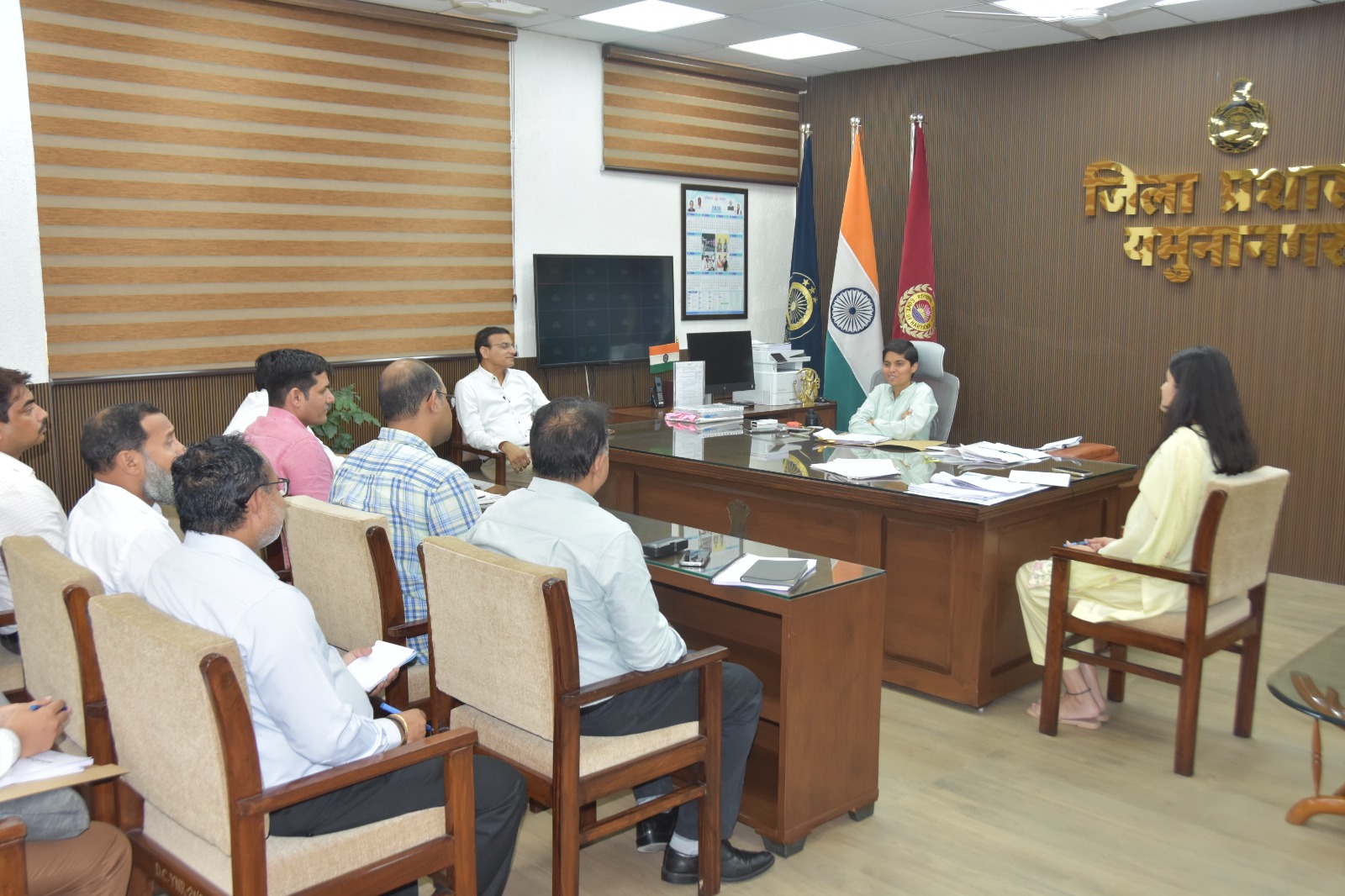
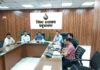
Deputy Commissioner Preeti reviews solid waste management arrangements and the proposed biogas plant project with Municipal Corporation and other concerned officials in Yamunanagar.
Source-level segregation, door-to-door collection and scientific disposal to be intensified; proposed plant expected to convert organic waste into biogas and useful organic manure
YAMUNANAGAR | PEN OF DEMOCRACY NEWS DESK
Deputy Commissioner Preeti has directed the Municipal Corporation and other concerned departments to strengthen the solid waste and residual waste management system across Yamunanagar district, emphasising that effective waste disposal, source-level segregation and scientific processing are essential for maintaining a clean, healthy and environmentally sustainable urban environment. During a review meeting with Municipal Corporation officials, the Deputy Commissioner said that the growing challenge of solid waste requires timely intervention and a coordinated strategy in which waste is not treated merely as an unwanted by-product but as a potential resource that can be reused, recycled and scientifically processed.
The Deputy Commissioner reviewed the existing waste management arrangements and instructed officials to make the system of door-to-door garbage collection more effective. She stressed that households should be encouraged to separate wet and dry waste at the point where it is generated, as proper segregation at source is the foundation of an efficient waste management system. Once waste is mixed, its processing and recycling become more difficult, whereas segregated waste can be directed towards appropriate treatment, recycling and recovery processes. She asked the concerned authorities to strengthen public awareness efforts so that residents understand the importance of separating biodegradable and non-biodegradable waste before handing it over for collection.
Preeti said that scientific management of solid waste is closely linked with environmental protection, public health and the efficient use of available resources. Improper disposal of waste can lead to unhygienic conditions, pollution and other environmental challenges. Therefore, she directed officials to ensure regular monitoring of waste management centres and to take effective steps to prevent the dumping of garbage in open spaces. The objective, she said, should be to establish a system in which waste collection, transportation, segregation, processing and final disposal are carried out in an organised and scientifically planned manner.
She also underlined the need to promote recycling and the reuse of suitable materials recovered from municipal waste. Organic waste, in particular, can be processed into useful products such as compost and other forms of organic manure, while biodegradable material can also be utilised for energy generation through appropriate technology. The Deputy Commissioner said that strengthening waste management infrastructure can help reduce the burden on dumping sites while also supporting a more sustainable approach to urban sanitation.
Officials were directed to work in close coordination and regularly review the progress of waste management initiatives. Preeti said that administrative efforts alone cannot achieve the desired results unless citizens actively participate in maintaining cleanliness. She appealed to residents not to throw garbage in open areas or public places and to cooperate with the municipal authorities by keeping wet and dry waste separately at home. Public participation, she said, is essential for making Yamunanagar cleaner, healthier and environmentally responsible.
Municipal Commissioner Mahabir Prasad, CM GGA Abhishruti, Municipal Corporation Assistant Commissioner Dheeraj Kumar, Public Health Department Executive Engineer Saurabh Kumar and other concerned officials were present during the review meeting.
In a separate meeting on the proposed biogas plant for Yamunanagar district, Deputy Commissioner Preeti discussed the project with officials from the petroleum sector, district administration and other concerned departments. She said that the proposed facility is an important requirement for the district and could provide a practical solution for the scientific utilisation of biodegradable waste.
The proposed plant is expected to process organic and wet waste through a defined treatment system to generate biogas and organic manure. The biogas produced through the processing of biodegradable material can be used as an energy source, while the organic residue can potentially be utilised as natural manure. The Deputy Commissioner said that such an initiative would support both waste management and resource recovery by converting material that is otherwise discarded into products with practical value.
She emphasised that increasing population and urbanisation have resulted in the generation of large quantities of solid waste every day, making effective waste management an urgent administrative and environmental priority. If waste is not handled properly, it can create unhygienic conditions and contribute to environmental pollution. The proposed biogas facility, therefore, is being considered as part of a broader effort to strengthen the district’s capacity for scientific waste processing and sustainable resource utilisation.
Preeti said that public awareness would remain an important component of the initiative. Residents need to be informed about the importance of segregating waste at source and ensuring that biodegradable material is separated from dry and other categories of waste. Proper segregation, she noted, can improve the efficiency of processing systems and help ensure that organic waste is effectively channelled for appropriate treatment.
The Deputy Commissioner also stressed the importance of coordinated implementation among the Municipal Corporation, Public Health Department, petroleum sector representatives and other concerned agencies. Regular monitoring and timely action will be necessary to ensure that the proposed project and other waste management initiatives contribute effectively towards improving sanitation and environmental conditions in the district.
The meetings reflected the district administration’s focus on moving towards a more organised and resource-oriented approach to waste management. By strengthening door-to-door collection, promoting source-level segregation, improving scientific disposal and exploring the potential of a biogas plant, the administration aims to address the growing waste challenge while encouraging the productive use of biodegradable material.
The Deputy Commissioner reiterated that cleanliness is a shared responsibility and called upon residents to actively support the administration’s efforts. She urged citizens to avoid littering, follow waste segregation practices and cooperate with municipal collection systems. Effective management of waste, she said, can contribute not only to cleaner surroundings but also to environmental conservation, improved public health and the sustainable use of resources.
Officials present in the meeting on the proposed biogas plant included Municipal Commissioner Mahabir Prasad, Additional Deputy Commissioner Naveen Ahuja, CM GGA Abhishruti, Bharat Petroleum Limited official Sanjay Thakur, Public Health Department Superintending Engineer Praveen Gupta, Dinesh Gaba, DIPRO Dr Manoj Kumar, along with Naresh Kamboj representing villagers and sarpanches from various villages.