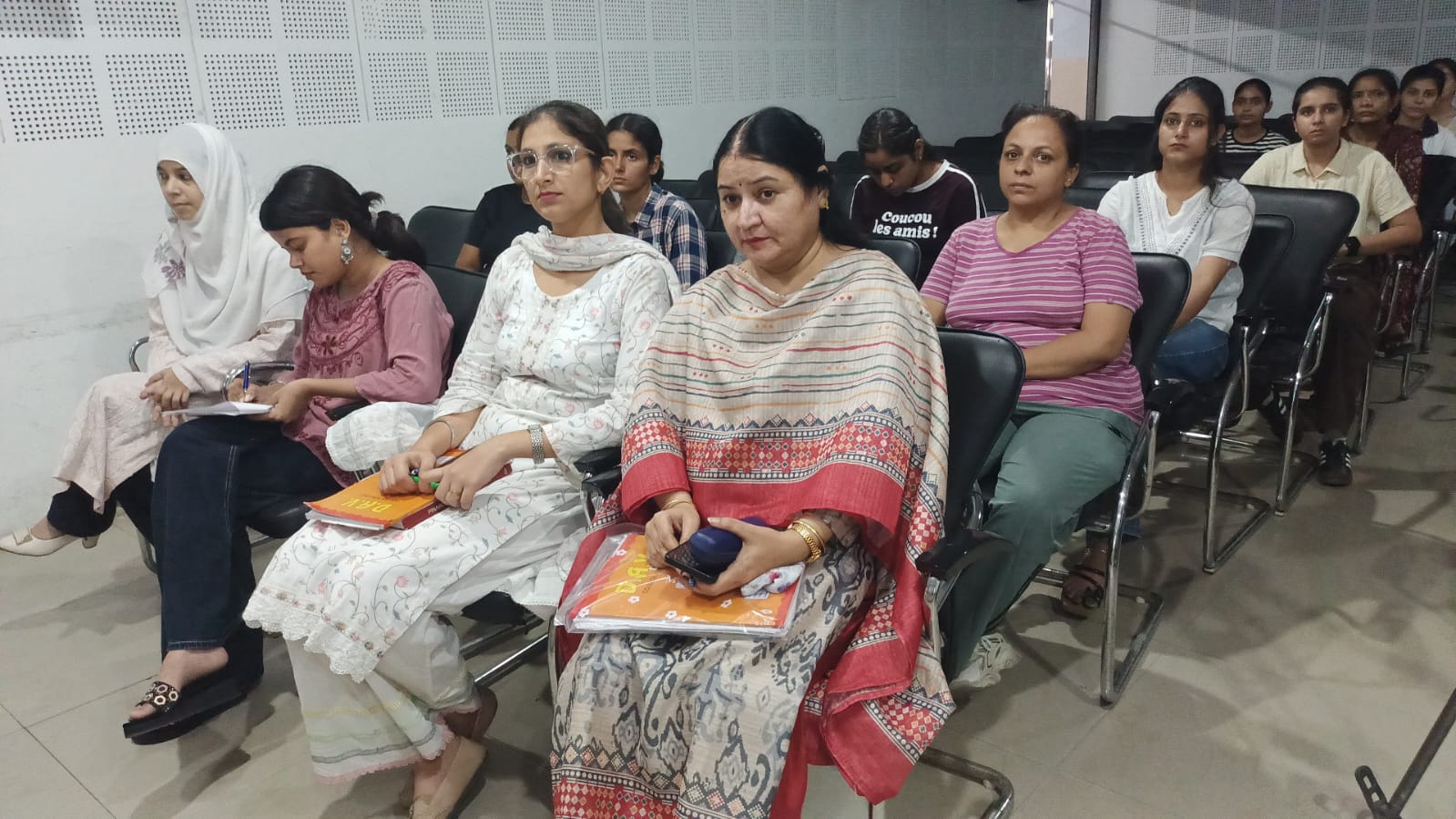
Participants attend the online biotechnology innovation lecture at DAV College for Girls.
Experts encourage students to explore government-backed fellowships and financial support for research, innovation and biotech entrepreneurship
Yamunanagar | Rama Kaushik
DAV College for Girls organised an online lecture on Friday to familiarise students, researchers and faculty members with government funding opportunities available for innovation and entrepreneurship in the field of biotechnology.
The programme aimed to create awareness about financial assistance schemes that support research-driven innovation, startup development and scientific entrepreneurship among young scholars.
The session was held under the guidance of Officiating Principal Dr Surinder Kaur, Institution’s Innovation Council (IIC) Convener Vivek, and IIC Vice-President Dr Sunita Kaushik.
The keynote address was delivered by Taranjit Kaur, Senior Manager at the Biotechnology Industry Research Assistance Council (BIRAC), who provided a detailed overview of various financial assistance programmes available for students, researchers and entrepreneurs in the biotechnology sector.
She explained that undergraduate students can benefit from the Young Innovator Fellowship, while postgraduate students and research scholars are eligible for specialised innovation fellowship programmes designed to promote scientific research and technological advancement.
Taranjit Kaur also highlighted funding opportunities available for biotechnology startups, innovation-based enterprises and commercially viable business ideas, encouraging participants to transform research into practical solutions and entrepreneurial ventures.
She further discussed India’s national policy on the bioeconomy, environmental sustainability and clean energy, along with the Biotechnology Ignition Grant (BIG) and other biotechnology promotion initiatives aimed at nurturing innovation across the country.
Emphasising the importance of research-led entrepreneurship, she said these schemes are designed to empower young innovators by providing financial support, mentorship and opportunities to develop technologies that can contribute to national development.
Faculty members urged students to actively explore these initiatives and utilise government support to pursue research, innovation and self-employment opportunities in emerging areas of biotechnology.
The programme concluded with an interactive session in which participants discussed research funding, innovation ecosystems and career opportunities in the biotechnology sector.
Dr Parmesh Kumar, Mamta Thapar, Priyanka and Manika Shetty played an important role in coordinating the successful organisation of the programme.