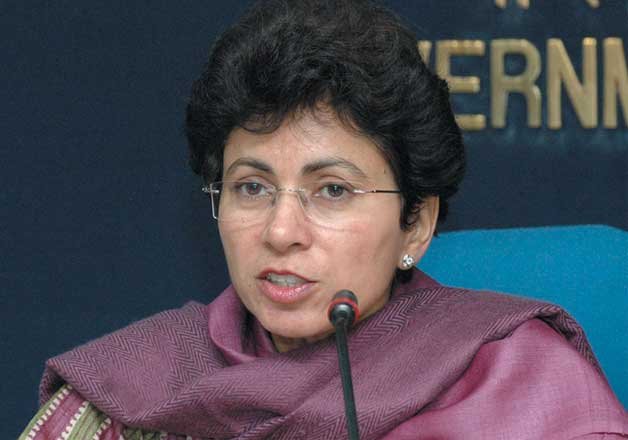
Rising prices are squeezing household budgets as Kumari Selja calls for stronger action to protect poor and middle-class families
SIRSA | PEN OF DEMOCRACY NEWS DESK
Sirsa MP, former Union minister, Congress general secretary and CWC member Kumari Selja has said that the household budgets of poor and middle-class families have come under growing pressure because of rising prices and what she described as inadequate control over inflation by the BJP government.
Inflation Putting Pressure on Families
Selja said the government continues to claim that inflation is under control, while the cost of essential goods and services required to run a household is steadily increasing. From kitchen essentials to housing and other everyday expenses, families are facing a wider financial burden at a time when incomes have not increased at the same pace.
She said the latest inflation figures underline the pressure being felt by households. According to the figures cited by her, India’s retail inflation rose to 4.82 per cent in August. Haryana recorded an inflation rate of 3.92 per cent, with the rural rate at 4.46 per cent and the urban rate at 3.38 per cent.
Selja said the comparatively higher rural inflation rate shows the particular pressure being faced by villagers, farmers, workers and families dependent on limited or irregular incomes. For such households, even moderate increases in food and essential expenses can have a direct impact on their monthly budgets.
Essential Food Items Become Costlier
Selja said prices of several commonly used food items have increased sharply over the past year. She cited an increase of around 48 per cent in onion prices, 44 per cent in garlic, 29 per cent in sugar and 6.5 per cent in tur dal.
She said the pressure is not limited to food items. Flour milling, milk, electricity, clothing, footwear and house rents have also become more expensive. With household incomes failing to rise adequately, families are increasingly being forced to reconsider spending on essential needs such as food, children’s education and healthcare.
Government Asked to Explain How Families Can Cope
Selja asked the BJP government to explain how poor and middle-class families are expected to manage their household budgets when expenses linked to food, electricity, transport, education, medical treatment and housing continue to rise.
She said the real impact of inflation should be assessed not merely through government claims but through market prices and the financial condition of ordinary households. When essential expenses consume a larger share of monthly income, families have fewer resources available for savings, education, healthcare and other necessary expenditure.
Call for Action Against Hoarding and Profiteering
Selja urged the government to take strict action against hoarding and profiteering in essential commodities and strengthen the public distribution system. She called for essential items such as pulses, sugar and edible oil to be made available at reasonable prices.
She also sought relief on taxes applicable to electricity, cooking gas and petroleum products so that low-income and middle-class households can manage their essential expenses with greater financial security and dignity.
CERTIFICATE CORRECTION FEES
“Charging thousands of rupees to correct errors in certificates is unjust,” says Kumari Selja
Selja said charging families thousands of rupees to correct errors in a child’s educational certificate, including mistakes in name or date of birth, is unjust and places an unnecessary burden on poor and middle-class households. She said the current fee structure cited for older certificates includes Rs 3,000 for certificates that are 6 to 9 years old, Rs 6,000 for those 9 to 12 years old, Rs 9,000 for those 12 to 15 years old and Rs 10,000 for certificates more than 15 years old.
She demanded that the government immediately withdraw the increased charges and make the correction process simple, transparent and available at a minimal fee.
Focus on Household Relief
Selja said controlling the cost of essential goods and services requires sustained administrative action as well as effective monitoring of markets. She maintained that relief for households should remain a priority, particularly for families whose incomes leave little room to absorb repeated price increases.
She said strengthening public distribution, checking unfair market practices and reducing the burden of essential household expenses would help protect families from the continuing squeeze on their monthly budgets.
ALSO READ
Kumari Selja Flags Growing Law and Order Crisis in Haryana, Calls for Urgent Police Recruitment
Relief Measures Needed for Families
Selja said the immediate priority should be to reduce the pressure on household expenses and ensure that essential commodities remain available at reasonable prices. She called for stronger monitoring of markets so that artificial shortages, hoarding and profiteering do not add to the burden already being faced by consumers.
She also stressed the importance of strengthening the public distribution system and ensuring that pulses, sugar and edible oil are available to vulnerable families at affordable rates. According to her, relief should reach households directly rather than remain limited to government announcements, while greater transparency is needed in the implementation of welfare and consumer-support measures.
Certificate Correction Fees Also Questioned
In a separate concern highlighted by Selja, she objected to the high charges being levied for correcting mistakes in certificates. She said families should not be forced to pay thousands of rupees simply to rectify genuine errors in official documents. She demanded that the fee structure be withdrawn and replaced with a simple, transparent and affordable correction process.
POD/DESK