Review meeting focuses on cleanliness, expansion, prevention of sewage contamination and promotion of fisheries to generate additional income for village development
YAMUNANAGAR | PEN OF DEMOCRACY NEWS DESK
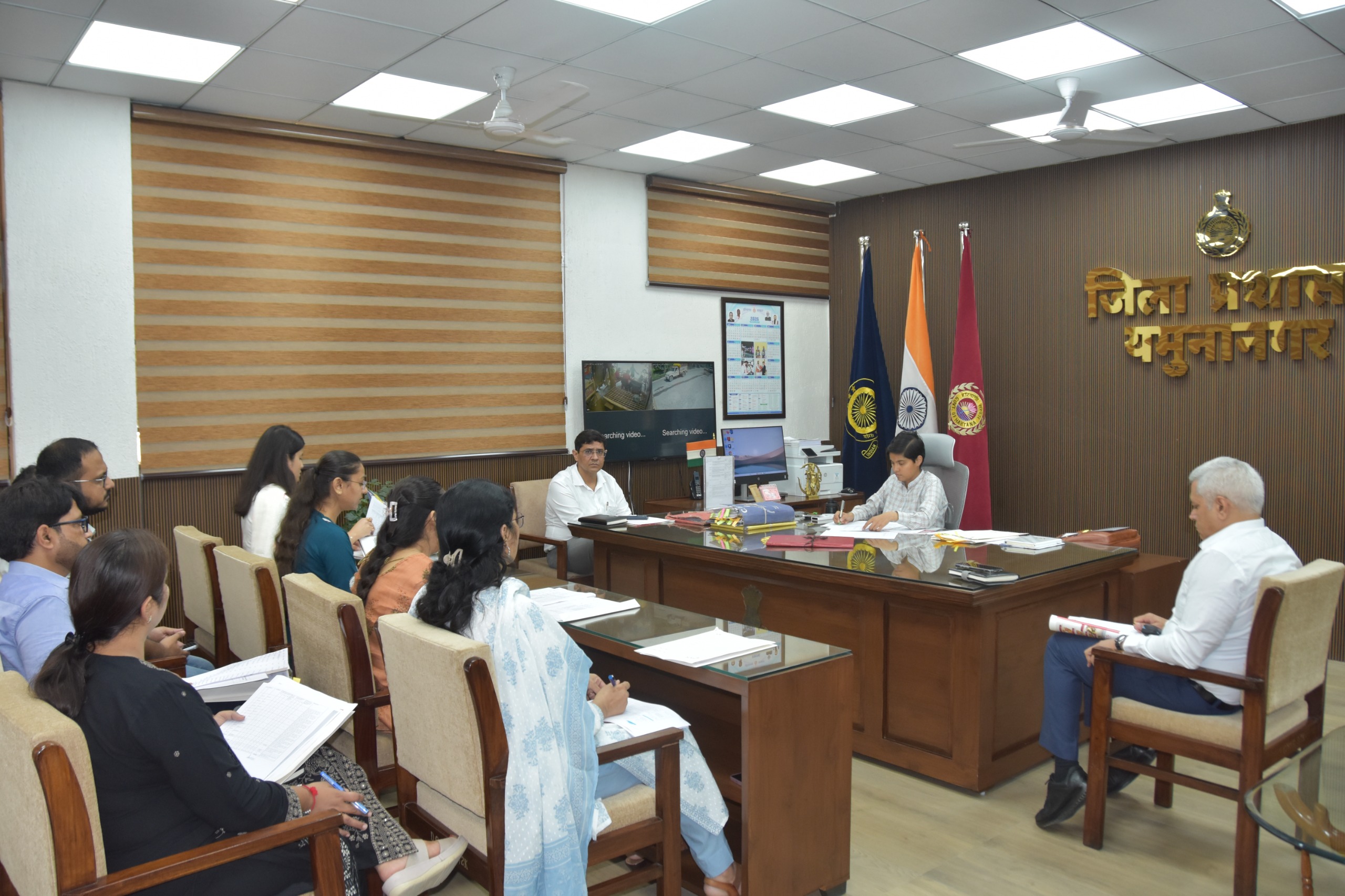
Deputy Commissioner Preeti held a meeting with district officials to review the management and development of ponds and Amrit Sarovars across Yamunanagar district, with particular emphasis on cleanliness, expansion, prevention of water contamination and promotion of fish farming as a potential source of additional revenue for village panchayats.
During the meeting, the Deputy Commissioner reviewed the condition of Amrit Sarovars developed in different villages and discussed measures required to ensure their proper maintenance. The discussions covered regular cleanliness, expansion of water bodies wherever necessary and the possibility of utilising suitable ponds and Amrit Sarovars for fisheries activities.
Preeti directed officials to conduct regular inspections of ponds and Amrit Sarovars and immediately address any shortcomings identified during such inspections. She stressed that water bodies created under development initiatives must be properly maintained and should continue to serve their intended purpose.
The Deputy Commissioner also placed particular emphasis on preventing contamination of Amrit Sarovars by wastewater from village drains. She directed officials to make appropriate arrangements in all villages so that sewage or drainage water does not flow into the Amrit Sarovars. Such preventive measures, she said, are essential to protect water quality and ensure that the water bodies remain clean and usable.
She instructed officials to identify Amrit Sarovars that require expansion and undertake the necessary work. Wherever the existing capacity or area of a water body is inadequate, appropriate expansion should be planned so that the facility can be utilised more effectively.
The Deputy Commissioner made it clear that development works should not remain confined to official records or paperwork. She stressed that the impact of government schemes must be visible on the ground and that officials should ensure that sanctioned and planned works are actually implemented at the site.
While reviewing the status of village ponds, Preeti specifically directed officials to resolve the overflow issue at the pond in Mandkheri village at the earliest. She called for timely action so that the problem does not create inconvenience for residents or affect the surrounding area.
The meeting also focused on the potential of ponds and Amrit Sarovars for fish farming. The Deputy Commissioner directed officials to identify suitable ponds across the district where fisheries activities can be undertaken. She said the related procedures and development work should be completed at the earliest so that the identified water bodies can be put to productive use.
According to the administration’s approach discussed during the meeting, promoting fish farming in suitable Amrit Sarovars can provide village panchayats with an additional source of income. Such revenue can subsequently be utilised for local development and improvement of facilities in villages.
Preeti instructed the concerned departments to coordinate closely and complete all necessary work related to fisheries without unnecessary delay. She stressed that the potential of village-level water resources should be utilised in a planned manner while ensuring that the primary objective of maintaining clean and functional water bodies is not compromised.
The Deputy Commissioner also called for active participation of local communities in the management of ponds and Amrit Sarovars. She directed officials to work in coordination with local residents, sarpanches and panches so that decisions regarding maintenance, cleanliness, expansion and utilisation are implemented effectively at the village level.
She said involvement of elected representatives and local residents would help officials understand ground-level problems more effectively and facilitate quicker solutions. Community participation can also play an important role in preventing the dumping of waste and ensuring that drainage arrangements do not lead to contamination of water bodies.
The meeting underscored the importance of regular monitoring rather than undertaking maintenance only after problems become serious. Officials were asked to keep a close watch on the condition of water bodies and take corrective action whenever deficiencies are identified.
The administration is also looking at ways to make village water resources more useful for local development. While cleanliness and water conservation remain key objectives, suitable ponds can also support livelihood-oriented activities such as fisheries, providing panchayats with an opportunity to generate additional resources.
The Deputy Commissioner emphasised that such activities should be undertaken systematically and in coordination with the concerned departments. Officials were directed to ensure that all required procedures are completed promptly and that the benefits of the initiatives reach villages at the ground level.
The meeting also reflected the administration’s focus on ensuring that rural development projects deliver tangible results. By improving the condition of ponds, preventing wastewater from entering Amrit Sarovars and expanding water bodies where required, the district administration aims to strengthen the management of village water resources.
Preeti reiterated that maintaining clean and functional water bodies is an important responsibility of the administration as well as the local community. She urged officials to maintain coordination with village representatives and ensure that identified problems are addressed without delay.
The emphasis on fisheries also provides a broader development perspective, as productive utilisation of suitable ponds could create an additional source of income for gram panchayats. The administration has therefore asked officials to identify viable water bodies and move ahead with the necessary preparations.
The Deputy Commissioner further stressed that officials should remain focused on implementation and ensure that plans translate into visible improvements. Regular inspections, timely corrective measures and coordination with local representatives will remain important components of the district’s approach towards managing ponds and Amrit Sarovars.
The meeting was attended by Additional Deputy Commissioner Naveen Ahuja, Zila Parishad Chief Executive Officer Brahm Prakash Ahlawat, CMGGA Abhishruti, District Information and Public Relations Officer Dr Manoj Kumar, BDPOs Neha and Simran, Kartik Chauhan, Executive Engineer Love Kumar and officials from the concerned departments.
The district administration said the management of ponds and Amrit Sarovars would continue to receive attention, with officials being directed to focus on cleanliness, water quality, infrastructure improvement and productive utilisation. The objective is to ensure that these village water bodies remain well-maintained resources while also contributing to local environmental management and rural development.
POD/DESK