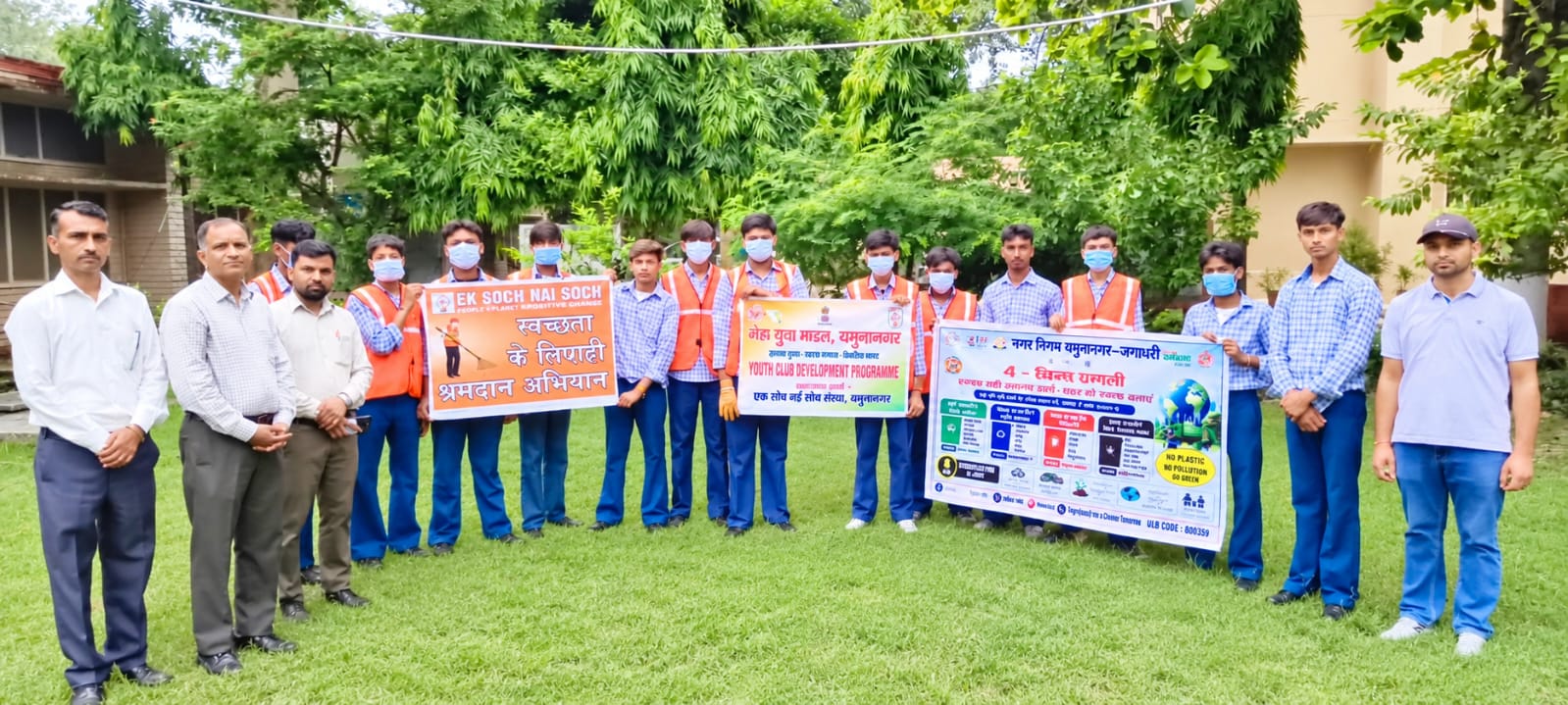
Municipal Corporation’s Swachh Bharat Mission team and Ek Soch Nayi Soch join hands with students and teachers to promote waste segregation and civic responsibility
PEN OF DEMOCRACY NEWS DESK
On the occasion of Teachers’ Day, the Swachh Bharat Mission team of the Municipal Corporation, Yamunanagar-Jagadhri, in collaboration with the Ek Soch Nayi Soch organisation, organised a special cleanliness drive at the Government Senior Secondary School near Jhanda Chowk, Jagadhri. The initiative combined the celebration of Teachers’ Day with an important message on cleanliness, responsible waste management and active participation in civic life.
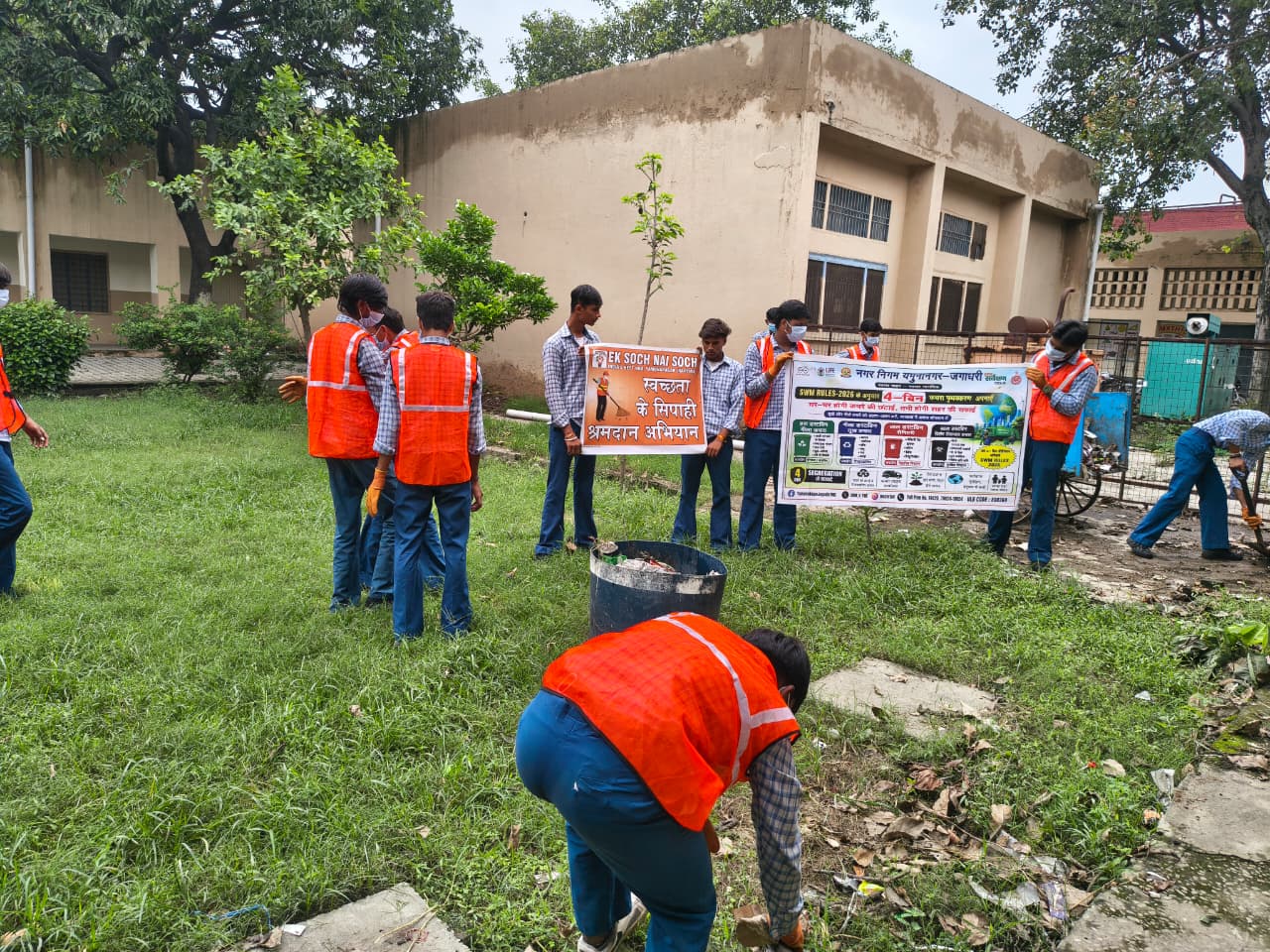
Students and teachers of the school participated enthusiastically in the campaign and joined hands to clean the school premises. Through their participation, they conveyed the message that maintaining cleanliness is not the responsibility of a particular department or organisation alone, but a collective duty involving students, teachers, families and the wider community.
During the drive, waste and garbage found in the school premises were collected systematically. The collected waste was then sent for scientific disposal, reinforcing the importance of ensuring that garbage does not simply move from one place to another but is handled and disposed of through an organised process.
The campaign also served as an awareness programme for students. Swachh Bharat Mission expert Durgesh Kumar, Ek Soch Nayi Soch founder Shashi Gupta and school principal Mohammad Javed interacted with students and teachers and explained the importance of maintaining cleanliness in educational institutions as well as in homes and public spaces.
The participants were encouraged to develop the habit of keeping wet and dry waste separate. They were also advised to dispose of garbage only at designated places and to ensure that waste generated at home, in school and in surrounding areas is handled responsibly.
Addressing the students, Swachh Bharat Mission expert Durgesh Kumar emphasised that cleanliness should not be viewed merely as a campaign conducted on special occasions. He said it should become a regular part of everyday life and a personal responsibility of every citizen.
He stressed that lasting improvement in cleanliness can only be achieved when responsible waste disposal and cleanliness become daily habits. According to him, awareness among school students is particularly important because children can carry these practices from classrooms to their homes and communities, thereby influencing their families and the people around them.
The participation of teachers also added significance to the initiative. Teachers play an important role in developing civic values among students, and their involvement in the cleanliness activity provided a practical example of responsible citizenship. Rather than limiting the message of cleanliness to classroom discussions, the campaign allowed students to actively participate in maintaining their own surroundings.
The organisers highlighted the importance of waste segregation as one of the basic steps towards effective waste management. Separating wet and dry waste at the point where it is generated can make subsequent collection, processing and disposal more systematic. Students were therefore encouraged to adopt this practice consistently instead of treating it as an occasional activity.
The campaign also emphasised that a clean school environment contributes to a healthier and more pleasant atmosphere for learning. Keeping classrooms, corridors, playgrounds and other common areas clean requires regular participation from everyone using the premises. The initiative sought to develop a sense of ownership among students so that cleanliness becomes an integral part of school culture.
Principal Mohammad Javed and the representatives associated with the campaign urged the students to extend the message beyond the school premises. They encouraged them to remain conscious of cleanliness in their homes, neighbourhoods and public places and to motivate others to avoid littering.
The joint initiative by the Municipal Corporation’s Swachh Bharat Mission team and Ek Soch Nayi Soch also highlighted the role that community organisations can play in supporting civic bodies and educational institutions. Collaborative programmes can help turn cleanliness from an administrative responsibility into a broader public movement by involving people directly in awareness and action.
 The organisers said that schools can serve as important centres for spreading awareness about responsible waste management. Students who learn the importance of segregation, proper disposal and cleanliness at an early age are more likely to carry these practices into their adult lives.
The Teachers’ Day cleanliness drive therefore carried a message extending beyond the celebration of educators. It connected the values of education and social responsibility, reminding students that learning also involves developing habits and attitudes that contribute positively to society.
At the conclusion of the programme, students, teachers and organisers collectively pledged to contribute actively towards building a clean school, clean ward and clean Yamunanagar-Jagadhri. The pledge reflected the larger objective of encouraging citizens to take ownership of their surroundings and work together for cleaner neighbourhoods.
The campaign demonstrated how educational institutions can become active partners in civic initiatives. By combining student participation, teacher involvement, municipal expertise and community engagement, the programme sought to create awareness that cleanliness begins with individual behaviour and becomes sustainable when adopted collectively.
The organisers expressed confidence that such initiatives would encourage students to become ambassadors of cleanliness in their homes and communities. The message delivered during the programme was simple but significant: a cleaner city requires not only organised campaigns but also consistent everyday action by every citizen.
POD/DESK