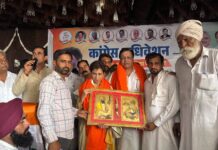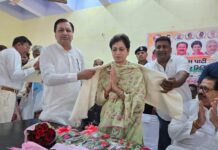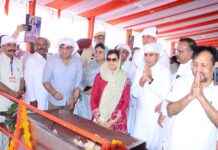
Congress leader Selja questions urban infrastructure, sanitation and sewerage systems across Haryana; seeks dialogue with protesting sanitation workers
PEN OF DEMOCRACY NEWS DESK
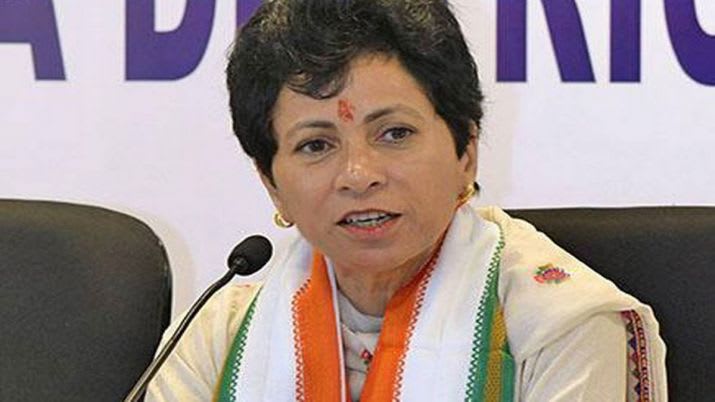
Sirsa MP, former Union minister, Congress general secretary and CWC member Kumari Selja has criticised the BJP governments over the condition of urban infrastructure, sanitation and civic services, alleging that the party’s much-publicised development model is being exposed whenever it rains.
Selja said waterlogging following even moderate rainfall in several cities, from the national capital and Delhi’s international airport to Gurugram and towns across Haryana, had raised serious questions about the government’s claims regarding urban infrastructure. She alleged that roads were inundated, sewerage systems were failing, garbage was accumulating in public spaces and residents in several areas were struggling to access clean drinking water.
According to Selja, large amounts of public money are being spent on publicity and advertisements to project an image of world-class infrastructure, but the situation on the ground presents a different picture. She said the recurring waterlogging at Delhi’s international airport after rainfall was particularly concerning because the airport serves as a major gateway for domestic and international travellers.
She questioned how the government could describe its infrastructure as a development model when roads in the national capital and even an international airport are vulnerable to waterlogging. She said passengers should not have to navigate through accumulated rainwater at an important transportation hub, while disruptions to flight operations can create difficulties for thousands of travellers.
Turning to Gurugram, Selja said the city is frequently projected as a global business destination and a millennium city, yet several of its major roads become severely waterlogged after relatively moderate rainfall. She said traffic congestion, stalled vehicles and prolonged delays have become recurring problems for commuters during the rainy season.
Selja said similar concerns were being reported from several cities across Haryana, including Faridabad, Sonipat, Panipat, Rohtak, Hisar, Sirsa, Ambala and Yamunanagar. She alleged that in some areas sewage water accumulates on streets, while garbage piles remain unattended, creating unhygienic conditions and potentially increasing the risk of disease.
The Congress leader said urban development should not be assessed merely through announcements, publicity campaigns or infrastructure claims. According to her, citizens expect basic civic services, including clean surroundings, functional sewerage networks, properly maintained roads and safe drinking water.
She said the repeated occurrence of waterlogging should prompt authorities to examine drainage systems, sewerage infrastructure, waste management and the maintenance of roads rather than treating every episode as an isolated problem. She called for greater accountability from civic authorities and the state government in ensuring that public infrastructure is capable of handling seasonal rainfall.
Selja also raised the issue of sanitation workers in Haryana, saying employees responsible for maintaining cleanliness in cities have been protesting for nearly a month. She alleged that instead of seeking a respectful and negotiated resolution to their concerns, the government was adopting a confrontational approach.
She said complaints had emerged regarding alleged use of force, detention and other coercive action against protesting employees. Selja described the issue as serious and said the concerns of sanitation workers should be addressed through dialogue rather than confrontation.
At the same time, she clarified that the Congress does not support violence or any action that causes inconvenience to the general public. However, she said the government could not avoid its responsibility by attempting to suppress the voice of employees.
Selja demanded that the Haryana government immediately initiate meaningful dialogue with sanitation workers’ organisations and seek a time-bound resolution of their legitimate demands. She also called for an impartial inquiry into allegations of mistreatment of employees and urged the authorities to review cases registered during the protest on humanitarian and legal grounds.
She said sanitation workers play a critical role in keeping cities clean and maintaining public health, particularly during the monsoon season when efficient waste disposal and sewerage management become even more important. Any prolonged dispute affecting municipal sanitation services, she added, should be resolved through communication and negotiation.
The Congress leader said the government’s responsibility was not limited to issuing advertisements or making development claims. Its primary responsibility, she said, was to ensure that residents received basic civic amenities and that public infrastructure functioned effectively.
She argued that clean streets, functioning sewerage systems, reliable roads and safe drinking water were fundamental requirements for any city aspiring to be described as modern or developed. Recurrent waterlogging, accumulated waste and overflowing sewage, she said, indicate the need for a serious review of urban planning and civic management.
Selja said the government should focus on strengthening drainage and sewerage networks, improving waste collection and ensuring regular maintenance of roads and public infrastructure. She also emphasised the need to establish effective mechanisms for responding quickly to civic problems during periods of heavy rainfall.
She said the government should engage with sanitation workers and municipal employees as partners in improving civic services. A cooperative approach, she argued, would be more effective than confrontation and would ultimately benefit residents who depend on municipal services.
The Congress leader also raised a separate issue concerning action following an assurance given in the Rajya Sabha, questioning why, according to her, no concrete action had been taken even after
Why No Action for 24 Days Despite Rajya Sabha Assurance, Asks Kumari Selja
Kumari Selja said it was unfortunate that the Leader of the Opposition in the Rajya Sabha had to raise the matter on the floor of the House. She said an incident that, in her view, required immediate action had remained without a concrete response even after 24 days.
Selja said assurances had also been given in the House by the Chairman and Union minister JP Nadda after the issue was raised. She questioned the government over what action had subsequently been taken and sought an explanation for the alleged delay in proceeding against those responsible.
She contrasted this with what she described as the BJP government’s prompt action against Congress leader Rahul Gandhi after he raised issues concerning youth, students and social dignity in Uttarakhand. Selja alleged that the contrast suggested an attempt to divert public attention from substantive issues and create divisions within society.
She said the people of Uttarakhand would not be misled by such politics. Referring to Rahul Gandhi’s successful rally, Selja claimed that the response from the public had unsettled the BJP government and said people would provide a democratic response in the future.
POD/DESK