Sirsa MP Selja questions BJP-led Centre over rising government vacancies and outsourcing, calls for a time-bound recruitment drive to protect constitutional representation of SC, ST, OBC and EWS communities
NEW DELHI | PEN OF DEMOCRACY NEWS DESK
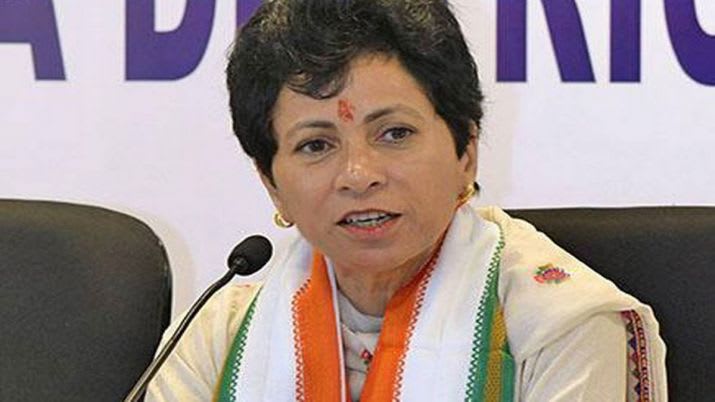
Sirsa MP, former Union Minister, Congress national general secretary and CWC member Kumari Selja has raised serious questions over the employment policy of the BJP-led Central Government, saying that reservation is not merely a provision written in the Constitution or a law book but an important constitutional mechanism for ensuring social justice, equal opportunity and adequate representation for SC, ST, OBC, EWS and other disadvantaged sections of society.
Selja said the purpose of reservation can only be fulfilled when adequate regular government posts are available and recruitment takes place in a transparent and time-bound manner. However, she expressed concern that a large number of sanctioned posts in Central Government ministries and departments have remained vacant for years, while contract-based employment, outsourcing and other temporary arrangements are increasingly being used in place of permanent jobs.
She questioned how eligible youth belonging to reserved categories could receive the real benefit of reservation when regular recruitment opportunities were shrinking.
“When the government keeps lakhs of sanctioned posts vacant for years and promotes contract and outsourcing arrangements instead of filling regular vacancies, how will the constitutional benefits of reservation reach deserving youth?” Selja asked.
According to the figures cited by the Congress leader, the number of vacant posts in various Central Government ministries and departments increased from around 4.21 lakh in 2015 to more than 8.24 lakh in 2024. She said several important departments, including the Railways, Defence and the Ministry of Home Affairs, have a significant number of sanctioned posts lying vacant.
Selja said the government must provide a clear explanation for the delay in filling these vacancies. She questioned why lakhs of young people were being deprived of opportunities for permanent government employment despite the existence of sanctioned posts.
“The question is straightforward—if recruitment itself does not take place, who will get the benefit of reservation?” she said.
The Sirsa MP maintained that reservation was introduced to ensure the participation of historically disadvantaged and underrepresented communities in government services and public institutions. It was intended to provide social and administrative representation to communities that had faced discrimination and exclusion for generations.
However, she said that if regular posts covered by constitutional reservation are continuously kept vacant, abolished or replaced with outsourced manpower, the reservation system may continue to exist formally while its practical impact on employment opportunities could steadily decline.
Selja described the increasing dependence on contractual and outsourced employment as another major area of concern. She said that constitutional reservation generally applies to regular government positions, and the gradual replacement of such jobs with temporary arrangements could reduce opportunities for eligible candidates from SC, ST, OBC and EWS communities.
According to her, the greatest impact would be felt by young people who depend on regular government recruitment for stable employment and social mobility.
She said the issue was not limited to employment statistics alone but was directly linked to the constitutional principle of social justice. The spirit behind the reservation system, she said, must not be weakened through prolonged vacancies or changes in the nature of public employment.
Referring to the constitutional vision associated with Babasaheb Dr B.R. Ambedkar, Selja said the commitment to social justice must remain at the centre of government policy. She said that the Constitution provides for representation and equal opportunity, and governments have a responsibility to ensure that these principles are effectively implemented.
The Congress leader demanded that the Central Government launch a special recruitment drive to fill all sanctioned vacant posts within a fixed timeframe.
She also called for greater emphasis on regular and permanent employment opportunities and demanded safeguards to ensure that the expansion of outsourcing and contractual arrangements does not affect the constitutional representation and rights of SC, ST, OBC and EWS communities.
Selja said the government should make recruitment data and the status of vacant posts more transparent so that young people can know how many sanctioned positions exist, how many remain vacant and when recruitment is expected to take place.
She added that employment policy should not create a situation where reservation remains protected on paper but becomes increasingly inaccessible in practice because fewer regular posts are available for recruitment.
“The objective of reservation is to ensure representation and participation. If the posts themselves remain vacant or are converted into temporary contractual arrangements, then the opportunities guaranteed through the constitutional system can be weakened,” she said.
Selja asserted that the Congress would continue to raise its voice firmly for social justice, equal opportunity and the constitutional right to representation.
She said that filling vacant government posts would not only create employment opportunities for millions of young people but would also strengthen the functioning of government departments that are currently operating with staff shortages.
The Sirsa MP urged the BJP-led Central Government to treat the issue as a matter of national importance and initiate a comprehensive recruitment programme across ministries, departments and public institutions.
Kumari Selja Writes to Railway Minister Seeking Expansion of Rail Facilities
Sirsa MP Kumari Selja has also written to Union Railway Minister Ashwini Vaishnaw, seeking an expansion of railway facilities across the Sirsa parliamentary constituency and adjoining areas.
In her letter, Selja highlighted the difficulties being faced by students, employees, traders, patients, general passengers and pilgrims due to inadequate train halts, limited connectivity and insufficient passenger facilities at several railway stations.
She demanded that the Jaipur–Bathinda Express and the Delhi (Tilak Bridge)–Sirsa Express be given halts at Suchan Kotli railway station.
Selja also sought the extension of the Meerut City–Ghaziabad MEMU service up to Narwana, along with additional halts for important trains at Narwana railway station.
The Congress leader further demanded comprehensive infrastructure development at Narwana station, including a washing line, water hydrant, coach washing point, stabling line, platform expansion, additional platforms, escalators and other essential passenger facilities.
She also urged the Railway Ministry to consider extending the Kalka–Lalgarh train up to Jaisalmer via Ambala, Patiala, Bathinda, Mandi Dabwali, Hanumangarh and Suratgarh.
In addition, Selja demanded halts in both directions for the Sirsa–Kota–Sirsa Express at Ding Mandi railway station.
She said these demands were connected with longstanding public needs and that their fulfilment would significantly improve rail connectivity for people living in the Sirsa parliamentary constituency and neighbouring regions.
Selja urged Railway Minister Ashwini Vaishnaw and the Railway Ministry to examine all the proposals on priority and take positive action. She said improved connectivity, additional train halts and modern passenger facilities would benefit lakhs of passengers and contribute to the economic and social development of the region.
POD/DESK