Awareness session at Kanhaiya Sahib Chowk focuses on waste segregation, responsible disposal and community participation
YAMUNANAGAR | PEN OF DEMOCRACY NEWS DESK
The Municipal Corporation of Yamunanagar-Jagadhri is preparing a dedicated team of cleanliness volunteers to strengthen public participation in efforts to build a clean and well-maintained city under the ‘Swachhata Hi Seva’ campaign. The initiative is being supported by the organisation ‘Ek Soch Nayi Soch’, with an emphasis on involving citizens directly in cleanliness activities and creating greater awareness about responsible waste management.
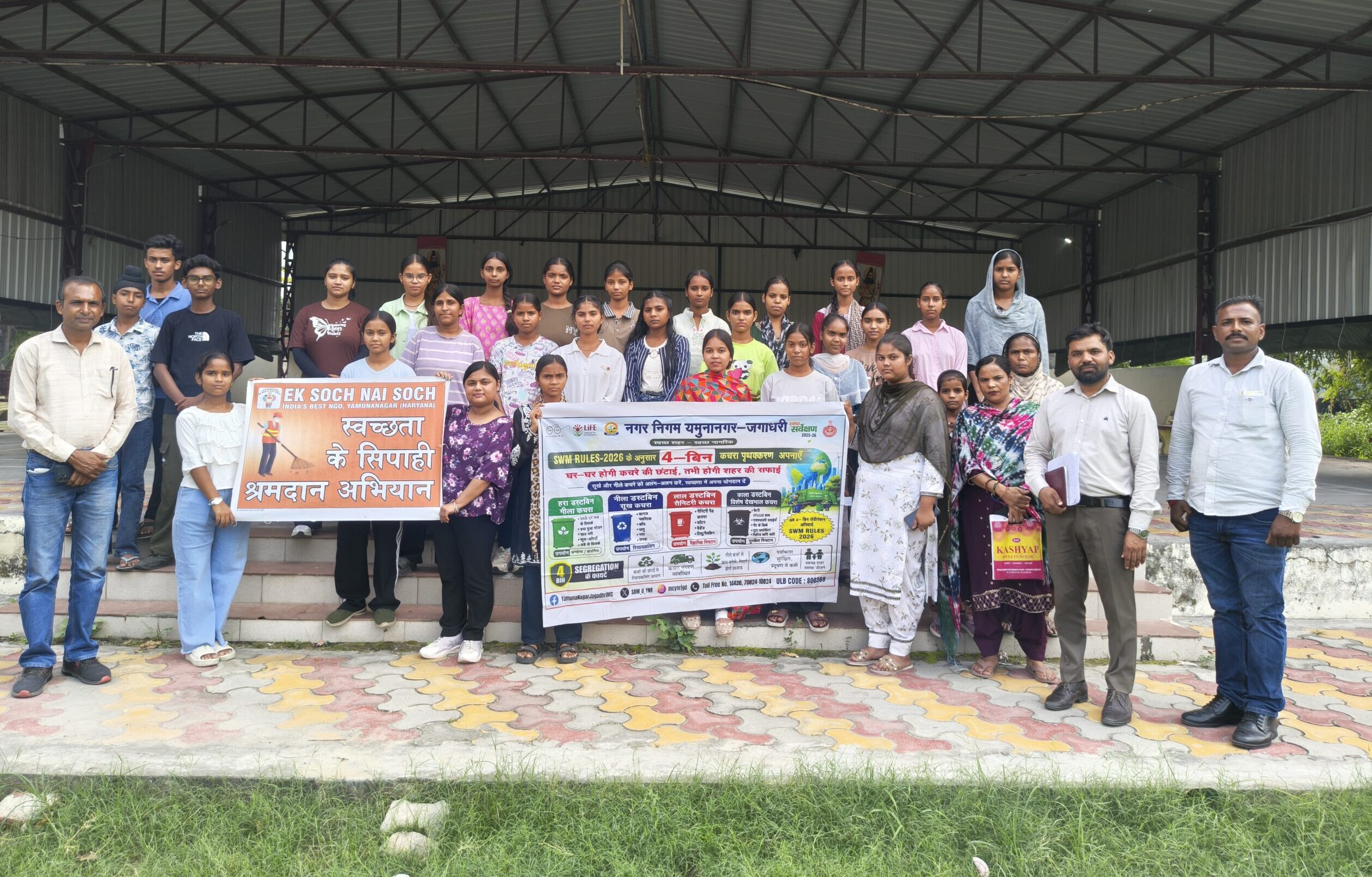
As part of the initiative, an awareness meeting was organised with cleanliness volunteers at Kanhaiya Sahib Chowk in Yamunanagar. The session focused on the importance of cleanliness, proper solid waste management and the role that residents can play in ensuring that waste generated at homes and commercial establishments is handled responsibly.
Speaking to the volunteers, SBM Expert Durgesh Kumar explained various aspects of cleanliness and solid waste management and highlighted the importance of responsible waste disposal. He also briefed the participants about the Solid Waste Management Rules, 2026, and stressed that effective waste management requires active cooperation from every citizen.
Volunteers Focus on Waste Segregation and Responsible Disposal
Durgesh Kumar said waste generated by households as well as establishments should be separated according to the prescribed categories before being handed over to the designated waste collection system. Proper segregation at the point of generation, he explained, can make the subsequent collection, processing and disposal of waste more effective and help improve the overall cleanliness of the city.
He also urged residents not to throw waste in public places. Maintaining cleanliness, he said, is not solely the responsibility of municipal workers or government agencies, but a collective responsibility requiring sustained participation from citizens.
The SBM expert called upon the volunteers to work closely with the Municipal Corporation and actively participate in cleanliness-related activities. He encouraged them to communicate with people in their neighbourhoods, explain the importance of proper waste segregation and disposal, and motivate residents to adopt responsible sanitation practices in their daily lives.
The volunteer network is intended to provide a stronger community-level connection between the Municipal Corporation and residents. Volunteers can play an important role in spreading information about cleanliness initiatives, encouraging behavioural change and helping residents understand how their everyday waste-handling practices affect the wider urban environment.
Durgesh Kumar emphasised that keeping public spaces clean requires more than periodic cleanliness campaigns. Regular cooperation from residents, responsible disposal of household and commercial waste and greater awareness about waste segregation are essential for creating lasting improvements.
Founder of ‘Ek Soch Nayi Soch’, Shashi Gupta, also addressed the meeting and said every citizen has an important role in building a clean city. He appealed to children and volunteers to adopt cleanliness practices themselves before encouraging others to follow them.
Gupta urged participants to spread the message of cleanliness among their families, friends and people living in their surroundings. He said individual actions, when adopted collectively, can create a significant impact on the cleanliness and appearance of neighbourhoods.
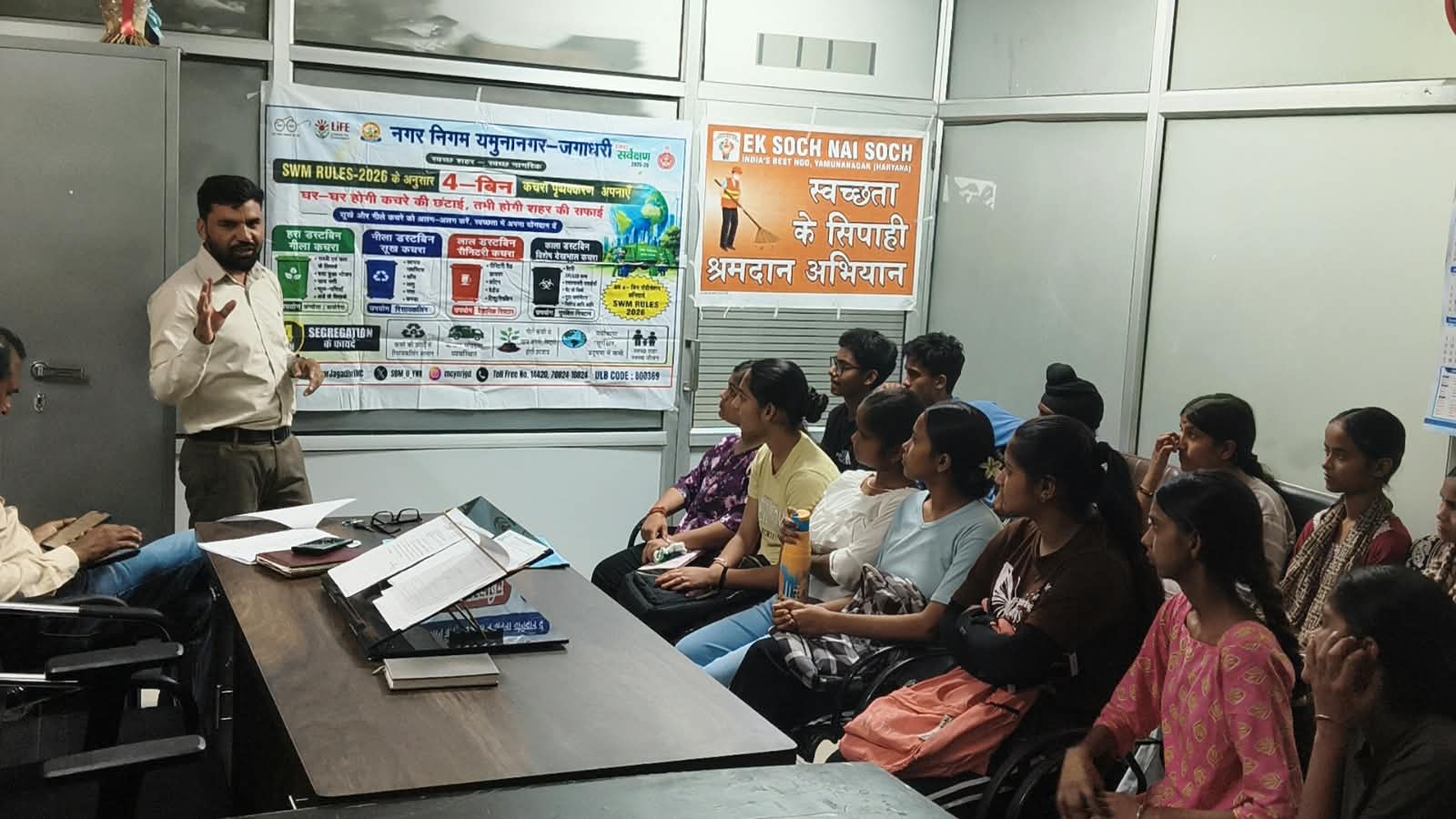 He encouraged the volunteers to become active messengers of the cleanliness campaign and inspire people around them to avoid littering and handle waste responsibly. According to him, community involvement is essential for ensuring that cleanliness becomes a regular habit rather than remaining limited to special drives or awareness programmes.
The participation of children in the meeting was also highlighted as an important component of the initiative. Early awareness among children can help establish responsible sanitation habits and encourage them to influence positive practices within their families and communities.
During the meeting, children and cleanliness volunteers collectively took a pledge to actively cooperate in efforts to create a cleaner Yamunanagar. They resolved to contribute to cleanliness activities and take the message of responsible sanitation to more people.
The volunteers were also encouraged to work as a bridge between municipal authorities and the community by identifying cleanliness-related concerns in their surroundings and encouraging residents to cooperate with municipal waste collection and sanitation arrangements.
The initiative comes with an emphasis on public participation in urban cleanliness. While municipal bodies are responsible for providing sanitation infrastructure and waste collection services, the effectiveness of these systems also depends on residents following basic waste-management practices.
Segregating waste before collection, avoiding littering in public areas and ensuring that waste is handed over through the designated collection system can help reduce the burden on waste-management infrastructure. Public awareness can also encourage residents to become more conscious of the environmental and civic consequences of improper disposal.
The awareness meeting at Kanhaiya Sahib Chowk therefore served both as an orientation programme for the volunteers and as an effort to strengthen community involvement in the city’s cleanliness campaign. The organisers emphasised that sustained public cooperation would be essential for achieving visible and lasting improvements.
The Municipal Corporation and ‘Ek Soch Nayi Soch’ are seeking to encourage citizens to move beyond viewing cleanliness as the responsibility of sanitation workers alone. The volunteer initiative aims to promote a sense of ownership among residents and motivate them to actively participate in maintaining their surroundings.
The meeting concluded with the volunteers and children reaffirming their commitment to cleanliness and pledging to spread awareness about responsible waste management. The organisers expressed the expectation that the volunteer network would continue to expand and encourage more citizens to participate in cleanliness activities.
The initiative under ‘Swachhata Hi Seva’ represents an effort to combine municipal services with community participation, with the larger objective of creating a cleaner, healthier and more responsible urban environment in Yamunanagar.
POD/DESK