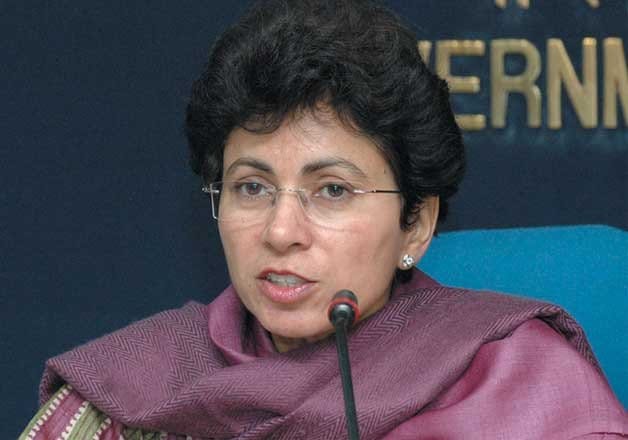
Sirsa MP questions electoral processes and SIR-related concerns, calls for transparency, impartial scrutiny and protection of every eligible voter’s rights.
Credibility Under Discussion
Kumari Selja, a former Union minister, Congress general secretary and Sirsa MP, has questioned the functioning of the Election Commission of India, saying public confidence in the constitutional poll body is central to the credibility of India’s democratic system.
She said the Election Commission must ensure that every decision connected with elections and electoral rolls is seen to be transparent, impartial and free from political influence. According to her, concerns raised by political parties and citizens over electoral processes should receive clear, fact-based responses.
Selja said the issue was not about opposing a constitutional institution but about protecting its independence, accountability and public credibility. She said the Congress would continue to raise questions wherever it believes the electoral process requires greater transparency.
Questions over electoral process
Selja said several decisions taken during the tenure of Chief Election Commissioner Gyanesh Kumar have become the subject of questions and debate among opposition parties and sections of the public. She argued that the Election Commission’s decisions should inspire confidence across the political spectrum and among ordinary voters.
She called for an impartial examination of decisions and electoral processes that have attracted controversy and said relevant facts should be placed in the public domain wherever necessary. In her view, transparency in such matters is important not only for political parties but also for voters who depend on the electoral system to exercise their constitutional right.
SIR and voter-list concerns
A major part of Selja’s statement focused on the Special Intensive Revision, or SIR, of electoral rolls. She said the Congress has repeatedly raised concerns regarding the process and stressed that no eligible citizen should be removed from the voter list through an error, inadequate verification or an arbitrary procedure.
Selja said complaints and allegations concerning the deletion of large numbers of names from electoral rolls should be examined transparently. She maintained that safeguarding the voting rights of every eligible citizen is a constitutional responsibility of the election machinery and that the process must provide appropriate opportunities for affected voters to raise objections and seek correction.
Uttarakhand complaints
Referring specifically to Uttarakhand, Selja said Congress workers, members of the state leadership, senior party leaders and citizens have raised concerns related to electoral rolls and the election process. She demanded that such complaints be examined individually and that responsibility be fixed wherever an irregularity is established.
She said an electoral system earns public trust when complaints are addressed through transparent procedures and when the reasons behind decisions can be understood by citizens. She also stressed that political disagreement should not weaken the institutional framework through which elections are conducted.
Congress raises wider governance concerns
Selja also criticised the BJP government in Uttarakhand over issues including unemployment, problems faced by employees and other matters of public interest. She said governments cannot rely on political tactics while ignoring issues that affect citizens in their everyday lives.
She maintained that the final decision in a democracy rests with voters and that citizens assess the performance of governments through their own judgement and voting rights. Her remarks linked the debate over electoral procedures with the wider question of public accountability.
A call for institutional confidence
Selja said the Congress’s stated concern is not directed against the Election Commission as an institution but towards ensuring that constitutional bodies remain independent, impartial and accountable. She urged the Commission to respond factually to questions raised by opposition parties and citizens so that confidence in the electoral process is strengthened.
The wider debate over electoral-roll revision has also placed greater attention on the importance of accurate voter lists. Electoral rolls must be updated to remove ineligible or duplicate entries while ensuring that eligible voters are not wrongly excluded. Maintaining that balance requires transparent procedures, accessible grievance mechanisms and timely correction of genuine errors.
For voters, the practical significance is straightforward: electoral information should be checked carefully, and any discrepancy should be taken up through the official correction and grievance channels available to electors. Political parties and civil-society groups can raise broader concerns, but individual voters also have a direct interest in ensuring that their names and details are correctly reflected in the electoral roll.
She said the credibility of elections depends not only on the conduct of polling on voting day but also on the integrity of the processes that precede it, including preparation and revision of electoral rolls. In her view, citizens must have confidence that their names will remain protected when they are eligible to vote and that any genuine correction will be made through a transparent and verifiable procedure.
She further said political parties have a responsibility to place concerns before the appropriate authorities, while election authorities have a responsibility to examine complaints according to law and communicate their decisions clearly. Such an approach, she said, can help reduce uncertainty and strengthen faith in democratic institutions.
Selja said Congress would continue to raise its voice for democratic rights, free and fair elections and protection of the voting rights of every eligible citizen. She maintained that strengthening public confidence requires institutions to address questions with facts, transparency and accountability.
The statement comes amid continuing public and political discussion around electoral-roll revision and the safeguards required to ensure that the exercise of updating voter lists does not inadvertently affect eligible electors. For the credibility of any electoral system, the competing objectives of accuracy, inclusion, verification and transparency remain closely connected.