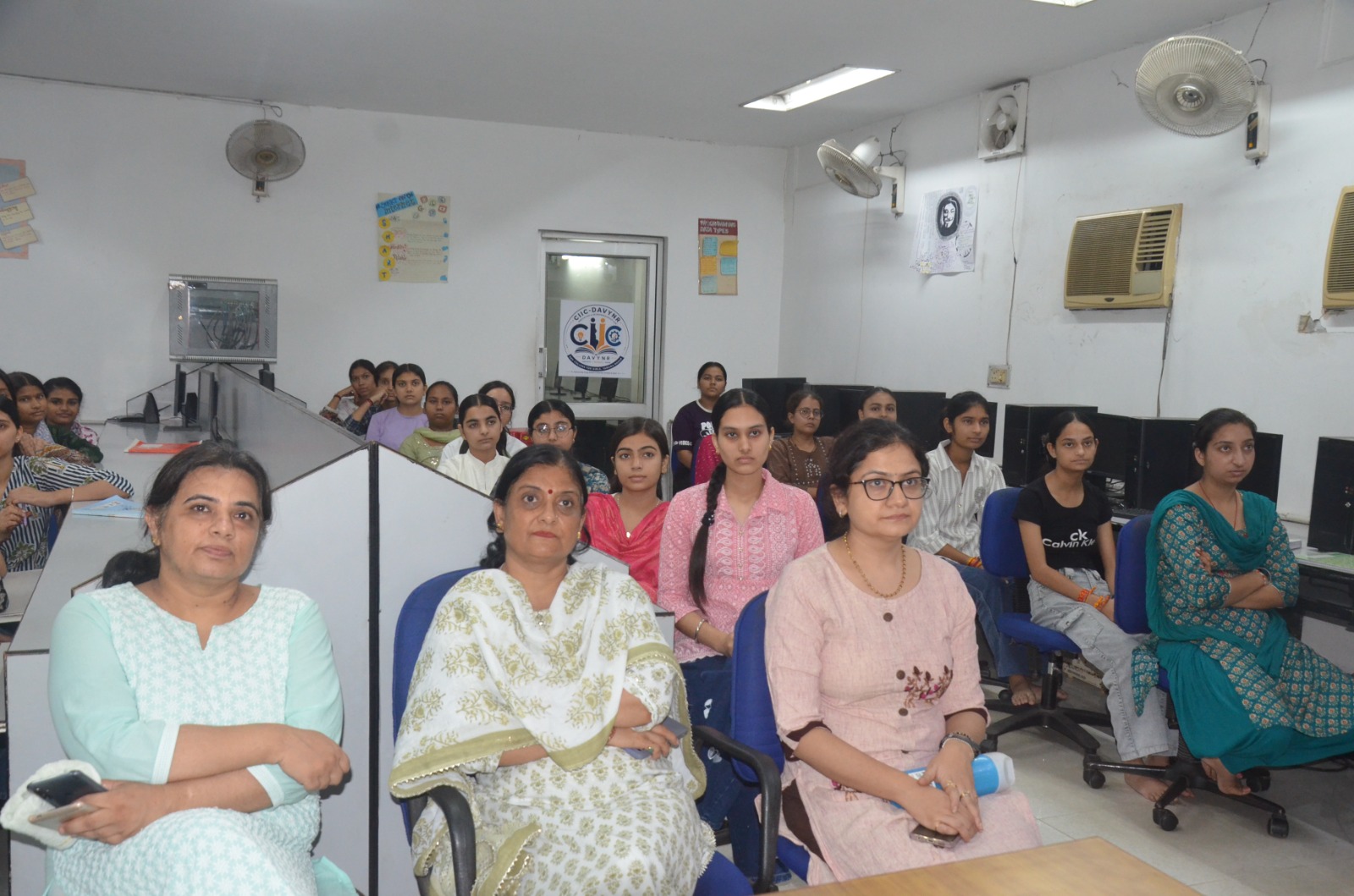
DAV Girls College students participate in an online lecture on strengthening research and innovation in higher education.
Online lecture highlights institutional research, innovation, entrepreneurship and the role of higher education in social and economic development
PEN OF DEMOCRACY NEWS DESK YAMUNANAGAR:
The Institution’s Innovation Council (IIC) of DAV Girls College organised an online lecture for students on strengthening the ecosystem of research and innovation in higher educational institutions. The programme was organised under an initiative of the Ministry of Education’s Innovation Cell and focused on developing stronger institutional mechanisms to promote research, innovation and entrepreneurship across higher education institutions.
During the programme, Shahina and Preksha, representatives of the Strategic Alliances Division of the Office of the Principal Scientific Adviser to the Government of India, interacted with the participants and explained various aspects of promoting research and innovation at the institutional level. The session provided students with an overview of the need for creating an environment where new ideas can be encouraged, developed and eventually transformed into practical solutions.
The programme was chaired by Dr Sunita Kaushik, Vice-President of the Institution’s Innovation Council, and Vivek, the IIC Convener. Faculty members and students participated in the online session, which focused on the changing role of higher educational institutions in research, innovation and entrepreneurship.
Addressing the participants, Shahina said higher educational institutions should not remain limited to being centres that provide degrees and conventional academic knowledge. Instead, they need to evolve into effective centres of research, innovation, entrepreneurship and social transformation. She emphasised that institutions have an important role to play in developing an environment where students and researchers can identify problems, generate new ideas and work towards solutions that can create a wider social impact.
She explained that strengthening institutional capacity is essential for developing a sustainable research and innovation ecosystem. According to her, the government has introduced initiatives such as Manthan and Utthan to strengthen the capabilities of higher educational institutions and encourage a systematic approach towards innovation and development.
Shahina explained that Manthan provides a platform for discussion and deliberation on new ideas and possible solutions to emerging challenges. The initiative encourages stakeholders to examine problems from different perspectives and identify innovative approaches. Utthan, she said, focuses on taking promising ideas forward so that they can contribute to development and meaningful transformation.
She also discussed the importance of converting ideas generated by students and researchers into practical and impactful solutions. Merely developing an idea, she explained, is not enough. A strong institutional ecosystem is required to support the process through research, collaboration, experimentation, mentoring and appropriate mechanisms for implementation.
The session also highlighted the importance of encouraging students to participate actively in research and innovation. Higher education institutions can provide students with opportunities to identify challenges around them, develop innovative approaches and understand how academic knowledge can be applied to real-world situations. Such exposure can help build problem-solving abilities and encourage a culture of innovation among young people.
Preksha said higher educational institutions should design and guide their research activities by keeping in view the needs of industry and society. She stressed that research should not remain confined to academic discussions but should also address practical challenges and emerging requirements.
She highlighted the importance of collaborative research and said stronger partnerships among educational institutions, industry and society could help create more relevant and effective research outcomes. According to her, institutions can make a significant contribution to social and economic development by promoting collaboration, innovation and entrepreneurship.
The interaction also brought attention to the growing importance of an integrated approach to research and innovation. In a rapidly changing environment, educational institutions need to create opportunities for students and researchers to work across disciplines and explore new approaches. Such collaboration can help generate ideas that address complex challenges and have the potential for wider application.
The speakers also underlined the role of institutional support in nurturing innovative ideas. Students may come up with promising concepts, but these ideas require guidance, research facilities, collaboration and opportunities for further development. A strong innovation ecosystem can provide the necessary environment for moving from an initial concept to a workable and impactful solution.
For students, the online lecture served as an opportunity to understand how research and innovation are increasingly becoming an important part of higher education. The programme also encouraged them to look beyond conventional academic learning and explore ways in which their knowledge and creativity could contribute to solving problems faced by society and industry.
The organisers said programmes of this nature can help create greater awareness among students about research opportunities and the broader innovation ecosystem. Regular interaction with experts and professionals can also motivate young learners to consider research, entrepreneurship and innovation as important avenues for their academic and professional development.
The successful organisation of the programme involved the support of Dr Paramash Kumar, Dr Shikha and Mamta Thapar. Their contribution helped facilitate the online session and ensure participation in the programme.
The initiative by DAV Girls College’s Institution’s Innovation Council reflects the growing emphasis on developing research-oriented and innovation-driven academic environments. By exposing students to national-level initiatives and expert perspectives, such programmes can encourage a stronger culture of creativity, problem-solving and entrepreneurship within higher educational institutions.
The session concluded with an emphasis on the need for educational institutions to continuously strengthen their research capabilities, encourage new ideas and build meaningful links with industry and society. The discussions highlighted that innovation becomes more effective when institutions provide students and researchers with the right ecosystem to experiment, collaborate and turn knowledge into solutions that can contribute to wider development.