Rotary Rivera Path Lab Inaugurated in Yamunanagar After Three-Year Delay
A long-awaited dream project of Rotary Yamunanagar Rivera and GNK Group becomes a reality at Guru Nanak Khalsa College, with a focus on diagnostic services and long-term sustainability.
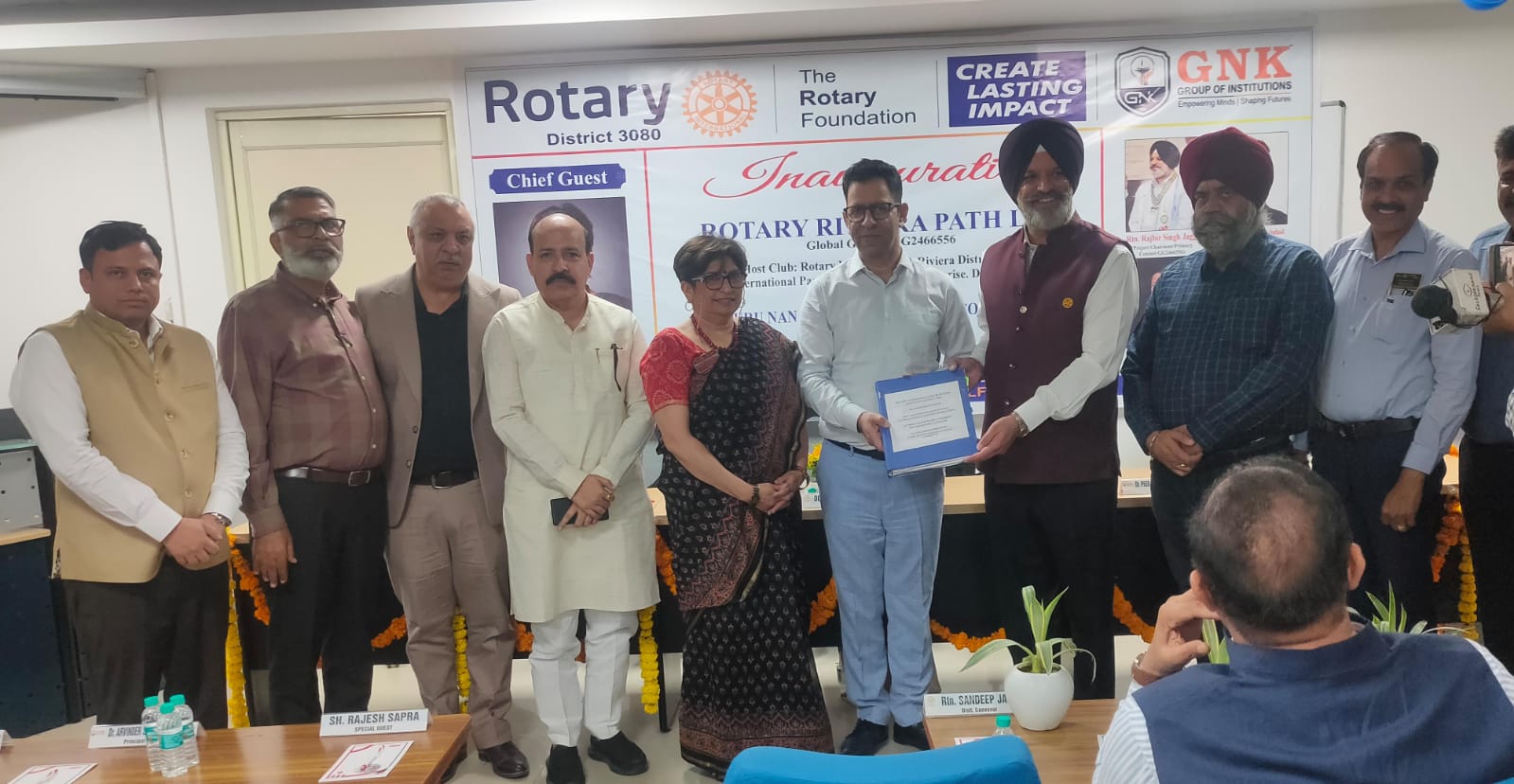
A long-pending healthcare initiative took a significant step forward with the inauguration of the Rotary Rivera Path Lab at Guru Nanak Khalsa College, Yamunanagar. Established under Global Grant GG2466556 through the joint efforts of Rotary Yamunanagar Rivera and the GNK Group, the project marks the completion of an initiative that had remained pending for three years.
Rotary Rivera, belonging to Rotary District 3080, served as the host club, while Rotary Karachi Sunrise from District 3271 partnered internationally in the project.
The inauguration was attended by District Governor Dr Rita Kalra as the chief guest. Past District Governor (PDG) Arun Mongia and Dr Peer Ghulam Nabi Sohel, CEO of the GNK Group, were the guests of honour. Rajesh Sapra, BJP district president, attended as the special guest.
A Three-Year Dream Finally Realised
Rotary Rivera President Rajesh Sondhi described the laboratory as a dream project that had faced a prolonged delay despite the grant having been received three years earlier. He expressed gratitude to the Khalsa College management, the principal, PDG Arun Mongia and project chairman Rajbir Jaggi for their support in bringing the initiative to completion.
Sondhi said the laboratory was the outcome of collective efforts by members of the Rotary family and expressed confidence that it would prove beneficial to people in need. The project is intended to strengthen access to diagnostic services through a community-focused healthcare initiative.
$30,000 Project Backed by Multiple Contributors
District Governor Dr Rita Kalra said the project had a total value of 30,000 US dollars. According to her, the contributions included $10,000 from PDG Arun Mongia, $4,000 from the international partner and a matching grant of $12,000 from The Rotary Foundation.
Explaining the role of Rotary’s funding mechanism, Kalra said contributions made by Rotarians help support projects through the foundation’s grant system. Her remarks highlighted how collaborative funding can turn local healthcare ideas into practical community initiatives.
She said the idea had emerged during the COVID period, when the need for accessible healthcare services had become particularly evident. The project’s completion, she indicated, was an important milestone, but its long-term success would depend on maintaining reliable standards and effective operations.
Sustainability Will Be the Next Challenge
Kalra identified the long-term sustainability of the laboratory as the major challenge ahead. She stressed the importance of following established protocols, securing the necessary licences, complying with biomedical waste management rules and employing trained technicians.
These measures are essential for maintaining quality, safety and public confidence in diagnostic services. A laboratory’s value depends not only on its inauguration but also on its ability to deliver dependable services consistently while meeting applicable regulatory requirements.
Kalra also spoke about exploring a future grant for a dialysis facility and a laboratory operating to international standards. Such initiatives, if taken forward, could broaden the scope of community healthcare support. However, their progress would depend on future planning, funding and the fulfilment of relevant technical and regulatory requirements.
Collective Effort Behind the Initiative
The programme was organised by Rotarian Rajesh Sondhi, President for 2026–27; Rotarian Rajbir Singh Jaggi, project chairman; and Rotarian Anupam Gupta, Secretary for 2026–27.
The inauguration brought together Rotary representatives, institutional stakeholders and community figures around a shared healthcare initiative. With the laboratory now inaugurated, attention will turn to its day-to-day functioning, compliance and financial sustainability.
The project’s completion after a three-year delay represents an important step for the organisers. Its lasting contribution, however, will ultimately be measured by the quality, accessibility and continuity of the diagnostic services it provides to the community.
Yamunanagar community events and local updates
Awareness initiatives and public welfare in Yamunanagar
Community development through education and public initiatives
Yamunanagar: Local events and community participation
The project’s stated funding figures are based on information provided by the organisers at the inauguration. The laboratory’s ongoing operations, service availability and regulatory status should be confirmed with the institution before making specific claims about services offered to the public.