Rapouli project expected to prevent burning of nearly 50,000 metric tonnes of paddy residue while creating direct and indirect employment opportunities
YAMUNANAGAR | PEN OF DEMOCRACY NEWS DESK
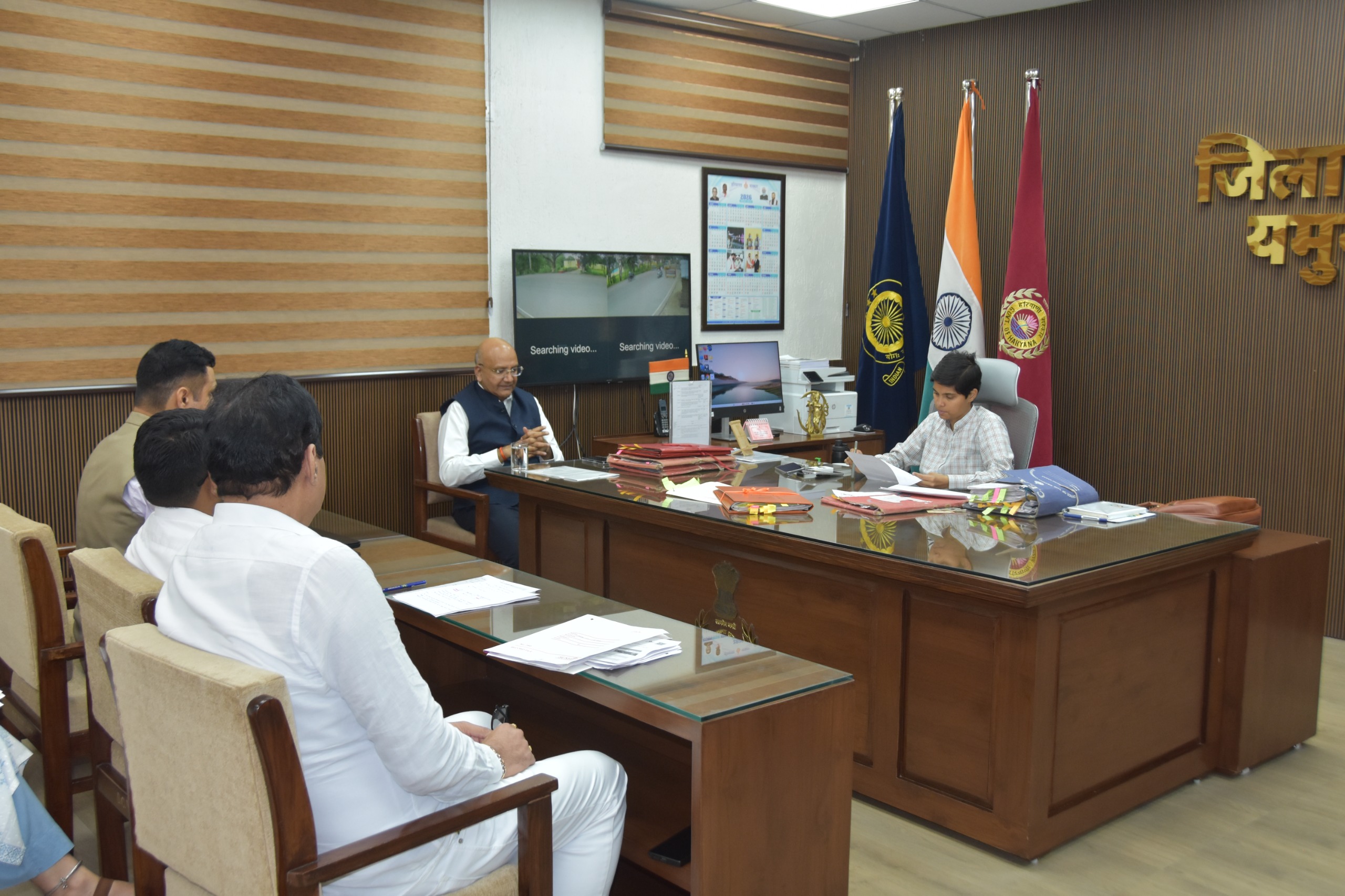
The Yamunanagar administration is stepping up efforts to prevent the burning of paddy residue and promote scientific utilisation of agricultural waste through compressed biogas (CBG) projects. Deputy Commissioner Preeti reviewed measures to prevent crop residue burning at a meeting held with the Managing Director of HPSR and senior administrative officials at the Secretariat conference hall.
During the meeting, the Deputy Commissioner said HPSR was setting up a CBG plant at Rapouli village, which would provide an organised mechanism for utilising paddy residue and other organic waste. She said the Central and Haryana governments were making necessary arrangements to promote the productive use of crop residues and reduce dependence on burning as a disposal method.
Preeti said Haryana had already taken steps towards developing infrastructure for crop residue management, with the state’s first residue management plant established in Sirsa. Similar plants have also been established in Jind and Kaithal, while the CBG project coming up in Yamunanagar is expected to further strengthen the district’s efforts in the fields of clean energy and environmental protection.
The Deputy Commissioner said the development of CBG projects could give Yamunanagar a new identity in the clean energy and environmental conservation sector. She emphasised that agricultural residue should be treated as a useful resource rather than waste and should be channelled towards productive and commercial applications.
According to the administration, the Rapouli CBG project is expected to generate direct employment for around 150 people and indirect employment opportunities for approximately 500 people. The project is also expected to create an additional source of income for landowners and others involved in the collection and supply of paddy residue.
Preeti said owners of around 5,000 acres of agricultural land could potentially benefit by selling paddy straw directly to those engaged in collecting it from farms. The organised collection and utilisation of residue is expected to prevent approximately 50,000 metric tonnes of paddy straw from being burned.
The project could therefore provide an economic incentive for better crop residue management while simultaneously addressing one of the major environmental concerns associated with post-harvest agricultural activity.
The Deputy Commissioner said the CBG initiative would also facilitate the production of organic manure. The availability of organic fertiliser could provide farmers with an alternative input and potentially reduce their dependence on chemical fertilisers, while ensuring that agricultural waste is returned to productive use.
The project is also expected to open opportunities for local entrepreneurship. According to the administration, activities linked to the CBG plant could generate business opportunities in areas such as manpower supply and management, transportation of paddy residue, material transportation and other services required for the operation and supply chain of the facility.
Preeti described the establishment of the CBG plant in the district as an important step towards promoting clean energy. She said the project would help ensure better utilisation of agricultural residue, cattle dung and other forms of organic waste while providing farmers with an alternative to burning crop residue.
Compressed biogas technology enables organic waste to be processed into a useful energy source. The administration said such projects can simultaneously address waste management, pollution control and energy requirements by converting biodegradable material into commercially useful fuel.
The Deputy Commissioner said the benefits of such projects should be communicated effectively to farmers and rural communities. She directed the concerned officials to undertake awareness activities and explain to farmers how crop residue could be collected, transported and utilised commercially instead of being burned in fields.
She stressed that farmers should be encouraged to adopt scientific and commercially viable methods of crop residue management. Such an approach, she said, could help protect the environment while also creating financial benefits for farmers and other people involved in the residue supply chain.
The administration also intends to provide necessary cooperation and facilities to projects of this nature within the stipulated timelines. Preeti directed officials to ensure coordination between the departments and agencies concerned so that issues related to the CBG project can be addressed efficiently.
She said burning crop residue contributes to air pollution and affects the quality of the environment, which can increase people’s exposure to various health problems. Effective and timely management of agricultural residue, therefore, has significance not only for farmers but also for public health and environmental protection.
The administration believes that diverting paddy straw from open-field burning towards CBG production can help reduce pollution during the post-harvest period. At the same time, the collection and transportation of residue can create additional economic activity in rural areas.
The project is also expected to strengthen the concept of a circular rural economy, where agricultural and animal waste can be converted into useful products and energy instead of being treated as material requiring disposal. Paddy straw, cattle dung and other organic waste can thereby become inputs for energy and manure production.
For farmers, the availability of a structured channel for selling agricultural residue could help reduce the practical difficulties associated with its disposal. Instead of burning the residue after harvesting, farmers could potentially supply it to collection networks linked with the CBG project.
The administration has emphasised that awareness among farmers will be essential for achieving the intended environmental and economic benefits. Officials have been asked to communicate the project’s advantages at the grassroots level and encourage rural communities to participate in scientific residue management.
The employment potential associated with the project is another significant aspect of the initiative. Apart from the estimated 150 direct jobs and around 500 indirect opportunities, related activities such as transportation, manpower management and collection of agricultural residue could provide opportunities for local service providers and entrepreneurs.
The production of organic manure could also add another dimension to the project’s economic benefits. By converting organic waste into useful agricultural inputs, the project can create value from material that might otherwise be burned or discarded.
The Deputy Commissioner reiterated that the administration’s objective was to combine environmental protection with economic opportunities for farmers and rural residents. She said timely crop residue management would help reduce pollution while creating an additional income avenue for those involved in the collection and supply of agricultural waste.
Officials present at the meeting included former IAS officer and HPSR Managing Director Deepak Aggarwal, Radaur SDM Narendra Kumar, Haryana Head of CBG Sandeep Kumar, District Information and Public Relations Officer Dr Manoj Kumar, Radaur Tehsildar, Block Development and Panchayat Officer of Saraswati Nagar and other administrative officials.
The meeting concluded with directions for greater coordination, public awareness and timely support for the CBG project. The Yamunanagar administration is looking at the initiative not merely as a waste management project but as an opportunity to tackle stubble burning, promote cleaner energy, create employment and provide farmers with additional economic avenues.
With the Rapouli project expected to utilise large quantities of paddy residue, officials hope that organised collection and commercial utilisation will encourage farmers to move away from field burning. If effectively implemented, the initiative could offer a practical link between agricultural waste management, environmental protection, clean energy generation and rural economic development.
POD/DESK