Congress leader asks Haryana government to disclose district-wise details and grounds for exclusion, says no eligible family should be denied welfare benefits
CHANDIGARH | PEN OF DEMOCRACY NEWS DESK
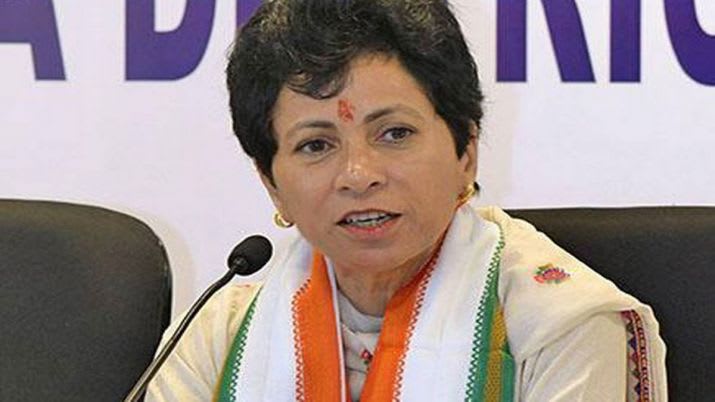
Sirsa MP, former Union minister, Congress general secretary and CWC member Kumari Selja on Saturday questioned the Haryana government’s review of Below Poverty Line (BPL) families, alleging that 13.50 lakh families were removed from the BPL list within just six months after the Assembly elections. She demanded that the government make public the district-wise details of the families excluded from the list and the criteria on which they were declared ineligible.
Selja said the number of BPL families in Haryana had risen to around 52.50 lakh before the Assembly elections, but after the elections, approximately 13.50 lakh families were removed from the list within six months. According to her, the number of families currently remaining on the list stands at around 39.89 lakh, and the eligibility of these families is also now being re-examined.
Questioning the basis of the changes, Selja asked what kind of economic and social transformation could have taken place across Haryana within only six months to result in such a large number of families suddenly becoming ineligible for BPL benefits.
She questioned whether the income of these families had genuinely increased to such an extent that they no longer required government assistance, or whether BPL cards had been issued before the elections without adequate verification for political reasons. She said the government should provide a clear and transparent explanation instead of leaving poor families uncertain about their eligibility for essential welfare schemes.
Selja said a BPL card should not be viewed merely as an administrative document. For economically vulnerable families, it is an important gateway to a range of welfare measures, including subsidised food, healthcare, education-related assistance and other government schemes. Any arbitrary change in eligibility can therefore have a direct impact on the lives of families that depend on public support.
She argued that the removal of eligible families from the BPL list without a transparent verification process and without giving them an opportunity to present their case would be unfair. She called for the verification exercise to be conducted in a manner that is transparent, participatory and accessible to affected families.
According to Selja, Gram Sabhas, local bodies and the families concerned should be involved in the verification process. Their participation, she said, would help establish whether a family genuinely meets the eligibility criteria and would reduce the possibility of errors or arbitrary exclusions.
She demanded that the Haryana government publish a district-wise list of the 13.50 lakh families removed from the BPL category and disclose the specific grounds on which each group or category of families was declared ineligible.
The Congress leader also urged the government to ensure that no eligible family’s ration card or access to government welfare services is discontinued merely because of an unresolved verification issue. She said families that genuinely qualify for assistance should not be made to suffer because of administrative discrepancies.
Selja called for a simple and time-bound appeal mechanism through which families excluded from the BPL list can challenge the decision. Such a system, she said, should be easily accessible and should provide affected families with an opportunity to submit documents and explain their circumstances before any permanent decision is taken.
She maintained that welfare schemes are intended to support people facing economic hardship and should therefore be administered with sensitivity and accountability. The government, she said, has a responsibility to ensure that verification exercises do not become a reason for genuine beneficiaries to lose access to essential services.
The Congress leader’s criticism comes against the backdrop of a broader political debate in Haryana over the identification and verification of beneficiaries under government welfare schemes. Her central question was whether the sharp reduction in the number of BPL families reflected a genuine improvement in household economic conditions or changes in the process used to determine eligibility.
Selja said the government should make the relevant data available to the public so that the process can be independently understood and scrutinised. District-wise figures and clearly stated eligibility criteria, she argued, would help address concerns among families who fear losing access to welfare benefits.
She further stressed that the interests of poor and vulnerable households should remain at the centre of the verification process. Any review of beneficiary lists, she said, should be based on established criteria and verifiable information rather than political considerations.
Selja also raised questions over what she described as divisive language used by BJP leaders. She asked what message the BJP intended to convey through such rhetoric and questioned whether the party once again wanted to rely on politics based on religious and caste divisions.
She alleged that such politics reflected the longstanding approach of the BJP and the RSS, but claimed that people had now become aware of what she described as an old political tactic. She argued that public attention should instead remain focused on issues directly affecting people’s lives.
According to Selja, Haryana’s pressing concerns include corruption, migration of young people in search of opportunities, unemployment, rising crime and growing insecurity about the future. She said the government should answer questions related to these issues rather than diverting public attention towards religious or caste-based issues.
She alleged that attempts to invoke religious and caste sentiments to shift attention away from government shortcomings would no longer be sufficient to avoid accountability. The government, she said, should address the concerns of citizens through concrete action and provide answers on matters affecting employment, security and economic wellbeing.
The Congress leader said the BPL issue was particularly sensitive because changes to beneficiary status can have consequences extending beyond food assistance. Families may also depend on their eligibility status for access to other government programmes, making transparency in the verification process essential.
She reiterated that the government should clarify the reasons behind the removal of 13.50 lakh families, publish the relevant district-wise information and establish a mechanism through which genuine beneficiaries can seek review of their cases.
Selja said the objective should be to ensure that every genuinely eligible family remains connected to government welfare programmes and that no deserving household is excluded because of an administrative error or lack of an effective appeal mechanism.
She called for the entire verification exercise to be conducted in a fair, transparent and accountable manner, with adequate safeguards for families whose eligibility is under review.
Govt Using Old Tactic to Divert Attention from Real Issues, Says Kumari Selja
Kumari Selja questioned what she described as divisive language used by BJP leaders and asked what message the party intended to send through such statements. She questioned whether the BJP was once again seeking to divide society along religious and caste lines and rely on communal politics.
Selja alleged that such an approach represented the political style historically associated with the BJP and RSS, but claimed that people had become increasingly aware of what she called an outdated political tactic.
She said Haryana’s real concerns were corruption, migration of young people, unemployment, rising crime and growing insecurity about the future. The government, she said, should answer these questions and focus on addressing the problems confronting citizens.
According to Selja, repeatedly attempting to provoke religious or caste sentiments to divert attention from alleged government failures would not resolve the state’s pressing problems. She said people were looking for answers on employment, security, economic opportunities and governance rather than political rhetoric.
POD/DESK