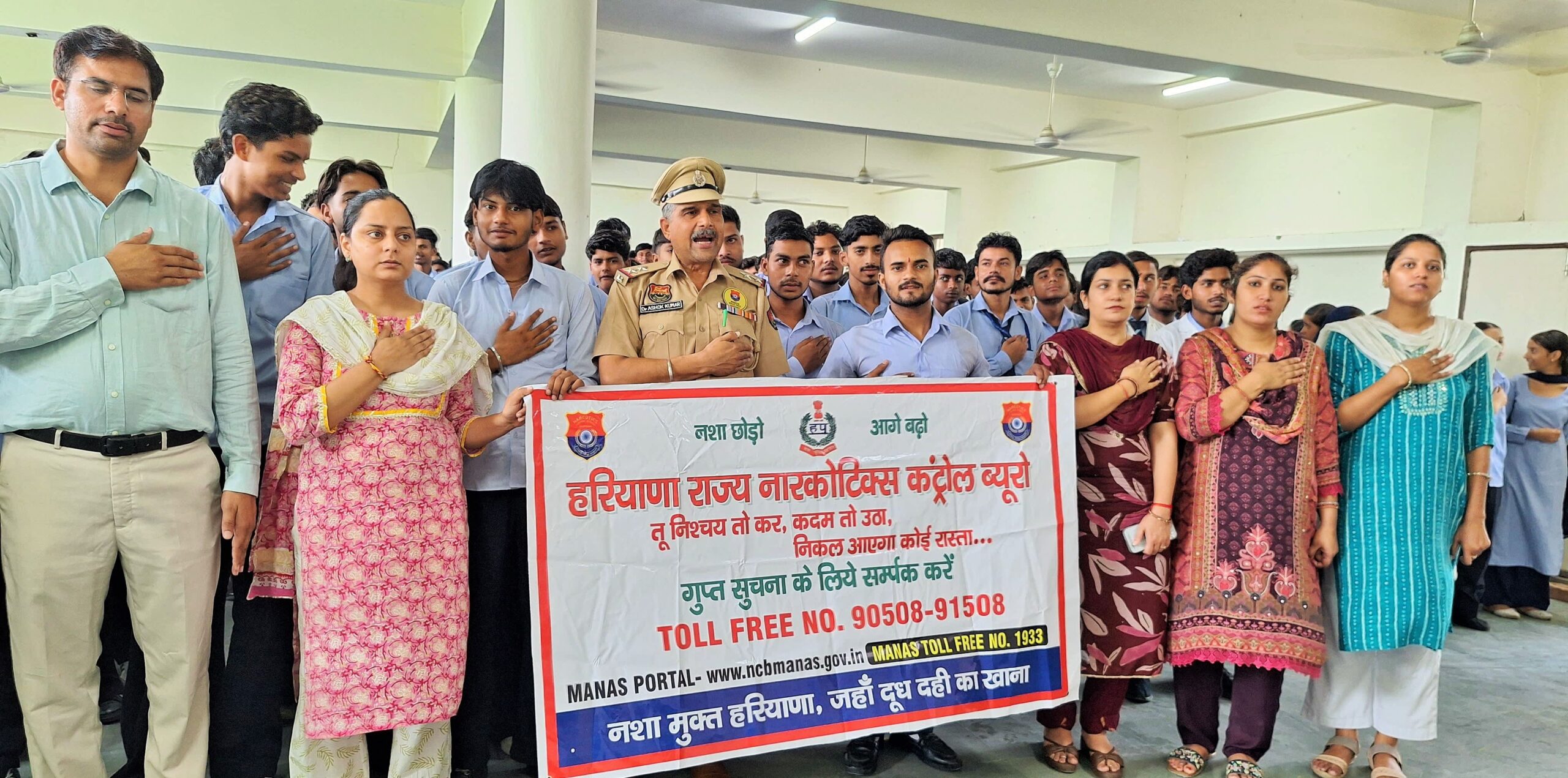
Haryana State Narcotics Control Bureau awareness and rehabilitation in-charge Dr Ashok Kumar Verma addresses students during the anti-drug awareness programme at Hathnikund Polytechnic.
111th awareness programme reaches 500 students and 41 teachers; Dr Ashok Kumar Verma stresses prevention, rehabilitation and community participation
YAMUNANAGAR | PEN OF DEMOCRACY NEWS DESK
The Haryana State Narcotics Control Bureau continued its statewide campaign against drug abuse by organising its 111th comprehensive one-day awareness programme at Chaudhary Ranbir Singh Government Polytechnic, Hathnikund. The initiative is part of the Bureau’s efforts to take the message of drug prevention and awareness to villages and educational institutions across Haryana.
The campaign is being conducted under the direction of Haryana State Narcotics Control Bureau Additional Director General of Police Sanjay Kumar, IPS, and under the leadership of Faridabad Joint Commissioner of Police and Deputy Inspector General of the Bureau Rajendra Kumar Meena, IPS. The programme at Hathnikund was conducted by Dr Ashok Kumar Verma, Sub-Inspector and the Bureau’s in-charge for awareness programmes and rehabilitation.
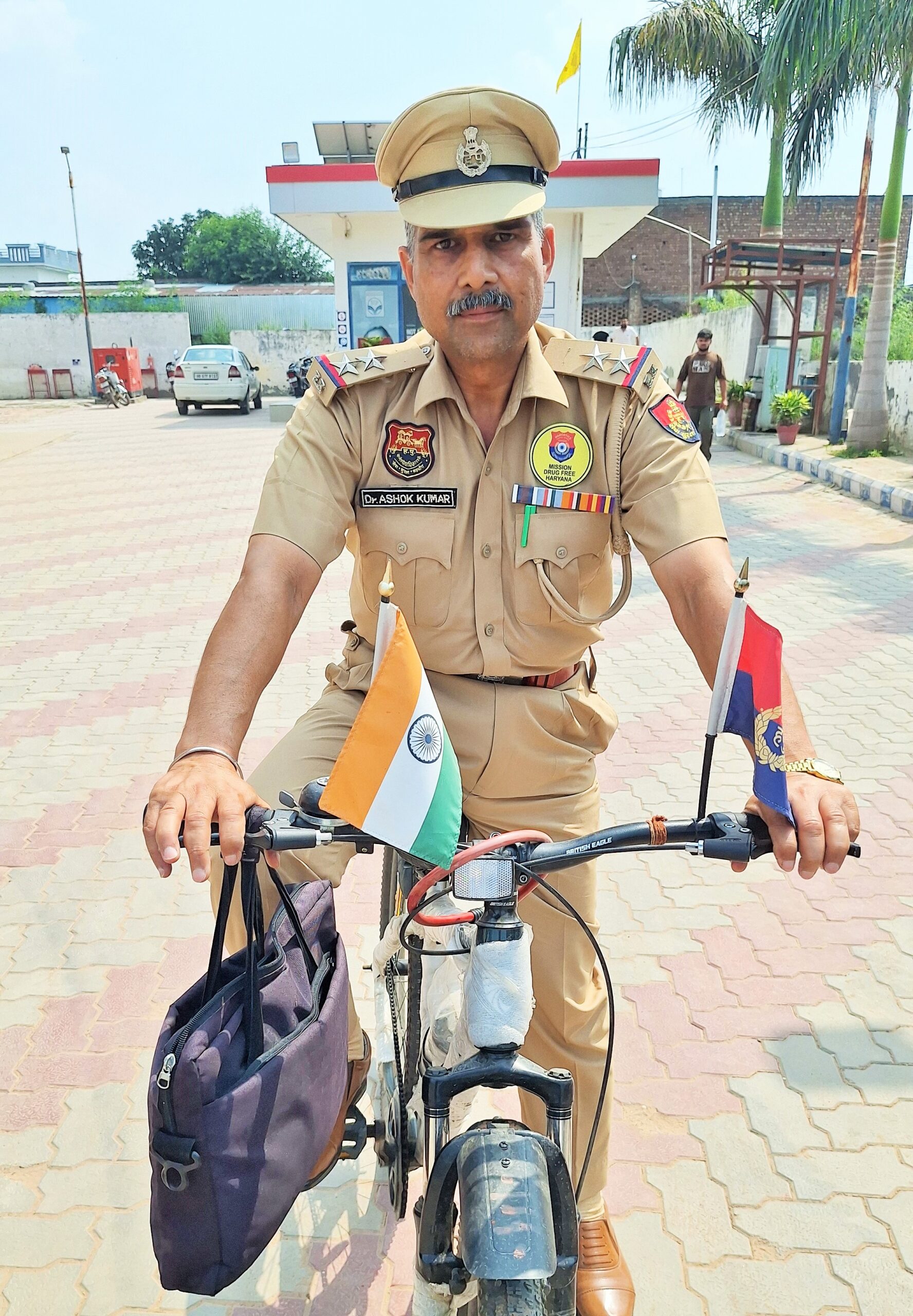
Dr Verma has been travelling from one place to another by bicycle as part of his awareness campaign, using direct interaction with students and communities to spread information about the dangers of drug abuse and the importance of prevention and rehabilitation.
Around 500 students and 41 teachers participated in the programme. It was organised in the presence of institute principal Sarla Chaudhary, who supported the initiative aimed at creating greater awareness among students about the physical, psychological and social consequences of substance abuse.
Addressing the students, Dr Ashok Kumar Verma delivered a message focusing on the aspirations that parents have for their children. He said, “If drugs were good, a mother would tell her child to take them; instead, every mother wants to give her child a healthy life, good education and values.”
He explained that drug addiction can gradually damage an individual’s physical and mental health while also affecting the happiness and stability of the entire family. The consequences, he said, can extend to education, employment opportunities, financial conditions and social standing.
Dr Verma emphasised that young people are among the country’s greatest strengths and that protecting them from drug abuse is a collective responsibility. He appealed to students to remain completely away from drugs and to encourage their friends, family members and people around them to understand the serious consequences of substance abuse.
During the programme, students and teachers were provided detailed information about different types of addictive substances, their physical and mental effects, methods of prevention and the treatment and rehabilitation of people struggling with addiction.
The awareness session also focused on the need for early intervention. Students were encouraged to understand that addiction can affect individuals from different backgrounds and that timely support and professional treatment can play an important role in recovery.
Dr Verma said tackling the drug problem requires more than enforcement measures. According to him, the fear of legal action alone cannot provide a complete solution. Families, educational institutions and society must work together with awareness and sensitivity to prevent addiction and support those affected by it.
He particularly stressed the role of educational institutions in protecting young people. Teachers can help identify warning signs, encourage healthy choices and guide students towards constructive activities and responsible decision-making. Similarly, families have an important role in maintaining open communication with young people and providing support when problems arise.
The Bureau official also urged students to become active participants in the campaign against prohibited drugs. He said responsible citizens should not remain silent when they come across information about drug trafficking or the circulation of prohibited substances.
Dr Verma appealed to citizens to share confidential information about prohibited drugs with the authorities and contribute to the drug-free campaign. He said information can be provided through 1933 or 9050891508, with the identity of the informant kept confidential.
He said community cooperation was essential for making the anti-drug campaign effective. Law enforcement agencies can take action against traffickers, but long-term prevention also depends on families, schools, colleges and local communities creating an environment in which young people are encouraged to stay away from addictive substances.
The programme also highlighted rehabilitation as an important component of the response to drug addiction. Dr Verma said individuals suffering from addiction should be encouraged to seek appropriate treatment and rehabilitation rather than being isolated or permanently stigmatised.
Students were urged to spread awareness among their peers and become responsible messengers of the drug-free campaign. The Bureau stressed that young people can play an important role in preventing substance abuse by resisting peer pressure, making informed choices and encouraging friends who may be vulnerable to addiction to seek help.
The participation of a large number of students and teachers at the Hathnikund programme provided an opportunity to communicate the anti-drug message directly to the educational community. The organisers said such programmes are intended to strengthen awareness at the grassroots level and encourage greater public participation in the campaign.
The Bureau’s bicycle-based outreach initiative also underlines its effort to take awareness activities beyond conventional institutional programmes. By travelling from one location to another and interacting directly with people, the campaign seeks to build a wider social movement against drug abuse.
The organisers said prevention must remain a central component of efforts to tackle addiction. Awareness among young people, timely intervention, family support, professional treatment and rehabilitation can collectively help reduce the social impact of substance abuse.
The programme concluded with an appeal to students and teachers to remain vigilant and contribute to creating a healthier environment for the younger generation. Participants were encouraged to share the information gained during the session with their families and communities.
At the conclusion of the programme, Principal Sarla Devi honoured Dr Ashok Kumar Verma with a memento in recognition of his awareness efforts and his contribution to spreading the message against drug abuse.
The Haryana State Narcotics Control Bureau said awareness programmes would continue to be taken to different parts of the state as part of the broader campaign to prevent drug abuse, encourage responsible citizenship and strengthen support for people seeking recovery.
The initiative at Hathnikund Polytechnic reinforced the message that the fight against drugs cannot be limited to police action alone. Sustained cooperation among law enforcement agencies, educational institutions, families, students and society is essential to protect young people and build a healthier, safer and drug-free Haryana.


 Dr Verma emphasised that young people are among the country’s greatest strengths and that protecting them from drug abuse is a collective responsibility. He appealed to students to remain completely away from drugs and to encourage their friends, family members and people around them to understand the serious consequences of substance abuse.