Swachh Bharat Mission team educates residents on separating wet, dry, sanitary and hazardous waste at source
YAMUNANAGAR | PEN OF DEMOCRACY NEWS DESK
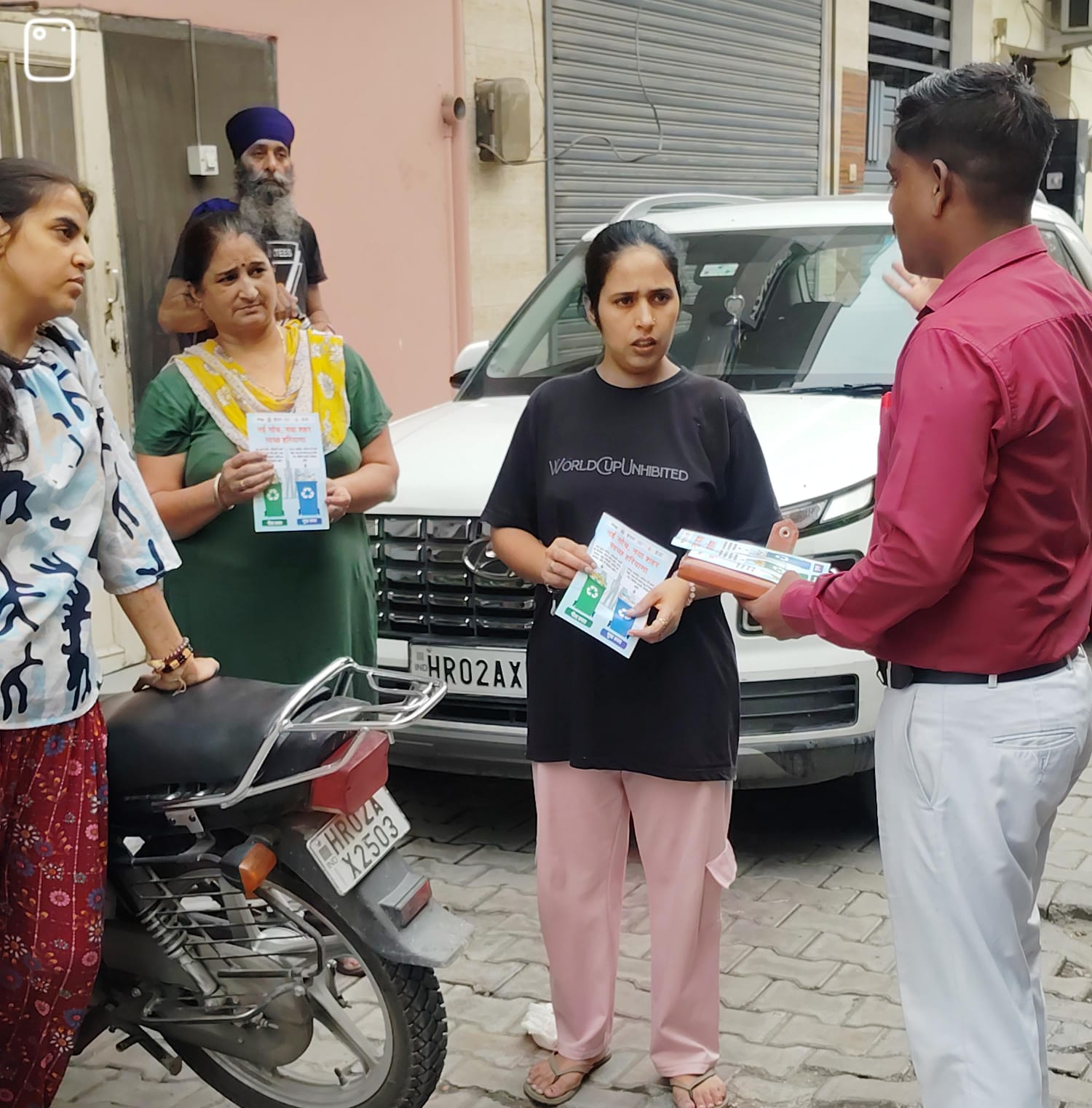
The Municipal Corporation has intensified its daily four-bin waste segregation campaign to encourage residents to separate household waste at source and contribute to more efficient waste collection, recycling and disposal. Under the directions of Municipal Commissioner Mahabir Prasad, a team from the Swachh Bharat Mission conducted a door-to-door awareness drive in New Hamida Colony, Ward 15, on Monday.
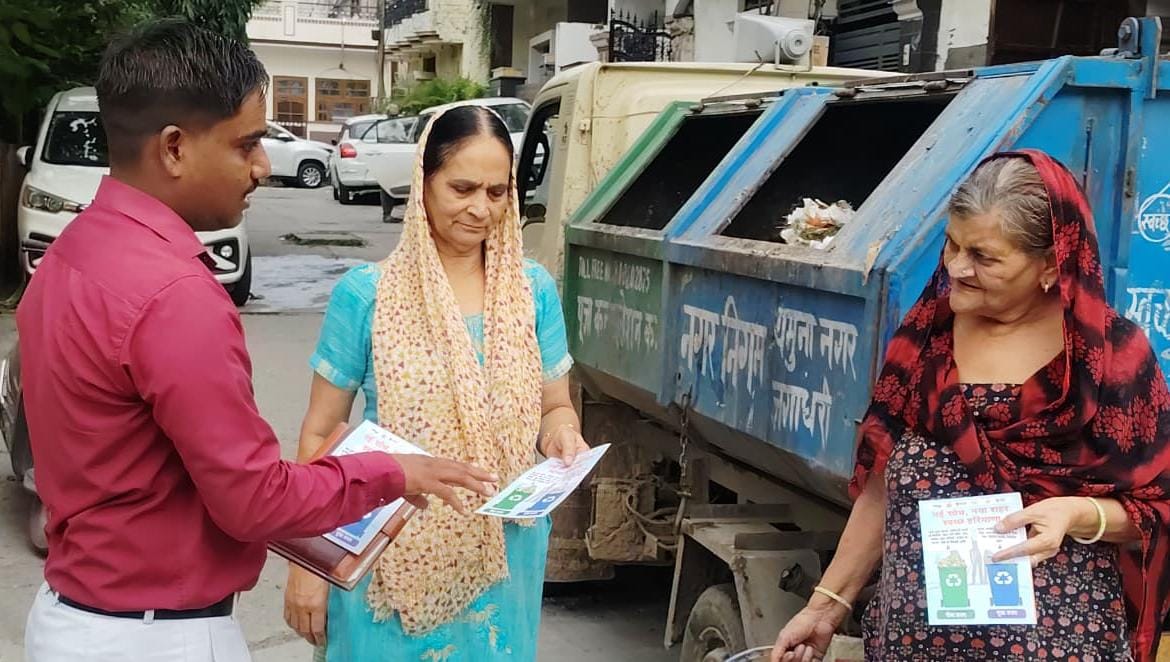
During the campaign, members of the Swachh Bharat Mission team visited households and explained to residents how different types of waste should be separated and placed in designated bins. Awareness pamphlets were also distributed among residents to reinforce the message and help households follow the prescribed waste segregation system.
Swachh Bharat Mission expert Akash Kumar said segregation at source was an essential part of an effective solid waste management system. He explained that household waste should be divided into four categories so that different materials can be handled appropriately during collection, processing and disposal.
According to Kumar, green bins should be used for wet waste, including leftover food and fruit and vegetable peels. Such biodegradable material can be handled separately and processed through appropriate waste management methods.
Blue bins are meant for dry waste, including paper, plastic, wrappers and plastic bottles. Separating recyclable materials from wet waste helps improve the recovery and recycling of useful materials and prevents recyclable items from becoming contaminated.
Residents were also advised to keep sanitary waste in red bins. This category includes items such as gloves, masks and diapers, which require separate handling because of their nature and potential health risks.
The fourth category, which is to be placed in black bins, includes sharp and potentially hazardous items such as pointed or cutting objects, glasses, broken glass, injections, empty paint containers and electronic waste. The separate collection of such material is important to protect sanitation workers and ensure that potentially hazardous waste does not get mixed with ordinary household garbage.
The municipal team explained the four-category system to residents during the door-to-door campaign and encouraged them to make segregation a routine practice rather than treating it as an occasional exercise.
Municipal Commissioner Mahabir Prasad appealed to residents to separate waste inside their homes before handing it over to the designated waste collection vehicles. He said proper segregation at source would make subsequent stages of waste management more effective, including collection, processing, recycling and disposal.
Prasad said residents have an important role to play in improving the city’s sanitation system. When waste is separated correctly at the household level, different categories can be directed towards appropriate treatment and disposal processes, reducing the amount of mixed waste requiring further handling.
He also said source segregation could help prevent the creation of garbage accumulation points in public areas. Open dumping often results in the formation of unauthorised garbage spots, commonly referred to as garbage-vulnerable points, which can adversely affect the cleanliness and appearance of residential areas.
The Commissioner stressed that maintaining an effective sanitation system requires active participation from citizens. Municipal teams can collect and process waste, but the system becomes considerably more effective when households cooperate by separating waste before collection.
The awareness campaign in New Hamida Colony was therefore focused on bringing waste management practices directly to residents and explaining the practical steps they can follow every day.
The distribution of awareness pamphlets was also intended to provide residents with a simple reference for understanding the four-bin system. The campaign team encouraged households to ensure that waste is placed in the appropriate container and handed over to the collection vehicle in the prescribed manner.
The Municipal Corporation has been conducting such awareness activities as part of its efforts to strengthen cleanliness and waste management practices across the city. Door-to-door interaction allows sanitation officials and awareness teams to directly address residents’ questions and explain why segregation is necessary.
Experts said mixing wet and dry waste makes recycling more difficult and can reduce the usefulness of recyclable material. Proper segregation, on the other hand, helps ensure that biodegradable, recyclable, sanitary and hazardous materials are handled through appropriate channels.
 Residents were also reminded that sharp objects, broken glass and other potentially dangerous material should not be mixed with ordinary household waste because sanitation workers may be exposed to injury during collection and handling.
The campaign highlighted that waste management begins at the household level. A simple practice of keeping different categories of waste separate can contribute to cleaner neighbourhoods and a more organised municipal waste collection system.
Prasad said citizens should consider source segregation an important part of their responsibility towards maintaining a clean city. He urged residents to cooperate with municipal sanitation teams and use the designated collection system rather than disposing of garbage in open spaces.
The Commissioner said greater public participation would help the Municipal Corporation improve sanitation standards and strengthen the overall waste management mechanism.
The New Hamida Colony campaign also reinforced the broader message that cleanliness cannot be achieved through municipal efforts alone. Residents, sanitation workers and civic authorities need to work together to ensure that waste is handled responsibly from the point at which it is generated.
The Municipal Corporation appealed to residents to adopt the four-bin system consistently and encourage other members of their households to follow the same practice. Regular segregation at source, responsible handover of waste and avoidance of open dumping can collectively make a significant difference to neighbourhood cleanliness.
The campaign concluded with the Swachh Bharat Mission team urging residents to make waste segregation a daily habit. The civic body said continued public cooperation would remain essential to building cleaner residential areas and improving the city’s waste management and recycling efforts.
POD/DESK