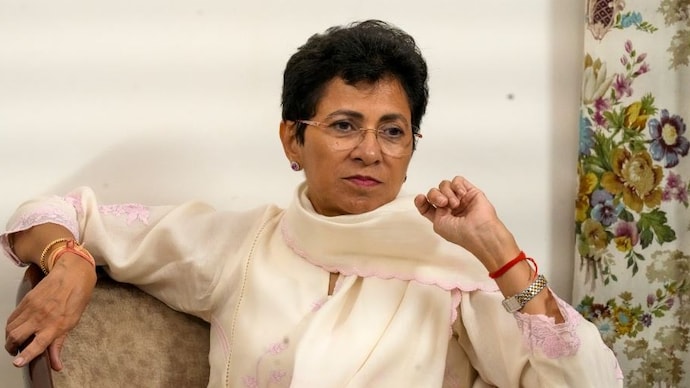
Kumari Selja has raised concerns over Haryana’s healthcare infrastructure, staffing shortages and reported delays in Ayushman payments.
Congress leader Selja says weak public healthcare infrastructure and reported pending payments to private hospitals could affect access to treatment for beneficiaries
CHANDIGARH /PEN OF DEMOCRACY NEWS DESK
Sirsa MP, former Union minister, Congress national general secretary and CWC member Kumari Selja has accused the BJP government in Haryana of making exaggerated claims about the Ayushman scheme while the state’s healthcare infrastructure continues to face serious challenges. She alleged that government hospitals are struggling with shortages of doctors, paramedical personnel and other employees, while several important health programmes continue to depend significantly on contractual and temporary staff.
Selja said the government’s claims about healthcare benefits need to be examined against the situation on the ground. According to her, providing health insurance coverage or issuing health cards cannot by itself guarantee quality treatment unless hospitals have adequate medical personnel, equipment and supporting infrastructure.
She cited departmental figures to claim that against 27,269 sanctioned posts in the Health Department, only around 20,403 permanent employees are currently working. She further claimed that more than 47,000 employees are engaged through contractual or other temporary arrangements across different health-related departments and programmes.
According to the figures cited by Selja, the National Health Mission has around 14,468 employees working under such arrangements, while Medical Education and Research has approximately 7,398 and the AYUSH Department around 2,234 employees under contractual or other temporary arrangements.
The Congress leader questioned how the state can ensure reliable healthcare services when a substantial workforce is dependent on temporary arrangements. She said the government must focus on strengthening the permanent healthcare workforce and filling vacant positions in hospitals and other medical institutions.
Selja argued that the shortage of healthcare personnel has a direct impact on patients. She said adequate numbers of doctors, nurses, paramedical workers and other staff are essential for providing timely consultations, diagnostic services, medicines and treatment.
She also raised concerns over the reported financial dues of private hospitals participating in the Ayushman scheme. Selja referred to claims made by doctors’ organisations that around ₹1,200 crore in payments to private hospitals remain pending.
According to Selja, the reported payment issue affected Ayushman cardholders during a symbolic strike by private hospitals on September 1. She said the disruption reportedly created difficulties for some patients seeking admission and undergoing scheduled surgeries at participating hospitals.
She further said that private hospitals have warned of stopping services indefinitely after September 15 if their outstanding payments are not cleared. Selja urged the Haryana government to resolve the issue immediately, stressing that uncertainty surrounding private hospital participation could affect patients who rely on the Ayushman scheme for cashless treatment.
She questioned the government’s preparedness to deal with the situation if public hospitals do not have sufficient manpower and private hospitals also face delays in receiving scheme payments. In such circumstances, she asked, economically weaker patients could face serious difficulties in finding timely treatment.
Selja said the state’s healthcare concerns extend beyond staffing shortages and payment-related issues. She also expressed concern over the reported decline in Haryana’s sex ratio at birth.
According to the figures cited by the Congress leader, the sex ratio at birth in Haryana was reported at 923 in 2025 but had declined to 900 by June 2026. She described the reported figure of 829 in Charkhi Dadri as particularly alarming.
Selja said a decline in the sex ratio at birth should be treated as a serious social concern and should prompt stronger administrative action. She stressed the need for effective implementation of programmes aimed at protecting the girl child and preventing gender discrimination.
The Congress leader also questioned the functioning of the Haryana State Commission for Protection of Child Rights. She said that although a chairperson had been appointed, six member positions had remained vacant since December 2025.
According to Selja, vacancies in institutions responsible for protecting children and vulnerable sections raise questions about the priority being given to such bodies. She said effective institutions require adequate manpower and regular functioning if they are to fulfil their statutory responsibilities.
Selja accused the BJP government of focusing on publicity while fundamental issues in public healthcare require greater attention. She said the government should provide transparent answers regarding vacancies, healthcare staffing, infrastructure and the implementation of welfare schemes.
She called for the immediate release of pending payments under the Ayushman scheme to eligible private hospitals. She also demanded that vacant positions for doctors and other healthcare workers in government hospitals be filled without delay.
Selja said dependence on temporary employees should gradually be reduced and the state should build a stronger and more stable healthcare workforce. She maintained that permanent staffing is important for continuity, accountability and the effective delivery of public health services.
She also urged the government to take concrete measures to address the reported decline in the sex ratio at birth and ensure that institutions dealing with child rights are adequately staffed.
The Congress leader said the effectiveness of any healthcare scheme ultimately depends on what patients experience when they require medical assistance. According to her, citizens should not have to face long waits, staff shortages or uncertainty over treatment because of weaknesses in the healthcare delivery system.
She said economically weaker families are particularly dependent on government-supported healthcare programmes. For such families, timely treatment can prevent a medical emergency from becoming a severe financial burden.
Selja maintained that Ayushman coverage can provide meaningful relief to eligible families only when empanelled hospitals are financially supported and able to continue providing services without disruption. She therefore urged the government to address the reported payment issue and ensure uninterrupted treatment for beneficiaries.
She also stressed that government hospitals must be equipped with sufficient doctors, nurses, paramedical staff and other personnel. Strengthening public hospitals, she said, should remain a central component of the state’s healthcare policy rather than relying primarily on scheme-based coverage.
Selja said the government should also examine why important health-related departments and programmes continue to rely heavily on temporary appointments. She called for a long-term strategy to strengthen human resources across the healthcare sector.
She said the reported decline in the sex ratio at birth also requires sustained monitoring, strict enforcement of applicable laws and greater social awareness. Government departments, civil society organisations and communities must work together to ensure that girls receive equal dignity, protection and opportunities.
The Congress leader said the state government should move beyond announcements and demonstrate measurable improvements in healthcare delivery. She argued that the success of a health policy should be assessed through the availability of doctors, medicines, diagnostic facilities, hospital services and timely treatment rather than solely through the number of cards issued.
Selja said the government has a responsibility to ensure that people receive healthcare without unnecessary obstacles. She urged the administration to take immediate corrective measures wherever gaps exist and to make the health system more responsive to patients.
She concluded that people do not need healthcare promises alone. They need functioning hospitals, adequate medical staff, timely tests, medicines and treatment when they require them. According to Selja, strengthening these basic services should be the government’s priority if its healthcare claims are to translate into tangible relief for citizens.