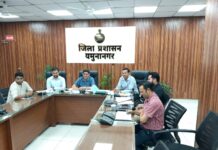
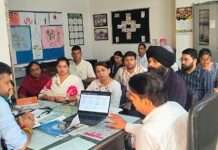
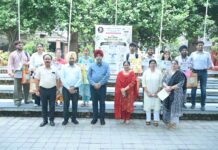
Tarun Jain and participants during the Gomay Swavalambi Yatra initiative launched on Raksha Bandhan to promote cow welfare, swadeshi products and self-reliance.
‘Gomay Swavalambi Yatra’ Launched Under Tarun Jain’s Leadership as Participants Receive Gomay Raksha Sutras and Pledge Support for Cow-Based Products
YAMUNANAGAR | PEN OF DEMOCRACY NEWS DESK
Raksha Bandhan this year was given a distinctive social dimension with the launch of the ‘Gomay Swavalambi Yatra Se Gomay Nav Yug Ki Ore’ initiative, which seeks to connect the sacred bond between brothers and sisters with the values of cow welfare, swadeshi and self-reliance. The initiative was launched under the leadership of national coordinator Tarun Jain, with Gomay Raksha Sutras prepared from cow dung being taken to prominent members of the city.
As part of the initiative, people were encouraged to wear the Gomay Raksha Sutra as a symbol not only of the traditional spirit of Raksha Bandhan but also of their commitment towards the care, protection and respect of cows. Those participating in the initiative took a pledge to contribute towards cow welfare and to promote the use of indigenous products in their daily lives.
The organisers said the initiative was conceived to broaden the traditional message of Raksha Bandhan. While the festival is traditionally associated with the bond of affection, protection and responsibility between brothers and sisters, the campaign seeks to extend these values to wider social concerns, including cow welfare, environmental responsibility, indigenous traditions and economic self-reliance.
The Gomay Raksha Sutras distributed during the initiative were prepared from cow dung and were presented to people as a symbolic reminder of the pledge associated with the campaign. The organisers said that the purpose was to create awareness about the potential of cow-based products and encourage people to consider their use in households wherever possible.
During the programme, participants also pledged to use products prepared from cow dung, cow urine, milk, curd and ghee in their homes, as far as possible. They were also encouraged to motivate other people to explore and use such products. According to the organisers, greater household-level acceptance of cow-based products could support activities connected with cow welfare while also creating livelihood opportunities for families engaged in their production and sale.
Several idols and other products made from cow dung were also presented as gifts. The organisers said these products reflected the possibility of converting traditional materials into useful and decorative articles through creativity, skill development and entrepreneurship.
They said the production and marketing of such goods could potentially provide additional income opportunities for families, particularly those seeking self-employment or involved in small-scale traditional activities. The campaign, according to the organisers, aims to create a connection between traditional resources and modern economic opportunities.
Tarun Jain said the ‘Gomay Swavalambi Yatra’ was based on the concept that cow-based products could contribute to both cow welfare and self-reliance. He said taking such products to households and increasing awareness about their possible applications could encourage people to support families involved in their preparation and marketing.
He said the initiative was not intended to remain limited to the distribution of Gomay Raksha Sutras. Its broader objective was to take the message of cow welfare, indigenous products and self-reliance to a larger section of society.
According to the organisers, increasing demand for cow-based products could encourage small-scale production and create opportunities for entrepreneurship. They said that if traditional knowledge is combined with improved skills, product development and market awareness, it could help generate sustainable livelihood opportunities.
The organisers also emphasised the importance of respecting indigenous traditions while adapting them to contemporary needs. They said traditional resources and practices can be given new economic relevance through innovation and responsible use.
The campaign has also sought to encourage greater community participation in cow welfare. The organisers said that protecting and caring for cows should not be viewed only as an individual responsibility but can also become part of a broader community effort involving citizens, social organisations and families.
They said public awareness would be an important component of the ‘Gomay Swavalambi Yatra’, as people need to understand the objectives of the initiative before they can actively participate in it. The distribution of Gomay products and the Raksha Sutras was therefore presented as a means of starting conversations around cow welfare, swadeshi and self-reliance.
The organisers described ‘Gomay Nav Yug’ as a broader vision associated with the campaign. According to them, the concept seeks to promote greater awareness about cow-dung-based products and explore their potential role in traditional practices, entrepreneurship and economic activity.
They said the campaign would seek to reach more households and encourage people to learn about products prepared from cow-based resources. The organisers also highlighted the possible connection between such products and livelihood generation, particularly for families involved in small-scale production.
Environmental responsibility was another aspect associated with the initiative. The organisers said that greater awareness about locally available resources and indigenous practices could help preserve traditional knowledge while encouraging responsible consumption.
They appealed to people to participate in the campaign in a constructive manner and support efforts related to cow welfare, indigenous products and self-reliance. They said the Gomay Raksha Sutra should serve as a continuing reminder of the pledge taken by participants on Raksha Bandhan.
According to the organisers, the thread represents a commitment to care for and respect cows, encourage the use of swadeshi products and promote self-reliance. They said the emotional significance of Raksha Bandhan provides a meaningful platform for communicating a wider message of responsibility towards society, nature and traditional resources.
The initiative also seeks to highlight the economic dimension of cow-based products. The organisers said that when products are developed, marketed and purchased at a wider scale, they can potentially support people involved in their production. This, they said, can help strengthen the idea of self-reliance at the local level.
Tarun Jain and the organisers expressed the hope that the message of the campaign would gradually reach more households and inspire greater public participation. They said the journey would focus on creating awareness and encouraging people to support cow welfare and indigenous products through their everyday choices.
The organisers maintained that the ‘Gomay Swavalambi Yatra Se Gomay Nav Yug Ki Ore’ initiative represents an effort to bring together traditional values and contemporary ideas of self-reliance. By connecting Raksha Bandhan with cow welfare, swadeshi and economic empowerment, the campaign seeks to give the festival an additional social message.
They said the Gomay Raksha Sutra is intended to go beyond its ceremonial significance and serve as a reminder of the commitments made by those participating in the initiative. The pledge includes supporting cow care, respecting indigenous traditions, encouraging the use of cow-based products and contributing to the broader objective of self-reliance.
The organisers said the campaign would continue to promote these ideas through public participation and awareness activities. They expressed confidence that greater awareness about indigenous products and cow-based resources could encourage more people to explore their use and support families associated with such activities.
With the launch of the ‘Gomay Swavalambi Yatra’ on Raksha Bandhan, the organisers have sought to connect the festival’s traditional message of protection and responsibility with a wider social and economic vision. The initiative places cow welfare, swadeshi, environmental awareness and self-reliance at the centre of its message and aims to take this vision from individual pledges towards broader community participation.