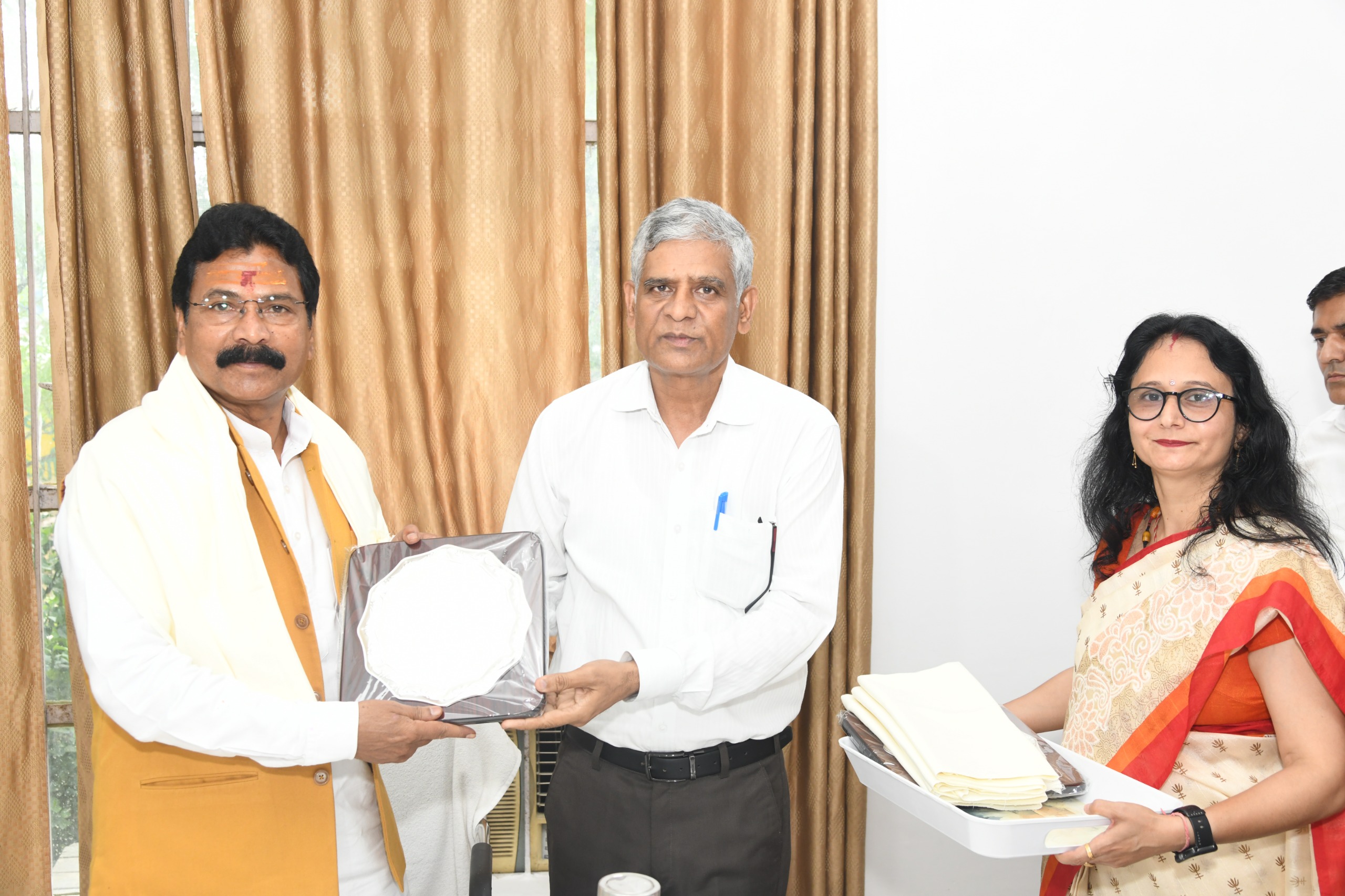
Members of the Madhya Pradesh Assembly delegation interact with agricultural experts during their visit to Krishi Vigyan Kendra, Kurukshetra, to study Haryana’s crop residue management initiatives.
Haryana reduced stubble-burning cases from 901 in 2018 to 12 in 2025, claims Madhya Pradesh Assembly Committee Chairman
KURUKSHETRA / PEN OF DEMOCRACY NEWS DESK
A delegation from Madhya Pradesh has praised Haryana’s efforts in crop residue management and the reduction of stubble-burning incidents, describing the state’s work as a model that could offer valuable lessons for other agricultural regions.
Thakur Das Nagvanshi, Chairman of a Madhya Pradesh Assembly Committee and a Member of the Legislative Assembly, said that despite Madhya Pradesh producing high-yield and good-quality wheat, controlling incidents of crop residue burning had remained a challenge. He said Haryana, however, had made notable progress through sustained efforts involving the state government, agricultural institutions and awareness programmes among farmers.
Speaking at a programme organised by Krishi Vigyan Kendra, Kurukshetra, Nagvanshi highlighted the decline in reported stubble-burning cases in Haryana. According to the information presented during the programme, the state recorded 901 cases of stubble burning in 2018, while the number had fallen to just 12 in 2025.
He said the achievement reflected the effectiveness of Haryana’s approach towards crop residue management and added that the state government and agricultural institutions deserved appreciation for their efforts.
Nawvanshi said Haryana had developed a structured system for encouraging farmers to adopt alternatives to burning crop residue. He appreciated the efforts made by the Haryana government, Chaudhary Charan Singh Haryana Agricultural University, Hisar, and the network of Krishi Vigyan Kendras in promoting scientific and sustainable methods of crop residue management.
The Madhya Pradesh delegation visited Krishi Vigyan Kendra, Kurukshetra, to understand Haryana’s policies, institutional mechanisms, awareness campaigns and technological interventions related to crop residue management. The visitors were also given detailed information about the machinery, subsidy systems and other initiatives designed to help farmers manage agricultural residue without resorting to burning.
Nawvanshi said the delegation had been particularly impressed by the planning and implementation of crop residue management programmes in Haryana. He noted that the state had made extensive use of both in-situ and ex-situ crop residue management methods, supported by agricultural machinery and Custom Hiring Centres.
He said the delegation would place its observations and findings before the Madhya Pradesh government and explore the possibility of adopting suitable measures to strengthen crop residue management in the state.
The programme was organised by Krishi Vigyan Kendra, Kurukshetra, under the guidance and directions of Professor V. R. Kamboj, Vice-Chancellor of Chaudhary Charan Singh Haryana Agricultural University, Hisar. The event was conducted under the supervision of Dr Naresh Kaushik, Director of Extension Education at the university.
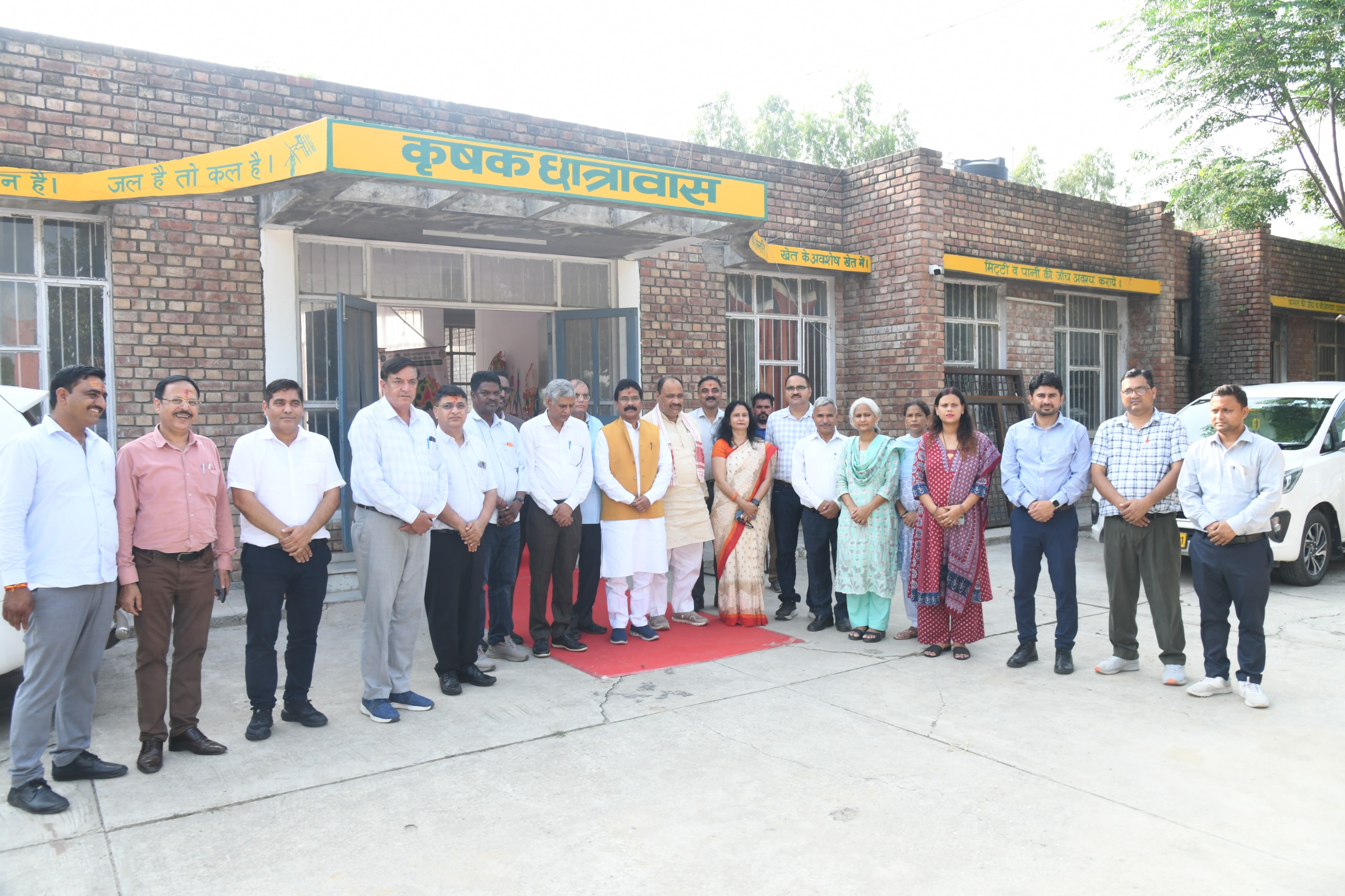
The visiting delegation included Madhya Pradesh Assembly members Mahendra Ramsingh Yadav and Nilesh Uike, Additional Secretary Umesh Sharma, Under Secretary Mahavir Singh, Nodal Officer Sameer Patel and Haryana Assembly Protocol Officer Sanjeev Sharma.
Dr Naresh Kaushik welcomed the visiting guests with bouquets and highlighted the importance of sharing successful agricultural practices between states. He said agricultural challenges such as crop residue management, water conservation and sustainable farming required coordinated efforts and the exchange of practical knowledge.
During the programme, Dr S. K. Dhanda, Associate Director of Agricultural Advisory Services, conducted the proceedings. A comprehensive presentation was delivered by Dr Sandeep Rawal, Coordinator of Krishi Vigyan Kendra, Yamunanagar, who provided an overview of the organisational structure and activities of the Directorate of Extension Education, the functioning of Krishi Vigyan Kendras and their major extension initiatives.
The presentation focused particularly on crop residue management and explained the role of technological assessment, demonstrations and the transfer of agricultural practices to farmers. Detailed information was shared about in-situ and ex-situ residue management techniques, the availability and use of agricultural machinery, and the role of Custom Hiring Centres in making modern farm equipment accessible to farmers.
The delegation was also briefed on the changing situation of stubble-burning incidents in the district since 2018 and the measures adopted to prevent the practice. These included farmer fairs, frontline demonstrations, training programmes and awareness activities organised at village, block and district levels.
Special attention was also given to awareness programmes conducted among school and college students. The objective of these initiatives was to create wider public awareness about the environmental and agricultural impact of crop residue burning and encourage community participation in promoting sustainable farming practices.
During the interaction, Additional Secretary Umesh Sharma also gathered information about agricultural diversification in Kurukshetra district. Discussions covered initiatives related to direct seeding of rice, water conservation, climate-resilient agriculture and improving water-use efficiency.
The programme provided the visiting delegation with an opportunity to study Haryana’s experience in addressing one of the major environmental and agricultural challenges associated with intensive farming. The delegation members expressed interest in examining how Haryana’s combination of technology, farmer outreach, policy support and institutional coordination could be adapted to local conditions in Madhya Pradesh.
The event concluded with a vote of thanks by Dr Ajay Sharma, Senior Scientist at IOCL. Among those present were Dr Manoj Kumar, Dr Fateh Singh, Dr Ashwini Kumar, Dr Lalita Rani, Dr Sarita Rani, Dr Kavita and other members of the Krishi Vigyan Kendra staff.
The visit underlined the growing importance of inter-state cooperation in agriculture, particularly in areas involving environmental sustainability, climate resilience and scientific management of farm waste. The Madhya Pradesh delegation said the experience and information gathered during the visit would be presented before the state government for further consideration.


 Special attention was also given to awareness programmes conducted among school and college students. The objective of these initiatives was to create wider public awareness about the environmental and agricultural impact of crop residue burning and encourage community participation in promoting sustainable farming practices.