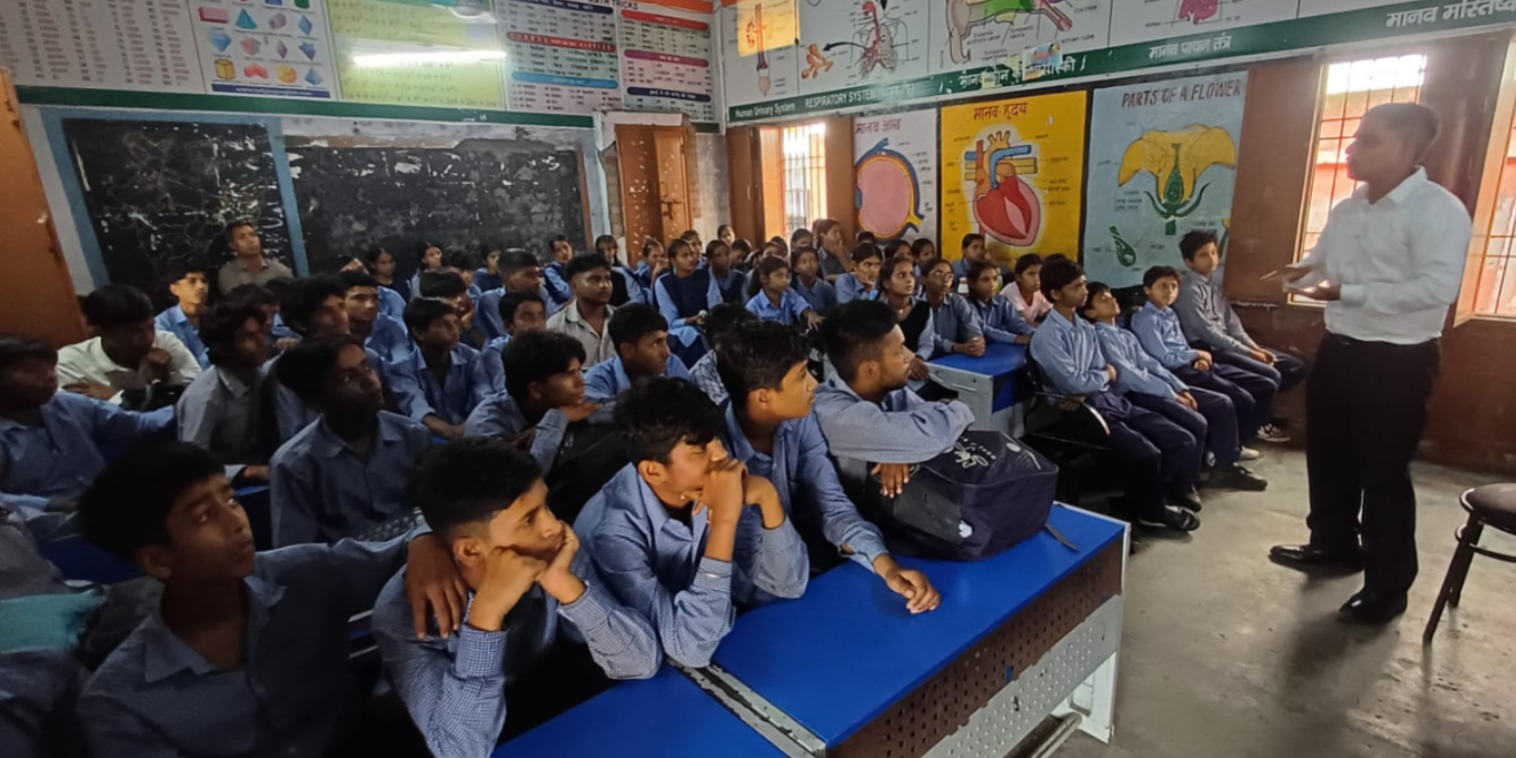
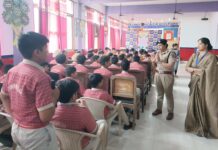
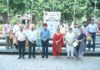
Swachh Bharat Mission expert Akash Kumar educates students about four-bin waste segregation and solid waste management at Government Senior Secondary School, Govindpura.
Municipal Corporation’s Swachh Bharat Mission team explains wet, dry, sanitary and special-care waste management under Solid Waste
YAMUNANAGAR | PEN OF DEMOCRACY NEWS DESK
Students of Government Senior Secondary School, Govindpura were sensitised about scientific waste management and the importance of source-level waste segregation during an awareness programme organised by the Swachh Bharat Mission team of the Municipal Corporation. The programme was conducted under the directions of Mayor Suman Bahmani and Municipal Commissioner Mahabir Prasad.
During the programme, Swachh Bharat Mission expert Akash Kumar used a PowerPoint presentation to explain the importance of the four-bin waste segregation system under the Solid Waste Management Rules, 2026. Students were informed about the need to separately collect and manage wet waste, dry waste, sanitary waste and special-care waste.
Akash Kumar explained that proper segregation at the source is the foundation of an effective solid waste management system. He said that when waste generated in homes, schools and other institutions is separated into appropriate categories at the point of generation, its collection, processing, recycling and safe disposal become considerably more efficient.
The students were made aware that wet and dry waste should not be mixed. Proper segregation not only helps maintain cleanliness but also improves the possibility of recovering useful materials from waste. The students were encouraged to adopt the four-bin system in their homes and educational institutions and motivate their family members to follow the same practice.
The programme also focused on the management of dry waste in industries. Students were informed that materials such as plastic, paper, cardboard, metal and glass can be sorted and sent for recycling. Through proper sorting and processing, a significant portion of dry waste can be converted into useful resources instead of being sent directly to dumping sites.
The expert further explained that suitable non-recyclable dry waste can be processed into Refuse Derived Fuel (RDF), which can subsequently be utilised for energy generation. Students were told that scientific waste processing can therefore contribute not only to cleanliness but also to resource recovery and energy conservation.
Special emphasis was also placed on the principle of RRR — Reduce, Reuse and Recycle. Students were encouraged to reduce unnecessary consumption, reuse items wherever possible and ensure that recyclable material reaches the appropriate recycling stream.
The awareness session highlighted the importance of changing the way society looks at waste. Instead of treating all discarded material as useless garbage, students were encouraged to understand that properly segregated waste can become a valuable resource.
Akash Kumar said that effective waste management begins with individual responsibility. If every household, school and institution adopts proper source segregation, the overall cleanliness and waste-processing system of the city can be significantly improved.
Students were also encouraged to avoid littering and to make cleanliness a part of their daily routine. They were urged to spread awareness among their parents, neighbours and friends about the importance of keeping different categories of waste separate.
The programme sought to connect environmental awareness with practical action. By educating students about waste segregation, recycling and resource recovery, the Municipal Corporation aims to encourage young citizens to become active participants in building a cleaner and more sustainable city.
The students participated in the awareness session with interest and were introduced to the practical aspects of waste management through the presentation. The programme concluded with an appeal to the students to adopt responsible waste-management practices and contribute actively to environmental protection.
The Municipal Corporation’s initiative reinforces the message that proper waste segregation at the source is not merely a municipal responsibility but a collective responsibility of citizens, institutions and communities. Small changes in everyday habits, when adopted collectively, can make a significant difference to urban cleanliness and environmental sustainability.