Bedi highlights governance reforms, welfare delivery and merit-based recruitment under the Nayab Singh Saini government
KURUKSHETRA | PEN OF DEMOCRACY NEWS DESK
Haryana Social Justice and Empowerment Minister Krishan Kumar Bedi on Saturday said the state’s governance model had undergone a significant transformation, claiming that employees and citizens in Punjab were now demanding implementation of the “Haryana model” and “Haryana pattern”. He contrasted the current situation with the period before 2014, when Haryana employees, according to him, used to demand the Punjab pattern.
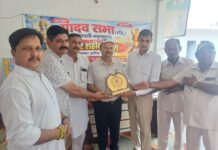
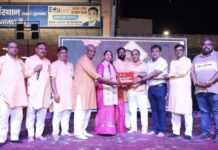
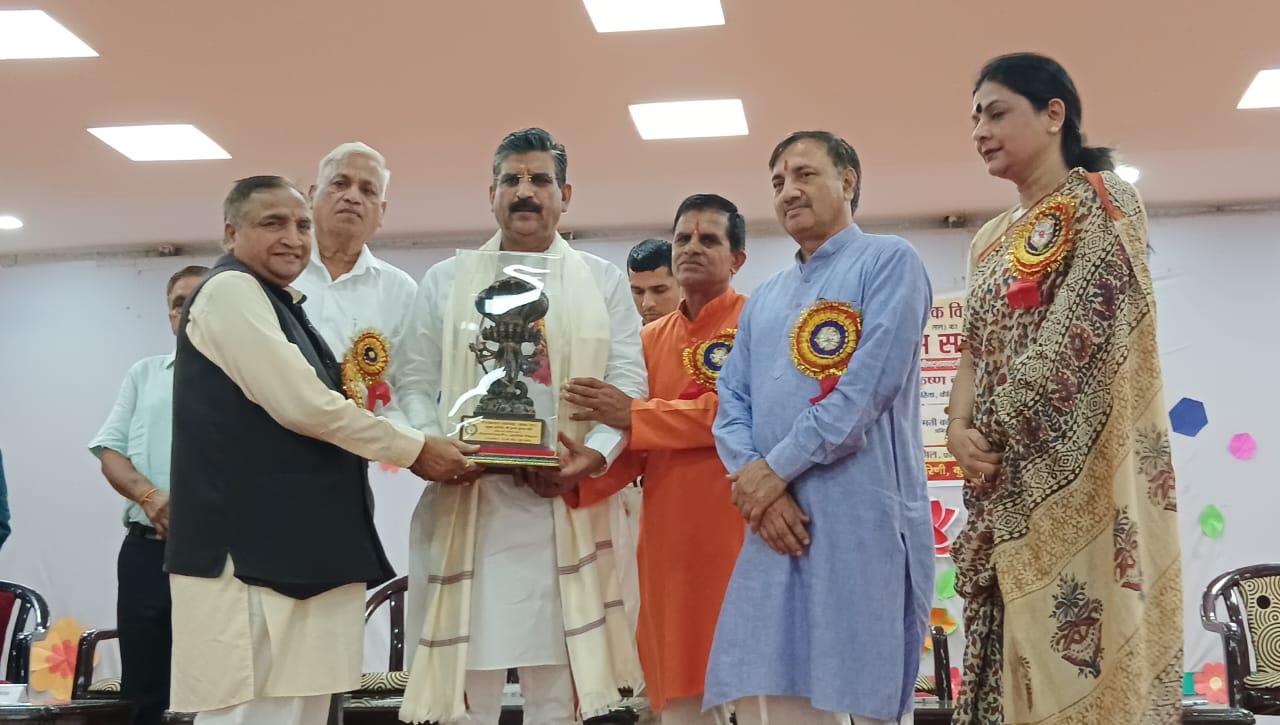
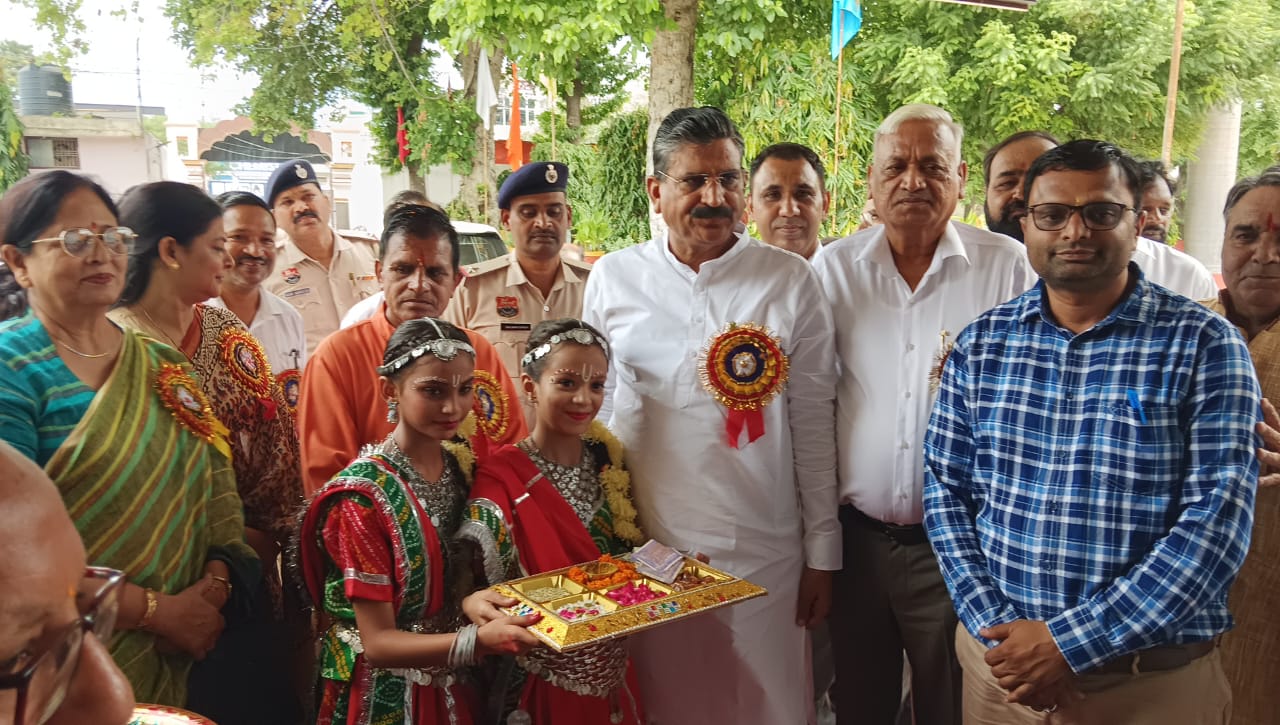
Bedi was speaking at a programme organised at Shrimad Bhagavad Gita Primary School (Bal Ghar). Before addressing the gathering, the Cabinet Minister laid the foundation stone for the first floor of the school’s building. During the programme, he also announced a financial contribution of ₹11 lakh for the institution.
Bedi said Haryana was being developed in a balanced manner under the guidance of Chief Minister Nayab Singh Saini and that the government was working to ensure that citizens across the state received access to basic facilities such as education and healthcare.
He described Shrimad Bhagavad Gita Primary School as more than an educational institution, calling it a centre for values and ideas as well as a place of learning. He said children at the institution were being taught basic education along with moral values, positive thinking, science and technology.
The Minister said students educated at the institution were going on to contribute to the development of Haryana and the country. He stressed that education should not be limited to academic knowledge but should also help develop values, responsible citizenship and a constructive outlook among young people.
 Bedi also highlighted changes in the delivery of pensions and other welfare benefits after the government came to power in 2014. He said pension payments for different categories of beneficiaries were shifted to an online system through which money is transferred directly into beneficiaries’ bank accounts.
According to Bedi, the government faced the challenge of bringing around 36 lakh pension accounts into the online system and completed the process within 13 months. He said the direct-transfer mechanism had helped ensure that the money released from Chandigarh reached beneficiaries in full.
He contrasted this with the system followed by previous governments, alleging that under the earlier arrangement the amount released for beneficiaries did not reach them in full. He also said the online system had reduced the manpower and time required for distributing payments.
The Minister presented direct benefit transfer as an example of the government’s focus on transparency and efficiency in welfare delivery. He said digital transfer of funds had reduced the scope for leakages and made it easier for beneficiaries to receive payments directly.
Bedi also spoke about employment and recruitment, claiming that the present government was providing government jobs to young people on the basis of merit and without the need for “slips and expenses”. He said the approach had contributed to growing interest among young people in education and competitive examinations.
He alleged that under previous governments, candidates seeking government employment had to depend on political connections, family or regional influence and financial arrangements. He said the present government had sought to move away from such practices by emphasising merit-based recruitment.
The Minister further said that development policies after 2014 were being implemented across the state without discrimination based on caste, region or family background. He referred to the government’s stated principle of “Sabka Saath, Sabka Vikas, Sabka Vishwas” and said development was being pursued across all Assembly constituencies.
He claimed that the government was working towards balanced development and ensuring that public policies and development programmes benefited people across the state rather than being concentrated in selected regions or communities.
Bedi also responded to questions from journalists regarding the prolonged strike by sanitation workers in Haryana. He said that an agreement had been reached on the demands of sanitation workers during a meeting held under the leadership of Chief Minister Nayab Singh Saini.
He said sanitation workers had returned to duty across the state following the agreement. The development is expected to help restore municipal sanitation services in areas where the prolonged strike had disrupted garbage collection and other civic services.
The Minister’s remarks on the sanitation workers’ strike came amid efforts by the state government and employee representatives to resolve the outstanding demands and bring sanitation services back to normal.
The programme at Shrimad Bhagavad Gita Primary School also focused on the institution’s role in providing education alongside cultural and moral development. Bedi said educational institutions had an important responsibility in preparing students to contribute positively to society.
He said the combination of academic education, values, science and technology could help young people meet the demands of a rapidly changing world while remaining connected with their social responsibilities.
The foundation stone for the first floor of the school building was laid during the programme, marking an additional development for the institution. Bedi’s announcement of ₹11 lakh in financial assistance is expected to support the institution’s activities and infrastructure development.
Bedi reiterated that the government was focusing on basic public facilities and welfare delivery while pursuing a development model based on what he described as equal opportunities across Haryana.
He said the transformation in governance should ultimately be reflected in the lives of ordinary citizens through easier access to government services, improved infrastructure, education, healthcare and employment opportunities.
The Minister’s comparison between Haryana and Punjab was used to underline his claim that the state’s administrative and welfare model had gained recognition outside Haryana. He said that while Haryana employees once looked towards Punjab for a model of government service and administration, the situation had now changed.
He also reiterated the government’s position that merit-based recruitment should provide young people with opportunities without political or financial influence. According to him, increased interest in education among young people was an indication of confidence in the recruitment process.
Bedi said the government’s approach to development was intended to cover all sections and regions of Haryana. He maintained that policies were being implemented with the objective of ensuring equal development across Assembly constituencies.
The programme was attended by Sah Prant Karyawah and chief speaker Dr Pritam Singh, Haryana president of Hindu Shiksha Samiti Dr Rishiraj Vashisht, social worker Laljpat Rai Singla, School Committee president Mohinder Pal Singla, manager Jeevan Modgil, Principal Chetna Vashisht, Sukhbir Chand Raisan and other prominent citizens.
The event brought together representatives of the education sector, social organisations and the local community, with discussions centred on education, social values, government welfare initiatives and development.
Bedi said the government’s emphasis on public welfare and service-oriented administration would continue, while educational institutions such as Shrimad Bhagavad Gita Primary School would remain important centres for nurturing the next generation.
POD/DESK