Experts assess improved varieties and scientific farming practices for productivity, cost reduction, water conservation and higher farm income
YAMUNANAGAR | PEN OF DEMOCRACY NEWS DESK
The Krishi Vigyan Kendra (KVK), Damla, Yamunanagar, under Chaudhary Charan Singh Haryana Agricultural University, Hisar, conducted field inspections of Frontline Demonstrations and Farmer Field Trials established on farmers’ fields across different villages of the district during the ongoing kharif season.
The demonstrations and trials have been designed to showcase improved agricultural technologies under actual field conditions and scientifically assess their suitability, productivity and economic benefits for local farmers. The initiative is aimed at helping growers understand the practical performance of improved crop varieties and scientific farming practices before adopting them on a wider scale.
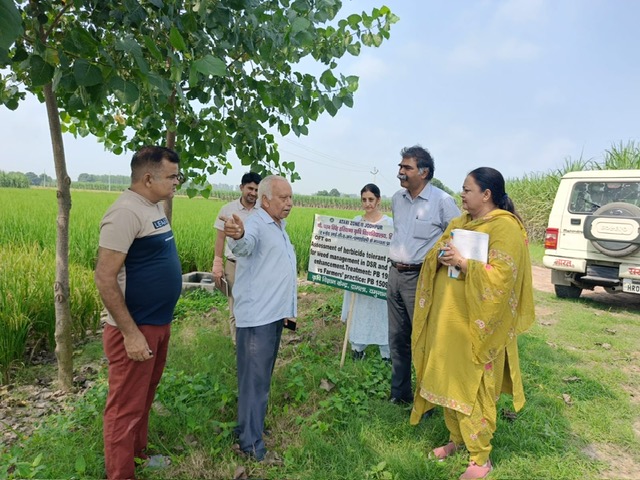
During the field visits, Dr Balwan Mandal, Principal District Extension Specialist from KVK Ambala, and Dr Kiran, Senior District Extension Specialist from KVK Karnal, inspected Frontline Demonstrations and Farmer Field Trials related to paddy cultivation in various villages of Yamunanagar.
The experts visited the farmers’ fields to assess the progress of the trials and examine the performance of improved paddy varieties and recommended agricultural practices. They also interacted directly with farmers to gather information about the present condition of the crop, production-related challenges and the techniques being followed in the fields.
During the interaction, the experts discussed several important aspects of scientific paddy cultivation, including balanced nutrient management, weed control, pest and disease management and efficient irrigation practices. They also explained methods aimed at achieving higher production and better returns while keeping cultivation costs under control.
Farmers shared their field-level experiences and problems with the visiting experts, who suggested scientific approaches to address the issues raised during the inspection. The interaction was aimed at connecting research-based agricultural recommendations with the practical requirements of farmers working under local soil, weather and cultivation conditions.
KVK Damla Coordinator Dr Sandeep Rawal, Subject Matter Specialist Dr Aradhana Bali and Training Assistant Dr Karan Singh Saini were also present during the field inspection.
The experts observed scientific paddy cultivation practices being adopted by progressive farmers in different parts of Yamunanagar district. They encouraged farmers to make greater use of proven scientific technologies to reduce input costs and improve net returns rather than focusing solely on increasing crop production.
KVK Damla has established several Frontline Demonstrations and Farmer Field Trials on farmers’ fields to evaluate advanced agricultural technologies. These include demonstrations related to direct-seeded rice and other improved cultivation practices.
The field-based trials are also being used to assess important aspects of sustainable agriculture, including water conservation, reduction in labour requirements, lower cultivation costs and environmental protection. Such assessments can help determine whether a particular technology is suitable for wider adoption under the conditions prevailing in the district.
The experts said the demonstrations and trials would be inspected periodically at different stages of crop growth. Regular field monitoring will help researchers and extension specialists record the performance of the technologies throughout the crop cycle rather than evaluating them only at harvest.
A detailed assessment will also be carried out after harvesting. The evaluation will include crop yield as well as expenditure incurred on seed, fertilisers, pesticides, irrigation, labour, machinery and other agricultural inputs.
Based on the data collected from the fields, the total cost of cultivation, gross income and net profit will be calculated. The exercise will enable farmers to understand the actual economic benefits associated with different technologies and compare them with conventional cultivation practices.
The experts said such economic assessment was particularly important because higher production does not necessarily translate into higher farm income if the cost of cultivation also rises significantly. Farmers therefore need to evaluate technologies on the basis of both productivity and profitability.
KVK Damla specialists advised farmers to adopt an approach that gives priority to higher net returns at lower cost, along with efficient use of water and other natural resources. They emphasised the importance of environmentally sustainable farming practices that can help maintain agricultural productivity while reducing pressure on natural resources.
Direct-seeded rice and other improved technologies being evaluated through the demonstrations have the potential to address several challenges associated with conventional paddy cultivation. However, the experts stressed that their suitability and economic performance should be assessed under local field conditions before making wider recommendations.
The field demonstrations provide farmers with an opportunity to observe new techniques in actual agricultural settings and understand their practical requirements. This can make it easier for farmers to assess the benefits and limitations of a technology based on real field experience.
The initiative also creates a platform for interaction between farmers, agricultural experts and extension specialists. Such direct communication enables technical teams to understand problems faced by growers and provide timely scientific guidance.
The experts said successful technologies emerging from the demonstrations and trials would be promoted among other farmers so that the benefits of scientific agricultural practices could reach a larger number of growers.
They emphasised that the future of profitable farming depends not only on achieving high yields but also on reducing unnecessary expenditure, conserving water and soil resources and adopting environmentally responsible practices.
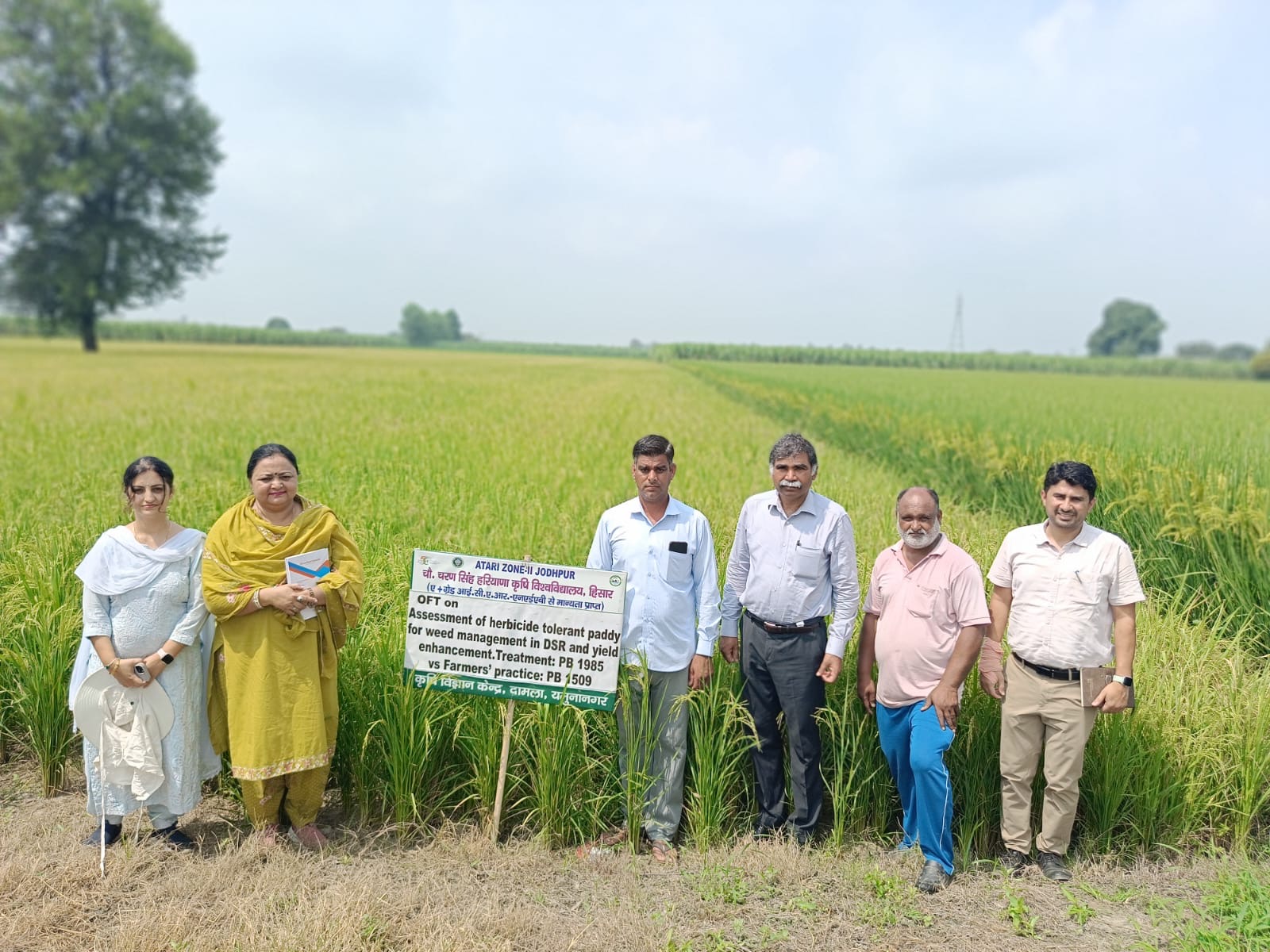 Farmers were encouraged to carefully observe the performance of the technologies being demonstrated on their fields and discuss their experiences with agricultural experts. The information generated through the trials can help farmers make more informed decisions regarding crop varieties, planting methods, nutrient management, irrigation and crop protection.
The Frontline Demonstrations and Farmer Field Trials being conducted by KVK Damla are therefore expected to serve as an important link between agricultural research and field-level adoption. By evaluating technologies under real farming conditions and calculating their actual economic returns, the initiative aims to provide farmers with practical information for improving both productivity and profitability.
The KVK experts reiterated that farmers should give equal importance to production, profitability, resource conservation and environmental sustainability. They said scientifically validated and economically viable technologies can play a significant role in making agriculture more efficient and sustainable.
The ongoing field inspections will continue at different crop stages, while detailed post-harvest assessments will provide further information about the performance and economic viability of the technologies under evaluation.
POD/DESK