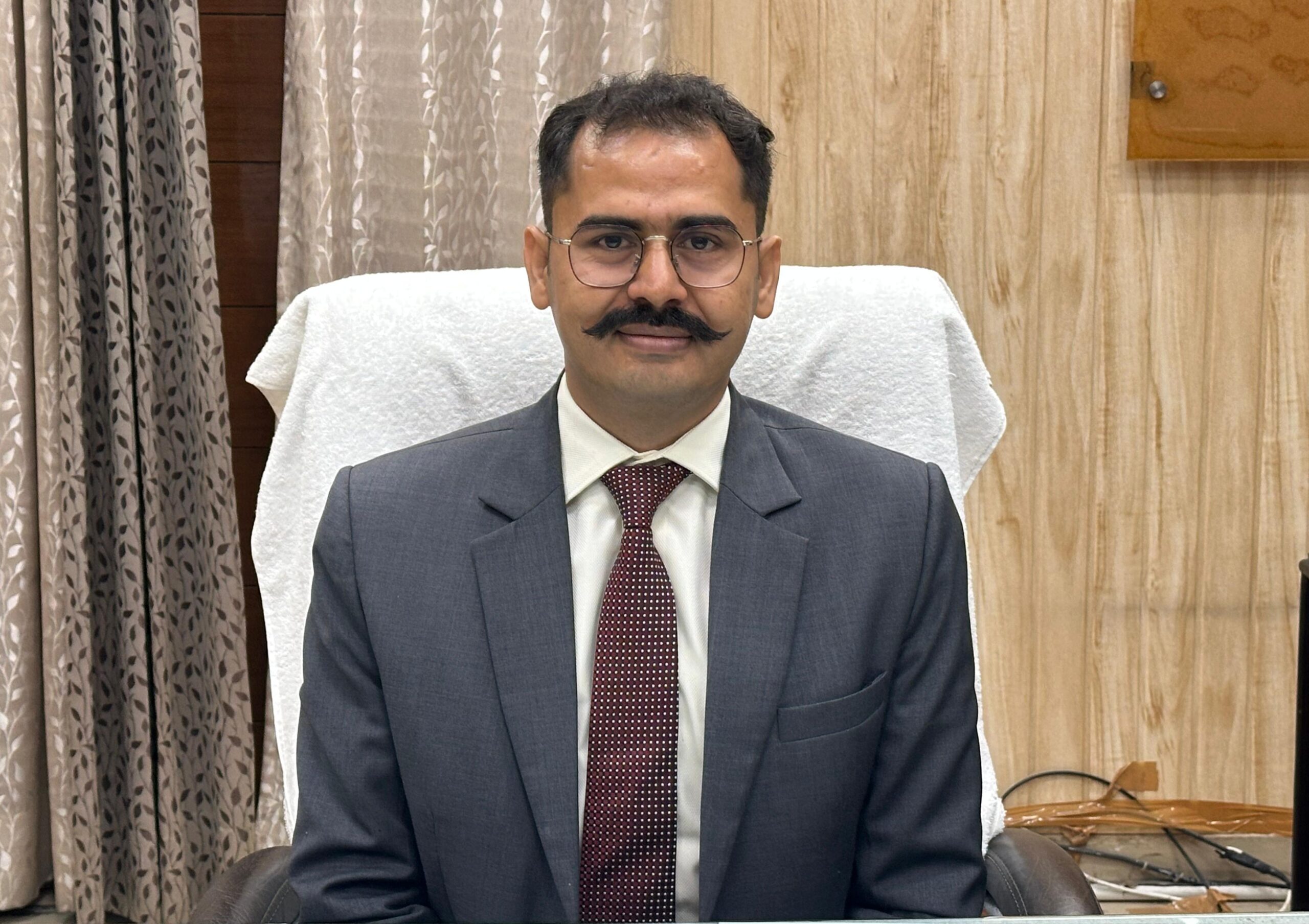
Deputy Commissioner Vishram Kumar Meena has urged citizens to report information about narcotics trafficking through helpline 1933.
DC Vishram Kumar Meena urges citizens to share information confidentially as part of the government’s vision of a drug-free India by 2047
KURUKSHETRA /PEN OF DEMOCRACY NEWS DESK
Deputy Commissioner Vishram Kumar Meena has urged citizens to actively contribute to the government’s campaign against drug abuse and narcotics trafficking by using the National Narcotics Helpline 1933 operated by the Ministry of Home Affairs.
Meena said the Union government has taken important steps under the Drug-Free India 2047 campaign to strengthen efforts against the misuse of narcotic drugs and the illegal trafficking of such substances. As part of these efforts, the Ministry of Home Affairs is operating the National Narcotics Helpline, which remains available 24 hours a day, seven days a week, enabling citizens to share information about drug-related offences at any time.
The Deputy Commissioner said the identity of people providing information regarding narcotics-related activities will be kept completely confidential. The confidentiality mechanism is intended to encourage citizens to come forward without fear or hesitation and provide information about the illegal sale, supply and trafficking of narcotic substances.
He said public participation is crucial in tackling the growing threat posed by drug abuse. While law-enforcement agencies are working to prevent the illegal movement and distribution of narcotic substances, timely information from citizens can help authorities identify such activities and take appropriate action.
Meena said the initiative could play an important role not only in controlling drug abuse but also in protecting young people from falling victim to addiction. Drug abuse has serious consequences for individuals, families and society, and preventing young people from being exposed to narcotics must remain a collective responsibility.
He said the Centre has set the objective of making India completely drug-free by 2047 and public cooperation is considered an important component of achieving this goal. Citizens, community organisations, families and local institutions can all contribute by remaining vigilant and reporting information about suspected narcotics-related activities through the appropriate official channels.
The Deputy Commissioner appealed to residents that if they have information about the illegal trade or trafficking of narcotic drugs, they should immediately contact the National Narcotics Helpline at 1933. He stressed that citizens should not hesitate to provide information merely because they fear that their identity could be disclosed.
Meena said the fight against drugs cannot be confined to government departments or law-enforcement agencies alone. A coordinated effort involving the administration, police, communities, educational institutions, families and citizens is essential to create greater awareness and prevent the spread of substance abuse.
He also appealed to citizens to rely on official channels when reporting drug-related information and to avoid spreading unverified allegations or rumours. Effective information sharing, he said, can strengthen the collective response against narcotics trafficking and contribute to the broader objective of building a healthier and safer society.
Financial Assistance of ₹2,300 Per Month for Destitute Children: DC Vishram Kumar Meena
The Haryana government is implementing several welfare schemes through the Department of Social Justice and Empowerment to provide financial assistance to eligible beneficiaries, Deputy Commissioner Vishram Kumar Meena said. Among these initiatives is a scheme under which eligible destitute children can receive financial assistance of ₹2,300 per month.
Meena said children up to the age of 21 years who are deprived of adequate parental care or support under specified circumstances may be eligible for assistance under the scheme. This includes children whose parents have died, whose father has been absent from the household for the preceding two years, or whose parents are serving a prison sentence of at least one year.
Children who are deprived of support or care because of the mental or physical incapacity of their parents or guardians may also qualify, subject to the conditions prescribed under the scheme.
The Deputy Commissioner said the annual income of the child’s guardian from all sources should not exceed ₹2 lakh for eligibility. The financial assistance is available for a maximum of two children in a family.
He advised families seeking the benefit to ensure that the required documents are available before submitting their applications. These include a certificate establishing that the child is destitute, a birth certificate issued by the Health Department, and documentary proof showing that the applicant has been a resident of Haryana for at least five years.
Applicants are also required to provide a self-attested photocopy of an identity document such as a photo voter card or ration card, along with the Parivar Pehchan Patra. The prescribed documentation is intended to establish the applicant’s identity, residence and eligibility under the scheme.
Meena said that if an applicant does not possess any of the specified documents, an alternative certificate along with an affidavit confirming residence in Haryana for at least five years may be submitted, subject to the applicable requirements.
He further clarified that children whose parents or guardians are receiving a family pension from the government will not be eligible to receive benefits under this particular scheme.
The Deputy Commissioner urged eligible families not to overlook the opportunity to seek assistance available under the government welfare programme. Financial support for vulnerable children, he said, is intended to help address their basic needs and provide greater social security to those who have been deprived of adequate parental support.
Those wishing to avail themselves of the scheme can submit applications through the nearest Antyodaya Saral Centre, Atal Seva Kendra or Common Service Centre (CSC).
Meena appealed to eligible beneficiaries to obtain information through authorised government service centres and submit their applications along with the required documents. He said the administration remains committed to ensuring that eligible beneficiaries are able to access welfare schemes intended for their support.