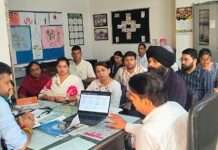
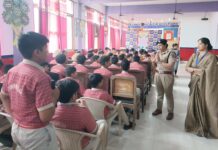
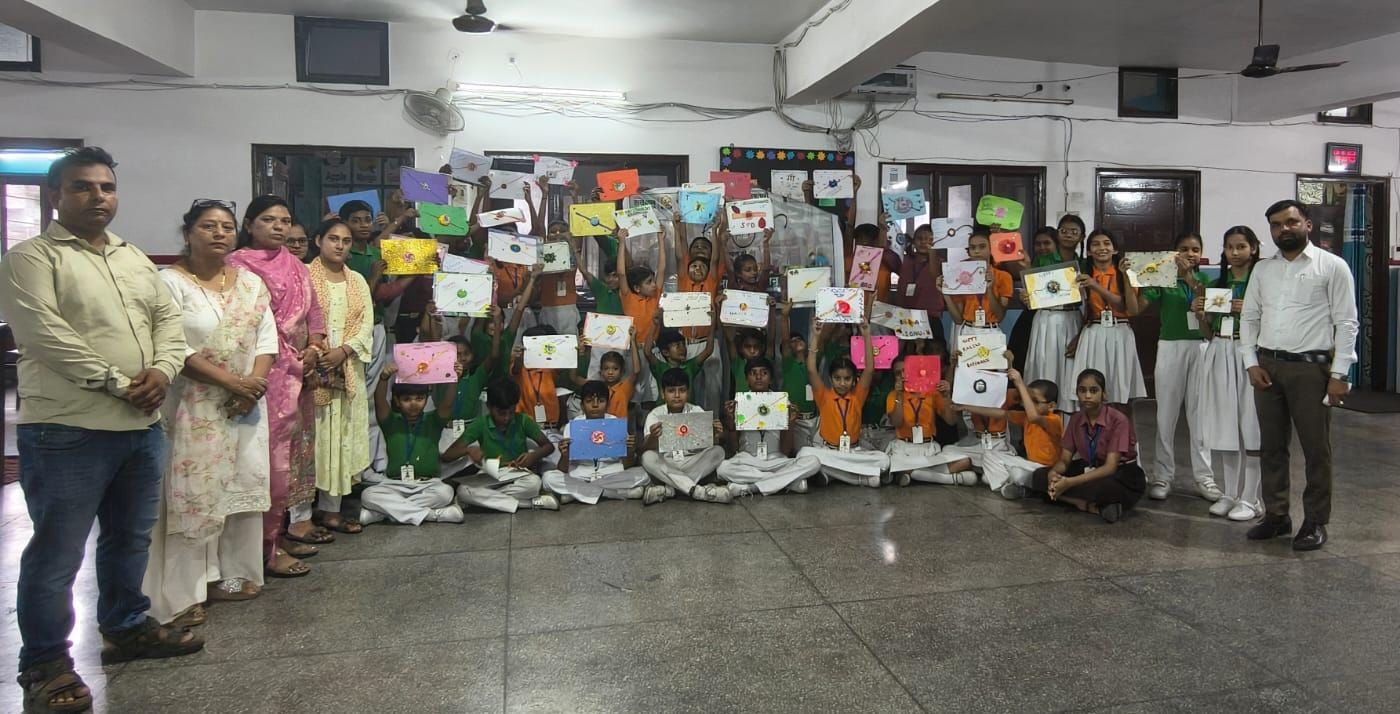
Students of Geeta Vidya Public School create eco-friendly rakhis from waste materials and participate in the “Bandhan Swachhta Ka” awareness programme organised by the Municipal Corporation’s Swachh Bharat Mission team in collaboration with Sneh Seva Trust.
Municipal Corporation’s Swachh Bharat Mission team and Sneh Seva Trust organise awareness programme at Geeta Vidya Public School, promoting Reduce, Reuse and Recycle through creative use of waste materials
YAMUNANAGAR | PEN OF DEMOCRACY NEWS DESK
In an effort to connect the message of cleanliness and environmental responsibility with the spirit of Raksha Bandhan, the Swachh Bharat Mission team of the Municipal Corporation organised a special awareness programme titled “Bandhan Swachhta Ka” at Geeta Vidya Public School in Yamunanagar. The initiative was organised with the cooperation of Mamta Sen, founder of Sneh Seva Trust NGO, and focused on encouraging students to adopt sustainable habits, reduce waste and understand the importance of reusing discarded materials creatively.
The programme was designed to make environmental education more practical and engaging for students. Through creative activities, awareness sessions and a collective cleanliness pledge, children were encouraged to understand that protecting the environment and maintaining cleanliness are responsibilities that begin at home and continue through schools and the wider community.
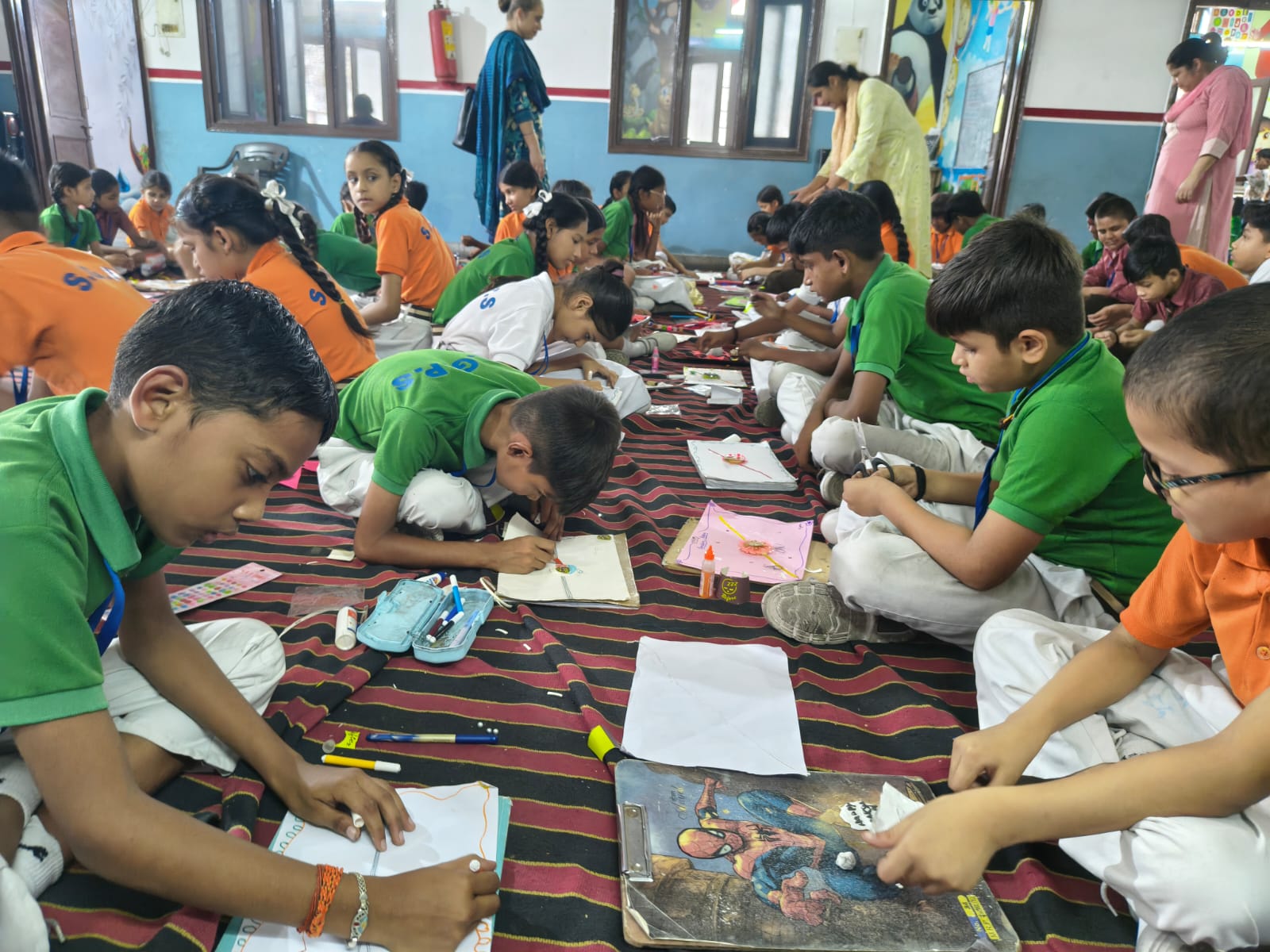
During the programme, students used waste and reusable materials such as paper, cloth, decorative items and other discarded resources to create attractive and eco-friendly rakhis. The activity demonstrated how materials that are often considered useless and thrown away can be given a new purpose through creativity and responsible reuse.
The organisers said that such activities can help students develop a positive attitude towards waste management from an early age. Instead of viewing waste only as something to be discarded, children were encouraged to think about whether an item could be reused, recycled or creatively transformed into something useful.
Swachh Bharat Mission Urban expert Durgesh explained the importance of adopting sustainable practices in daily life. He said that many items discarded from homes and schools can be reused in different ways rather than being immediately thrown into garbage bins.
He encouraged students to develop the habit of thinking before disposing of any material and to consider whether it could be used again for another purpose. Such small changes in everyday behaviour, he said, can collectively contribute to reducing the overall volume of waste generated in cities.
A major focus of the awareness programme was the concept of Reduce, Reuse and Recycle, commonly known as the principles of the 3Rs. Students were informed that reducing unnecessary consumption is the first step towards responsible waste management. Reusing materials helps extend their useful life, while recycling allows certain waste products to be processed and converted into new materials.
The Municipal Corporation team explained that responsible waste management is closely connected with environmental protection. When reusable and recyclable materials are unnecessarily thrown away, they add to the burden on the waste management system. On the other hand, adopting the principles of reduction, reuse and recycling can help minimise the quantity of waste requiring disposal.
The eco-friendly rakhi-making activity became one of the highlights of the programme. Students enthusiastically participated in designing colourful and creative rakhis using different waste materials. The exercise combined creativity with an important social message and helped demonstrate that environmental awareness can be incorporated into festivals and everyday traditions.
The organisers said that educational institutions can play an important role in shaping environmentally responsible behaviour among young people. Schools provide an effective platform for introducing practical lessons on cleanliness, waste segregation, recycling and conservation.
Students were also encouraged to spread the message of cleanliness beyond the school campus and discuss the importance of proper waste disposal with their families and friends. The programme highlighted the idea that maintaining a clean environment requires participation from every section of society.
As part of the awareness initiative, students formed a human chain to deliver a collective message in support of cleanliness and environmental protection. The activity reflected the enthusiasm of the children and reinforced the importance of collective responsibility in maintaining clean surroundings.
During the programme, students pledged not to throw garbage indiscriminately and to follow responsible waste disposal practices. They were encouraged to separate wet and dry waste and place different types of waste in appropriate bins.
The Swachh Bharat Mission team explained that waste segregation at the source is an important step in ensuring effective waste management. When different categories of waste are mixed together, the process of recycling, composting and further treatment becomes more difficult.
Students were therefore encouraged to adopt the practice of separating biodegradable and non-biodegradable waste and to motivate others to follow similar habits. The awareness session also focused on keeping homes, schools and surrounding public areas clean.
The message of the programme was closely linked with the festival of Raksha Bandhan. Organisers explained that just as a rakhi represents the bond of love, trust, care and responsibility between a brother and sister, every citizen should also develop a strong bond of responsibility towards the environment and the city.
The concept of “Bandhan Swachhta Ka” was used to encourage students to see cleanliness as a shared responsibility rather than the duty of a single organisation or government department. The programme underlined that a clean city can only be achieved when residents actively participate in maintaining their surroundings and adopt responsible habits in their daily lives.
Students were encouraged to avoid littering in public places, use designated waste bins and promote cleanliness among people around them. They also took a pledge to contribute towards maintaining a clean and healthy environment.
The organisers said that awareness programmes involving students can create a long-term impact because children often carry positive messages from schools to their homes and communities. By teaching students about waste segregation, reuse and environmental conservation, such initiatives can help build responsible habits that continue into adulthood.
The programme also sought to develop creativity among students by showing them that environmental responsibility does not always require complicated solutions. Simple activities such as reusing old paper, cloth and decorative materials can reduce waste while encouraging innovation and imagination.
Mamta Sen of Sneh Seva Trust supported the initiative as part of efforts to promote social awareness and environmental responsibility among young people. The collaboration between the NGO, school and Municipal Corporation’s Swachh Bharat Mission team provided students with an opportunity to participate directly in an activity combining festival celebrations with a meaningful public message.
Teachers and staff members of Geeta Vidya Public School also participated in the programme and encouraged students to adopt the lessons learned during the awareness session in their daily lives.
The event concluded with a message that cleanliness and environmental conservation should not remain limited to special campaigns or occasions. Instead, responsible waste management, proper segregation and reuse of materials should become part of everyday behaviour.
Through the “Bandhan Swachhta Ka” programme, the Municipal Corporation’s Swachh Bharat Mission team sought to connect the cultural significance of Raksha Bandhan with the larger responsibility of protecting the environment. The eco-friendly rakhi-making activity, human chain and cleanliness pledge together delivered a message that every individual can contribute to a cleaner and greener Yamunanagar.
The initiative highlighted that a strong bond with cleanliness begins with small personal actions. By reducing waste, reusing useful materials, recycling wherever possible and keeping surroundings clean, citizens can collectively contribute towards a healthier environment and a more sustainable future.


 Students were also encouraged to spread the message of cleanliness beyond the school campus and discuss the importance of proper waste disposal with their families and friends. The programme highlighted the idea that maintaining a clean environment requires participation from every section of society.