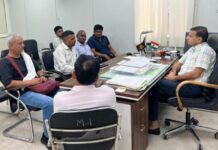
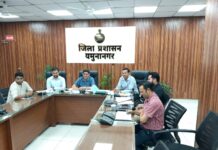
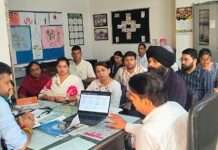
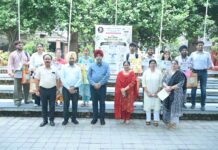
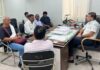
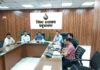
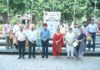
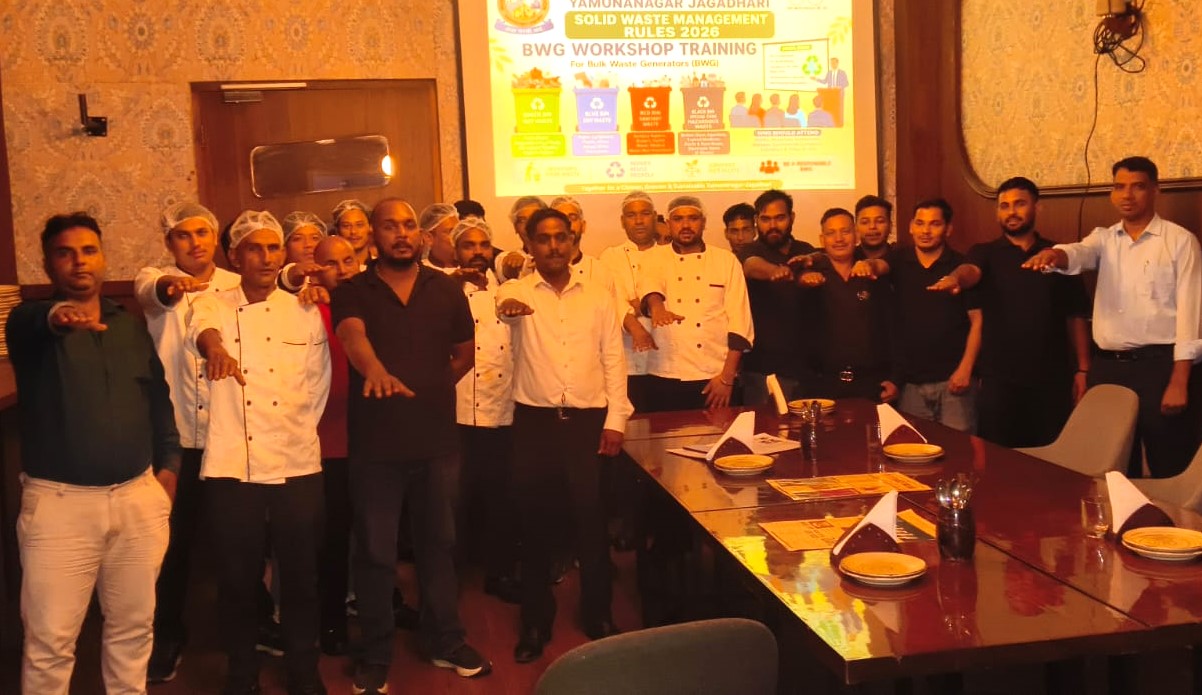
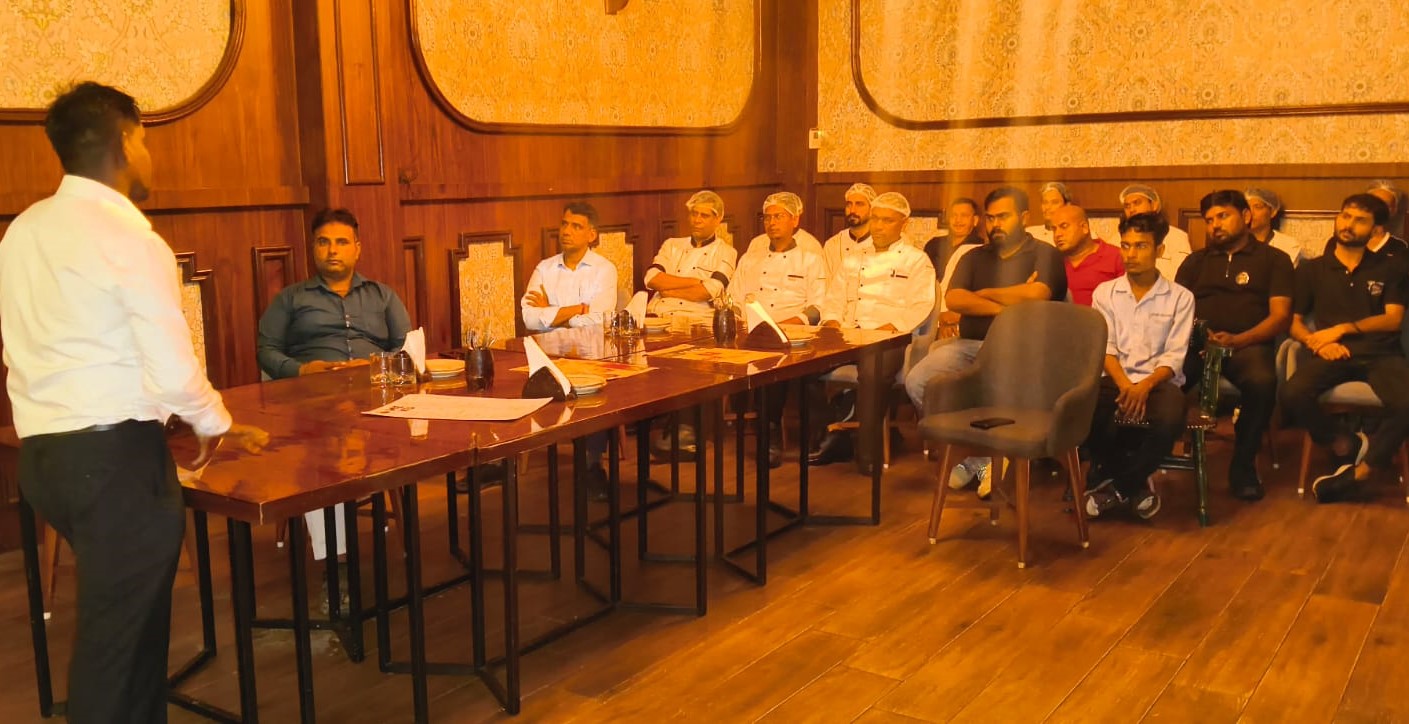
Swachh Bharat Mission Urban team members conduct an awareness workshop on four-bin waste segregation and scientific solid waste management at a private restaurant in Model Town, Yamunanagar-Jagadhri.
Restaurant management and staff sensitised on source-level segregation, on-site processing, record maintenance and responsible waste disposal
YAMUNANAGAR | PEN OF DEMOCRACY NEWS DESK
In an effort to strengthen scientific waste management and promote greater awareness about cleanliness and responsible waste disposal, the Swachh Bharat Mission team of the Municipal Corporation Yamunanagar-Jagadhri organised an awareness workshop at a private restaurant in Model Town, Ward No. 8. The programme focused on the implementation of the Solid Waste Management Rules, 2026, with special emphasis on the four-bin waste segregation system, source-level separation of waste and on-site processing.
The workshop was organised under the directions of Mayor Suman Bahmani and Municipal Commissioner Mahabir Prasad. Restaurant management and employees were provided detailed information about their responsibilities under the waste management rules and the importance of adopting scientific methods for the collection, segregation, processing and disposal of waste generated at commercial establishments.
The Municipal Corporation’s Swachh Bharat Mission Urban team explained that commercial establishments such as restaurants play an important role in the success of any city-wide cleanliness and waste management programme. Restaurants generate different types of waste every day, including food waste, packaging material, plastic, paper and other discarded items. If such waste is not properly segregated at the point where it is generated, it becomes difficult to process and recycle efficiently.
During the workshop, Swachh Bharat Mission Urban expert Akash Kumar gave detailed information about the provisions and standards prescribed under the Solid Waste Management Rules, 2026. He stressed that waste segregation must begin at the source itself and should not be postponed until the waste reaches a collection point or processing facility.
The restaurant management and staff were informed about the four-bin waste segregation system and the importance of placing different categories of waste in their designated bins. Proper segregation at the source can help prevent different types of waste from getting mixed together and can significantly improve the efficiency of recycling, composting and other waste-processing methods.
Akash Kumar specifically emphasised the need to keep wet and dry waste separately in the prescribed bins. Food leftovers, vegetable and fruit waste and other biodegradable materials should be handled separately from dry waste such as paper, cardboard, plastic packaging and similar materials.
The workshop also highlighted the importance of processing wet waste as far as possible at the site where it is generated. Restaurant establishments were encouraged to explore options such as composting and other appropriate processing methods for biodegradable waste. Proper on-site processing, officials explained, can reduce the quantity of waste that needs to be transported to external disposal or landfill sites.
Reducing the burden on landfill sites is one of the important objectives of scientific solid waste management. When biodegradable and recyclable waste is separated and processed properly, the volume of mixed waste requiring final disposal can be significantly reduced. This can contribute to cleaner surroundings and more efficient use of waste-processing infrastructure.
The Swachh Bharat Mission team also instructed the restaurant management to maintain proper records and regularly update waste-related data. Accurate record maintenance can help establishments monitor the quantity and type of waste being generated and assess whether the prescribed waste management practices are being followed effectively.
The management was advised to ensure that all necessary information related to waste generation, segregation and processing is properly maintained. Regular documentation and monitoring can also help commercial establishments identify areas where waste generation can be reduced and recycling or processing can be improved.
During the awareness session, employees were informed that effective waste management is not the responsibility of sanitation workers or municipal authorities alone. The participation of business owners, employees and customers is equally important in making the system successful.
The Swachh Bharat Mission team encouraged restaurant staff to motivate customers to use the designated bins for disposing of waste. Creating awareness among visitors and customers about proper waste disposal can help promote responsible behaviour and ensure that the concept of source-level segregation becomes a regular practice.
Officials said that the participation of commercial establishments is crucial for the effective implementation of the Solid Waste Management Rules, 2026. Restaurants, hotels, markets, offices and other establishments generate substantial quantities of waste and therefore have an important responsibility to ensure that waste is handled in accordance with prescribed environmental and municipal standards.
The workshop focused not only on compliance with regulations but also on developing a long-term culture of cleanliness and responsible waste management. Officials explained that the success of the four-bin system depends on proper understanding and consistent implementation at the establishment level.
The Municipal Corporation’s initiative is part of a broader effort to strengthen cleanliness practices across Yamunanagar-Jagadhri and encourage institutions, businesses and residents to actively participate in scientific waste management. By ensuring segregation at the source, promoting on-site processing and improving record maintenance, the civic body aims to reduce the environmental impact of waste and improve the overall efficiency of municipal waste management systems.
The awareness programme also underlined the importance of cooperation between municipal authorities and commercial establishments. While the Municipal Corporation is responsible for developing and strengthening the waste collection and management system, establishments generating waste must also ensure that they follow prescribed norms and adopt responsible practices.
Officials said that proper waste segregation can support recycling, composting and resource recovery while reducing the amount of waste sent for final disposal. The initiative is expected to encourage more commercial establishments to adopt the four-bin system and contribute to the objectives of the Swachh Bharat Mission.
The Municipal Corporation has reiterated that awareness and regular participation are essential for the successful implementation of the Solid Waste Management Rules, 2026. Through such workshops and sensitisation programmes, the civic body aims to ensure that restaurant owners, employees and other stakeholders understand their role in maintaining cleanliness and protecting the environment.
The programme at the Model Town restaurant concluded with an appeal to the management and staff to implement the four-bin waste segregation system effectively, maintain proper waste records, promote on-site processing wherever feasible and encourage customers to dispose of waste responsibly.
The Municipal Corporation’s Swachh Bharat Mission team said that sustained awareness and compliance at the source level would play a significant role in reducing landfill waste and creating a cleaner, healthier and more environmentally responsible Yamunanagar-Jagadhri.


 The management was advised to ensure that all necessary information related to waste generation, segregation and processing is properly maintained. Regular documentation and monitoring can also help commercial establishments identify areas where waste generation can be reduced and recycling or processing can be improved.