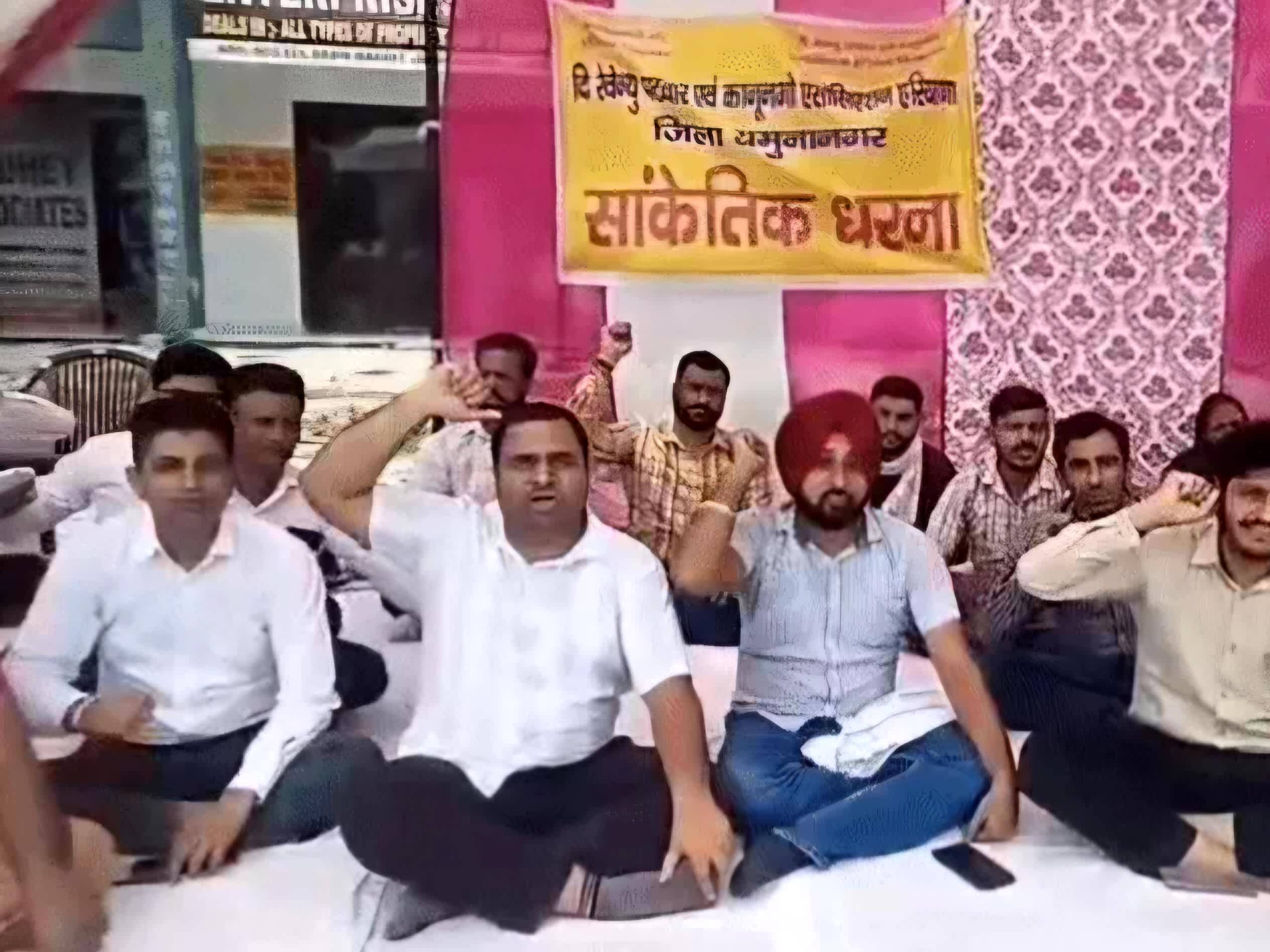
Revenue Patwar and Kanungo Association members raise concerns over technical glitches in the new digital revenue portal during their symbolic protest in Yamunanagar.
Yamunanagar association says persistent technical and record-related errors are disrupting land services, while field employees are being held responsible for system failures
YAMUNANAGAR | PEN OF DEMOCRACY NEWS DESK
The Revenue Patwar and Kanungo Association Haryana has announced a two-day symbolic protest in Yamunanagar on August 20 and 21 against what it describes as persistent technical and record-related problems in the new online revenue portal. The association has raised serious concerns over the functioning of the system introduced for important land record services, including Jamabandi and mutation entries, claiming that repeated technical glitches over the past several months have affected the work of field employees as well as members of the public seeking essential revenue-related services.
According to the association, the new digital system has been facing continuous operational difficulties for nearly four months. Employees say that new technical issues frequently emerge on the portal, making it difficult to complete routine revenue work efficiently. The association has reportedly brought these problems to the notice of departmental authorities and the concerned IT team on several occasions, but it alleges that a permanent solution has yet to be implemented.
Yamunanagar district president of the association, Ramphal, said that the consequences of the technical shortcomings are being faced directly by Patwaris and Kanungos working in the field. He said that employees should not be held accountable for errors or discrepancies arising because of software failures, technical limitations or problems in the digital record system. The association has demanded that responsibility for mistakes caused by technical faults should be clearly fixed on the concerned IT or system-management authorities rather than on field-level employees.
The association said that the problems are not limited to government offices or departmental staff. Citizens requiring land-related services are also facing difficulties. Services such as obtaining Jamabandi records, registering and verifying mutations, completing Girdawari-related work, correcting land records and accessing other important revenue services have reportedly been affected by technical issues. As a result, members of the public are often required to make repeated visits to revenue offices for work that is expected to be completed through the online system.
The protesting employees have argued that digitalisation should simplify administrative processes and improve the delivery of public services. However, they said that if a newly introduced system continues to experience technical problems, both employees and citizens face unnecessary inconvenience. The association has urged the government and the Revenue Department to address the issues on priority and ensure that the portal functions reliably before employees are held responsible for delays or errors.
A major concern raised by the association relates to the Digital Crop Survey system. According to the employees, the tablets provided for conducting the survey and the current operational range of approximately 20 metres create practical difficulties during fieldwork. They said that conducting surveys in agricultural fields, particularly those containing crops such as paddy and sugarcane, can be challenging under the existing technical requirements.
The association has demanded that the operational range for the Digital Crop Survey be increased to at least 150 metres, arguing that the existing range is not practical for many agricultural conditions. Employees say that a wider operational range would make the survey process easier and reduce difficulties faced while collecting field-level crop data.
The association has also demanded the removal of the mandatory face authentication requirement, claiming that the existing process creates additional operational difficulties for employees. It has further sought the adequate supply of computers, tablets and other essential technical equipment required for the smooth functioning of the digital revenue system.
According to the employees, the government should ensure that sufficient infrastructure is available before imposing complete responsibility for digital operations on field staff. They said that employees cannot be expected to deliver services efficiently if they do not have access to adequate devices, reliable connectivity and properly functioning software.
Another important demand raised by the association concerns the issuance of a revised Land Records Manual. The employees have said that updated guidelines should be provided before or alongside the implementation of major changes in the digital revenue system. They believe that a revised manual would provide greater clarity regarding procedures, responsibilities and the handling of land records under the new system.
Ramphal said that the concerns raised by the Patwaris and Kanungos are not confined to employee-related issues. According to the association, the smooth functioning of the revenue system is directly connected with the timely delivery of essential services to the public. Delays or technical failures in land records can affect farmers, property owners and other citizens who depend on revenue offices for official documentation and verification.
The two-day symbolic protest is intended to draw the attention of the government and the Revenue Department towards what the association describes as practical difficulties faced at the ground level. The employees have demanded a comprehensive and permanent solution to the portal’s technical issues and have called for greater coordination between field staff, departmental authorities and technical teams.
The association has maintained that field employees should not be made scapegoats for failures originating within the digital system. It has urged authorities to clearly define accountability for software-related errors and ensure that Patwaris and Kanungos are not subjected to unnecessary action for mistakes beyond their control.
The Revenue Patwar and Kanungo Association Haryana has appealed to the government to take the concerns raised by field employees seriously and improve the technical infrastructure supporting the new revenue portal. The association believes that resolving these issues would not only reduce the workload and difficulties faced by employees but would also help ensure faster and more efficient delivery of land and revenue services to the public.
With the symbolic protest scheduled for August 20 and 21 in Yamunanagar, the association is seeking immediate attention to the portal’s technical problems, improvements in the Digital Crop Survey system, adequate availability of computers and tablets, removal of mandatory face authentication and the issuance of updated operational guidelines for the new digital revenue framework.